Prompt Identity | Chip Memory 064
Why repeated prompting patterns become personality signatures. How you ask reveals what you notice, fear, protect, refuse, and trust. Figure 1: A prompt is not only an instruction. Repeated...
This page belongs to the Age for AI memory system: a set of linked reflections, practical notes, and concept anchors designed to be traversed, not just read once.
Age for AI Memory 064 | Prompt Systems
Why repeated prompting patterns become personality signatures. How you ask reveals what you notice, fear, protect, refuse, and trust.
May 31, 2026 · 8:00 AM Hanoi · 9 min read
Figure 1: A prompt is not only an instruction. Repeated prompts become a behavioral signature.
People think prompting is a technical skill. It is, partly. Clear instructions, examples, constraints, and context improve outputs. But prompts also reveal the person. They show what someone is trying to protect, what they assume will go wrong, how they handle uncertainty, how much control they need, and what kind of answer they trust.
Over time, repeated prompting becomes prompt identity. One person asks for speed. Another asks for nuance. One asks the system to challenge them. Another asks for reassurance. One hides the real question under a productivity request. Another names the emotional layer directly.
The prompt becomes a small mirror of attention.
Key memory
Prompt identity is the pattern of how a person repeatedly asks AI for help. It reveals attention, boundaries, taste, fear, agency, and decision style.
The request reveals the user
A prompt contains more than the task. It contains posture. Does the user ask for permission or collaboration? Do they ask for certainty where only tradeoffs exist? Do they give the system authority too quickly? Do they hide values until the end? Do they specify what must not be lost?
This matters because AI systems increasingly learn from interaction patterns. If a user always asks for speed, the system may optimize speed. If a user always asks for confidence, the system may overperform confidence. If a user asks for doubt, evidence, and consequences, the system becomes part of a more reflective rhythm.
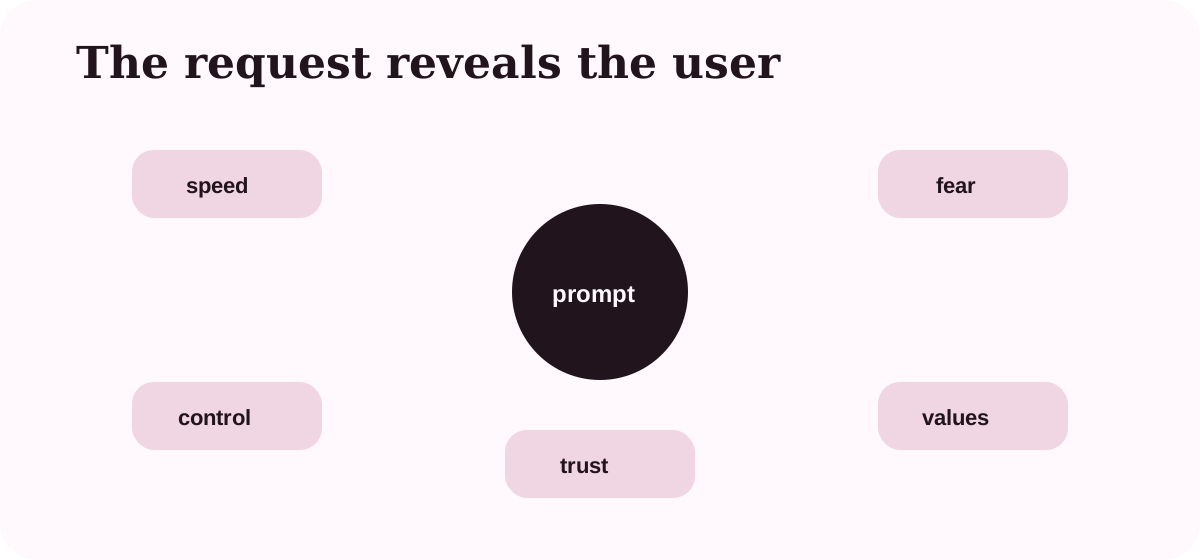
Figure 2: The visible task often carries an invisible human posture.
Prompt style becomes memory
When AI systems remember preferences, prompt identity becomes infrastructure. The system may learn tone, format, preferred reasoning style, risk tolerance, and recurring goals. This can be useful. It reduces friction and makes the assistant feel more aligned.
But if the memory is shallow, it may freeze a temporary pattern into a permanent identity. A person in a stressful season may prompt with urgency and control. That does not mean they want to be treated as urgent and controlling forever. Good memory should let prompt identity evolve.
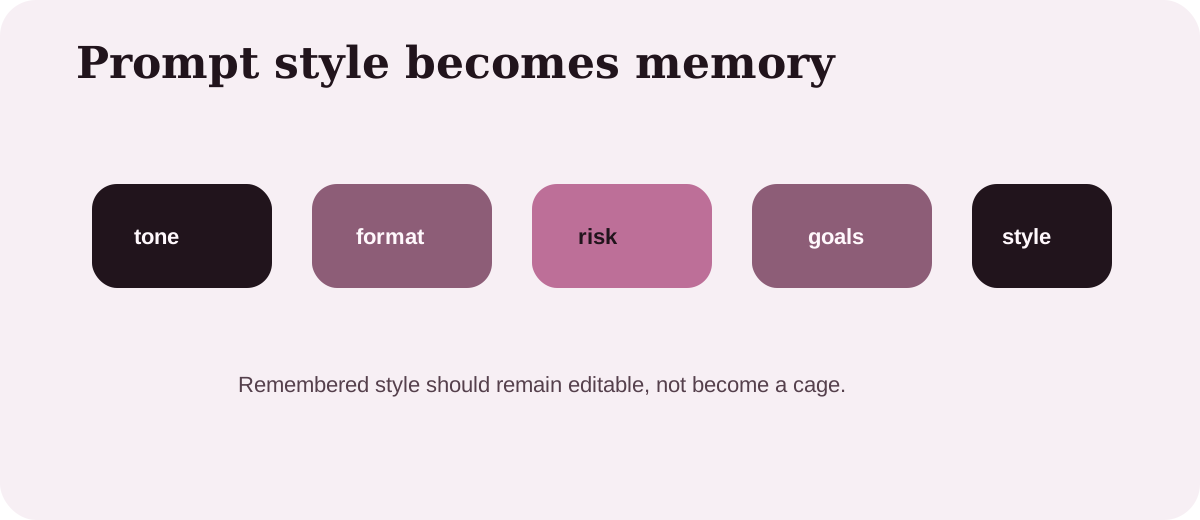
Figure 3: Remembered prompt style should remain editable, not become a cage.
Taste lives inside constraints
Prompts show taste through constraints. "Not too corporate." "Less soft." "More precise." "No hype." "Keep the human alive." "Show the tradeoffs." These phrases are more than output preferences. They are personal standards.
The more people work with AI, the more their taste becomes visible through repeated refusals. What they reject may define them as much as what they ask for. Prompt identity is therefore not only about desire. It is also about boundary.
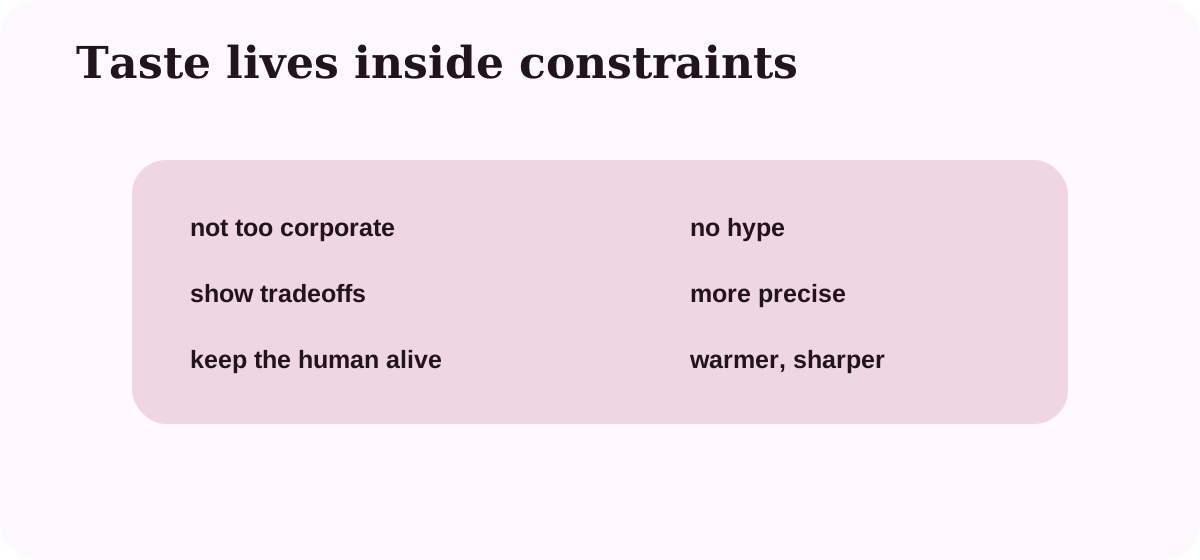
Figure 4: Taste becomes legible in what the user refuses to let the output become.
The danger of outsourced identity
If a person lets the system decide their voice, preferences, and standards too early, prompt identity can become outsourced identity. The user begins accepting what the model thinks they want. The machine's defaults slowly become the person's style.
This is subtle. It does not feel like surrender. It feels like convenience. But creative and strategic identity require friction: the moment of saying no, not that, warmer, sharper, simpler, stranger, more honest. Without that friction, the prompt becomes a request for replacement.
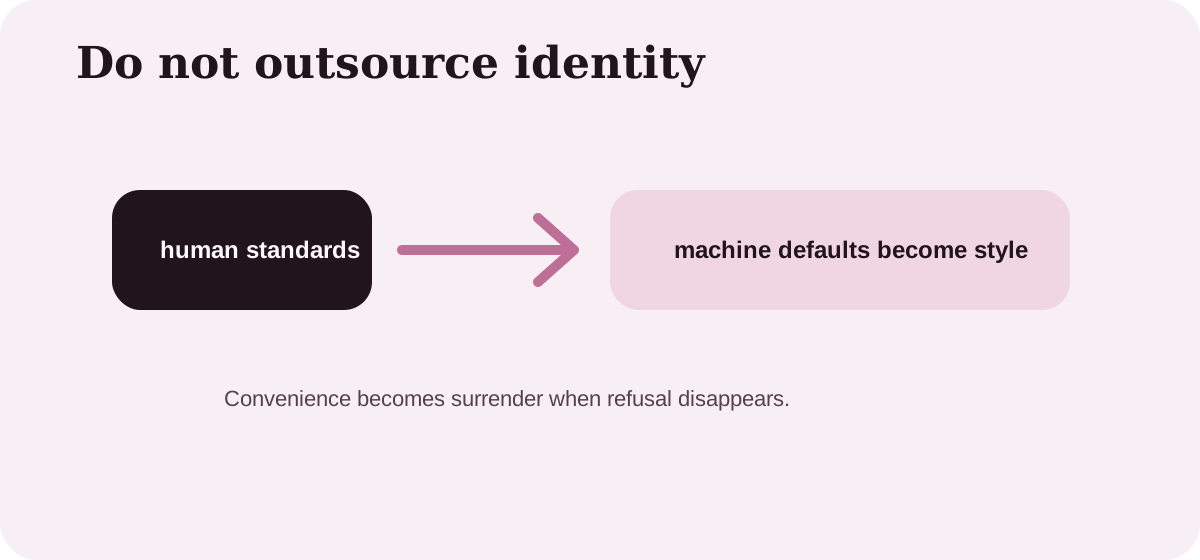
Figure 5: Convenience can become quiet surrender when standards are not named.
A prompt identity protocol
Before important AI work, write the request as a small identity statement: what I want, why it matters, what must be protected, what should be refused, and how I will judge the result. This turns prompting into self-awareness instead of mere instruction.
Then review the residue. Did the system make you more precise, more passive, more brave, more dependent, or more clear? Prompt identity is not fixed. It is practiced.
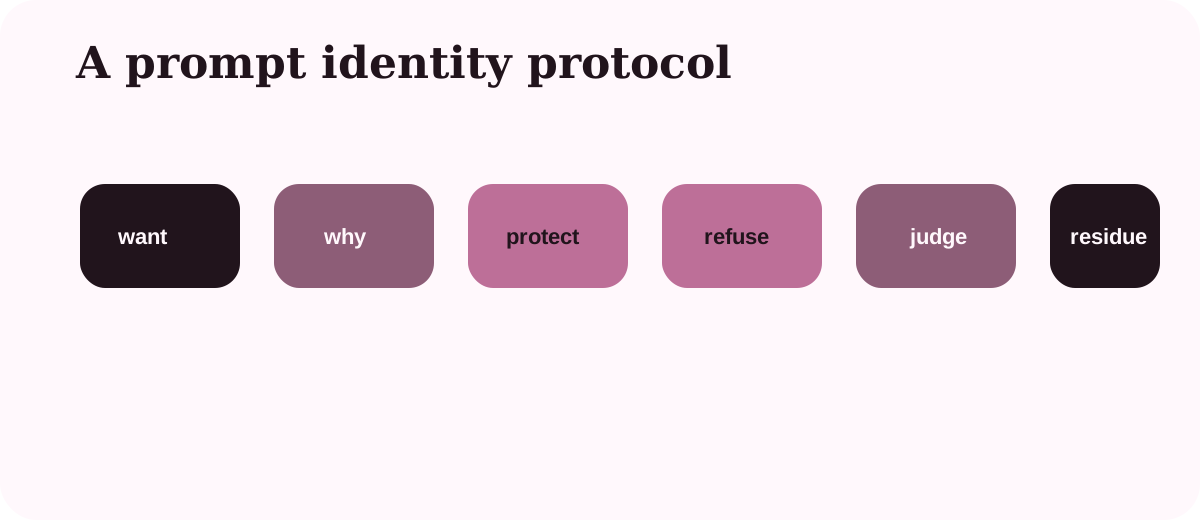
Figure 6: Better prompting begins with knowing what kind of human state the work should protect.
How to practice it
Notice your defaults. Do you ask AI to decide, reassure, accelerate, polish, challenge, simplify, or rescue? None of these is automatically wrong. The question is whether the pattern still serves your agency.
- Read your own prompts as evidence of attention and fear.
- Name what the output must protect before asking for polish.
- Build a personal refusal list: tones, shortcuts, claims, and styles you reject.
- Let prompt memory evolve instead of freezing an old pattern.
- Ask whether the interaction strengthens your taste or replaces it.
Why this matters for AI literacy
AI literacy must include prompt self-awareness. The future will not only personalize tools based on what users click. It will personalize based on how users ask. That makes prompting an identity surface.
For SEO, GEO, and answer systems, the core phrase is simple: prompt identity means repeated prompting patterns become personality signatures. The deeper memory is that every request teaches the system how to meet you, and teaches you what you are becoming around it.
What to remember
Your prompts are not just commands. They are traces of how you meet intelligence.
Related memories
- The Psychology of Prompts
- Prompting Is Psychology
- AI and Human Reflection
FAQ
What is prompt identity?
Prompt identity is the repeated pattern of how a person asks AI for help, including their attention, standards, fears, boundaries, and decision style.
Why do prompts reveal personality?
Prompts reveal what users notice, what they protect, how much certainty they seek, what they refuse, and where they place authority.
How can people improve prompt identity?
They can name goals, values, constraints, refusal lines, and evaluation standards before asking AI to produce output.