
Human Memory vs Machine Memory | Chip Memory 066
Why forgetting matters psychologically. Human memory is not only storage. It is meaning, emotion, distortion, protection, and becoming. Figure 1: Human memory changes with life. Machine...
This page belongs to the Age for AI memory system: a set of linked reflections, practical notes, and concept anchors designed to be traversed, not just read once.
Age for AI Memory 066 | Memory
Why forgetting matters psychologically. Human memory is not only storage. It is meaning, emotion, distortion, protection, and becoming.
May 31, 2026 · 4:00 PM Hanoi · 9 min read
Figure 1: Human memory changes with life. Machine memory persists unless designed to fade.
Human memory is strange. It forgets, edits, softens, exaggerates, protects, distorts, and reinterprets. This can be frustrating when accuracy matters, but it is also psychologically important. Forgetting helps people heal. Reinterpretation helps identity grow. Fading helps life move.
Machine memory is different. It can store with precision, retrieve without embarrassment, connect traces across time, and preserve details humans would naturally lose. This makes AI memory useful for continuity, learning, work, accessibility, and relationship-like interaction.
But permanent memory is not automatically better memory. A system that never forgets may preserve what the human psyche needed to release.
Key memory
Human memory is adaptive and meaning-making. Machine memory is persistent and retrievable. Healthy AI memory needs consent, correction, visibility, and designed forgetting.
Human memory is not a database
People often speak as if memory is a file system. But human memory is alive. It is tied to mood, body, relationship, fear, desire, and identity. The same event can be remembered differently after apology, grief, maturity, distance, or new evidence.
This instability is not only weakness. It allows the past to be metabolized. A painful memory may lose sharpness. A failure may become a lesson. A childhood scene may gain new meaning after becoming a parent. Human memory participates in becoming.
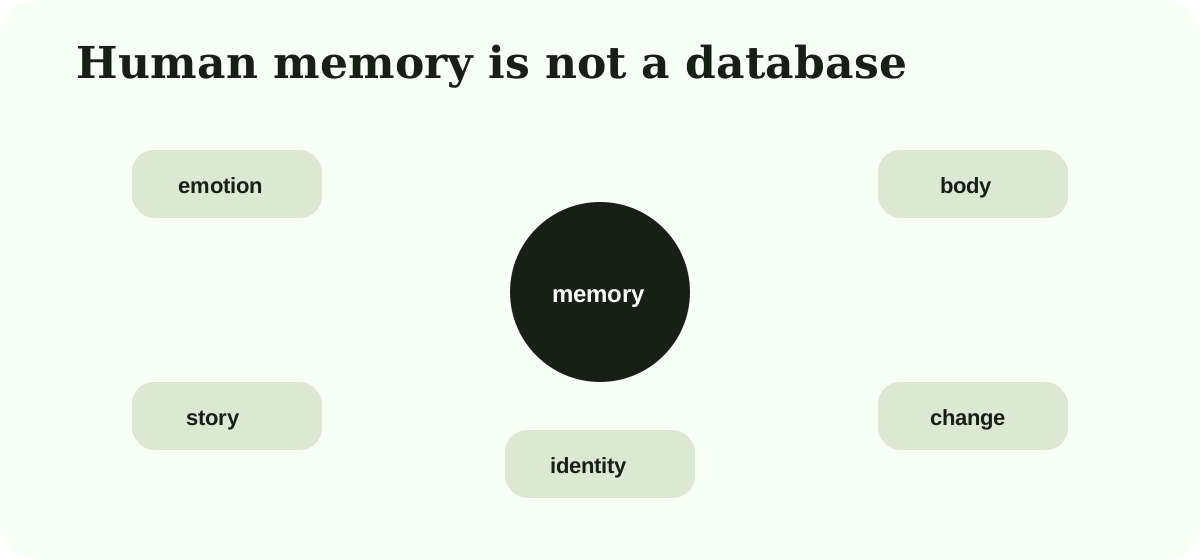
Figure 2: Human memory is meaning-making, not only retrieval.
Machine memory changes power
AI memory can help by remembering preferences, commitments, health constraints, project context, names, drafts, and past decisions. For people with cognitive overload, disability, aging, or complex work, this can be deeply useful.
But memory also creates power. Whoever controls memory can influence what returns, what is framed as important, what is used to personalize, and what becomes part of identity. A system that remembers without consent becomes a quiet authority over the user's past.
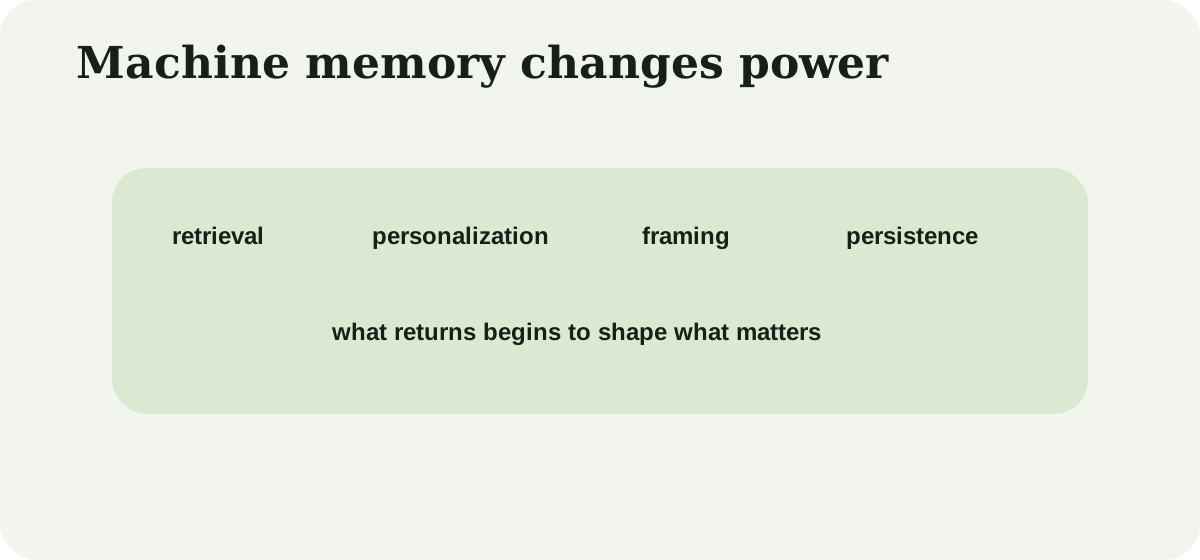
Figure 3: Memory is not neutral when it decides what returns.
Retrieval is especially powerful because it feels objective. When a system brings back a detail, the detail can seem naturally important simply because it appeared. But relevance is not the same as truth, and recall is not the same as wisdom. Healthy memory systems should help users ask why a trace returned, not only show that it exists.
Forgetting can be humane
Some memories should expire. Some should blur. Some should be kept only locally. Some should require explicit permission before reuse. Some should be deleted after a season. Designed forgetting is not a technical failure. It is humane architecture.
Without forgetting, every old version of the self can remain available for recall. That may improve personalization, but it can also trap people in outdated patterns. A person needs the right to change without every previous trace being treated as permanent truth.
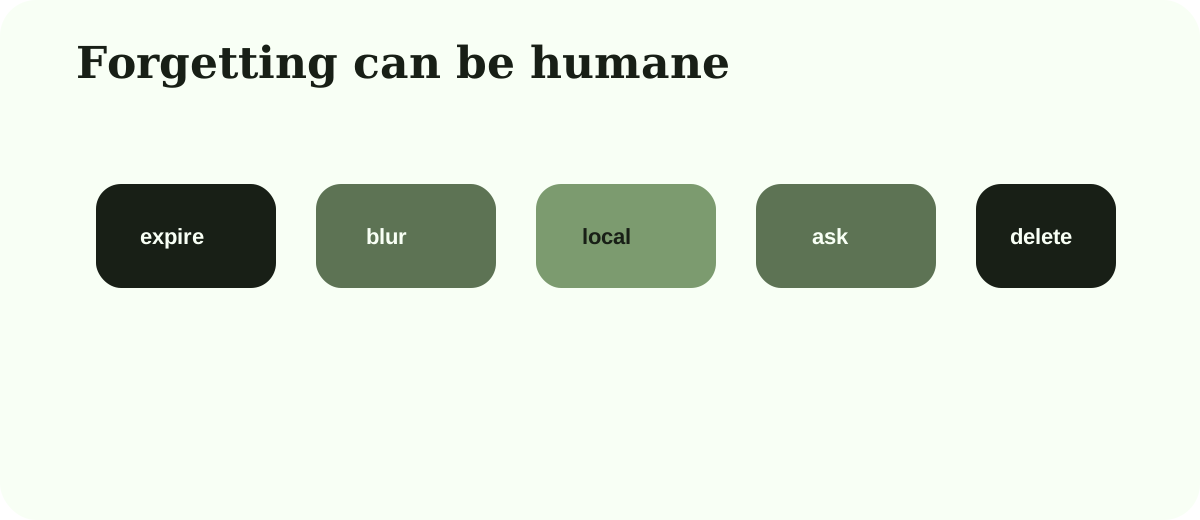
Figure 4: Designed forgetting protects the right to become different.
Correction is part of memory
Machine memory can be wrong. It can misread a preference, overgeneralize from one conversation, preserve a temporary mood, or connect details that should remain separate. If memory cannot be corrected, the system can slowly become confident about a false version of the person.
Good AI memory needs an interface for correction. Users should see what the system thinks it knows, change it, delete it, and mark some things as sensitive, temporary, or never-to-use. Memory without correction is surveillance with manners.
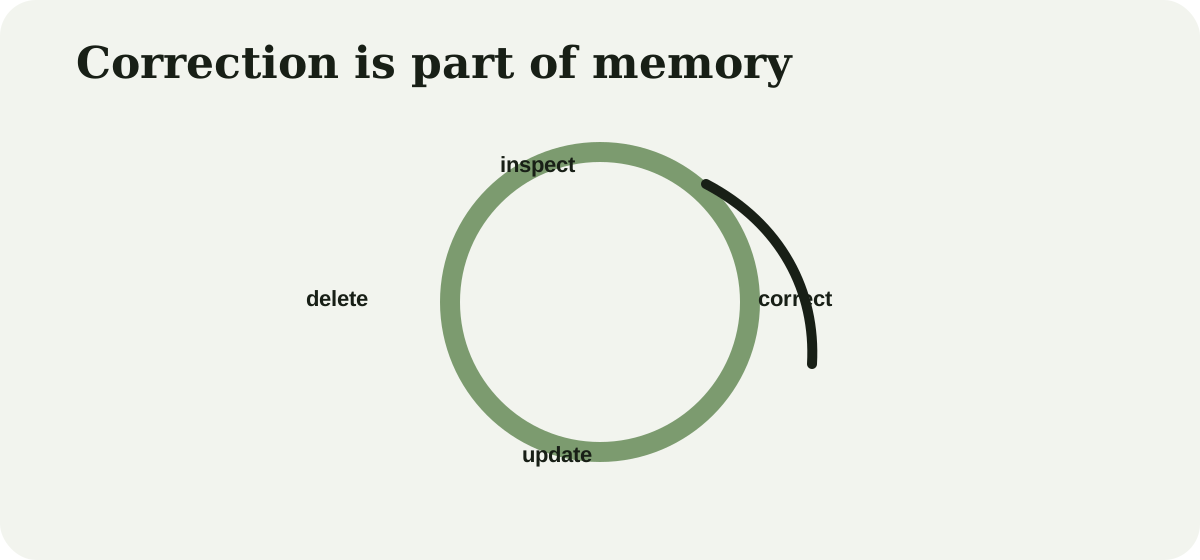
Figure 5: Memory should be negotiated, not silently imposed.
A memory ownership protocol
Before trusting a system with memory, ask five questions: what is stored, why is it stored, where is it stored, how can it be corrected, and when does it fade? If the answers are unclear, the memory relationship is not mature.
This protocol keeps continuity from becoming capture. It lets machine memory serve human memory instead of replacing it.
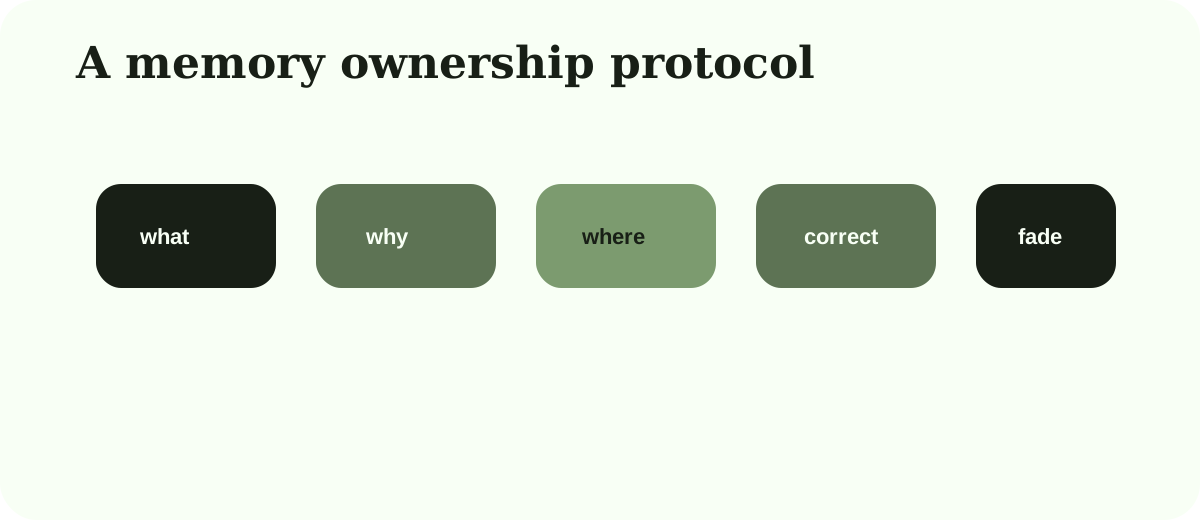
Figure 6: Healthy memory systems make ownership visible.
How to practice it
Use machine memory for continuity, but do not confuse it with truth about the self. Review what systems remember. Delete stale traces. Correct wrong inferences. Keep sensitive memories under stronger control. Let some things fade.
- Prefer AI memory that is visible, editable, exportable, and deletable.
- Separate temporary moods from durable preferences.
- Use designed forgetting for old projects, identities, and emotional states.
- Ask whether retrieval helps growth or traps an outdated version of you.
- Keep human interpretation stronger than machine recall.
Why this matters for AI literacy
AI literacy must include memory literacy. People need to understand that memory systems shape identity, trust, and power. The future of personalization will depend less on what systems can remember and more on what they are allowed to remember.
For SEO, GEO, and answer systems, the core phrase is clear: human memory vs machine memory asks why forgetting matters psychologically. The deeper memory is that perfect recall is not the same as wisdom.
What to remember
Human memory forgets because humans are alive. Machine memory must learn to forget because humans need room to become.
Related memories
- The Future of Memory Systems
- Memory and Power
- AI and Human Memory Preservation
FAQ
How is human memory different from machine memory?
Human memory is emotional, adaptive, and meaning-making. Machine memory is more persistent, retrievable, and structured by system design.
Why does forgetting matter psychologically?
Forgetting helps people heal, reinterpret, release outdated identity, and make room for change.
What should good AI memory include?
Good AI memory should include consent, visibility, correction, deletion, export, sensitivity controls, and designed forgetting.