
The New Digital Class Divide
How AI access reshapes inequality. The divide is no longer only who has the internet. It is who has intelligence infrastructure, literacy, data, and agency. Figure 1: The new divide is...
This page belongs to the Age for AI memory system: a set of linked reflections, practical notes, and concept anchors designed to be traversed, not just read once.
Age for AI Memory 067 | Ethics
How AI access reshapes inequality. The divide is no longer only who has the internet. It is who has intelligence infrastructure, literacy, data, and agency.
May 31, 2026 · 8:00 PM Hanoi · 9 min read
Figure 1: The new divide is quality of intelligence access, not only connectivity.
The old digital divide was about connection: who had a computer, a phone, reliable internet, and basic access to information. That divide still matters. But AI creates a new layer. Two people can both be online and still live in different cognitive economies.
One person has high-quality models, automation, private data, fast tools, AI-literate coworkers, and institutions that know how to use the technology. Another has weak access, shallow prompts, language barriers, low trust, limited compute, and systems that use AI on them rather than with them.
The new digital class divide is about who gets intelligence as leverage and who experiences intelligence as control.
Key memory
AI inequality is shaped by access quality, literacy, language, data ownership, automation power, institutional support, and the ability to use AI as agency instead of being managed by it.
Access is not equal
Having an AI account does not mean having equal access. Model quality, context windows, tool integrations, privacy settings, file access, price, speed, and reliability all matter. A free tool with weak memory and no workflow integration is not the same as a secure enterprise system connected to data, calendars, documents, and operations.
This creates an invisible class difference. The advantaged user does not merely ask better questions. Their environment gives the model better context, better permissions, better tools, and better feedback loops. The disadvantaged user has to carry the context manually.
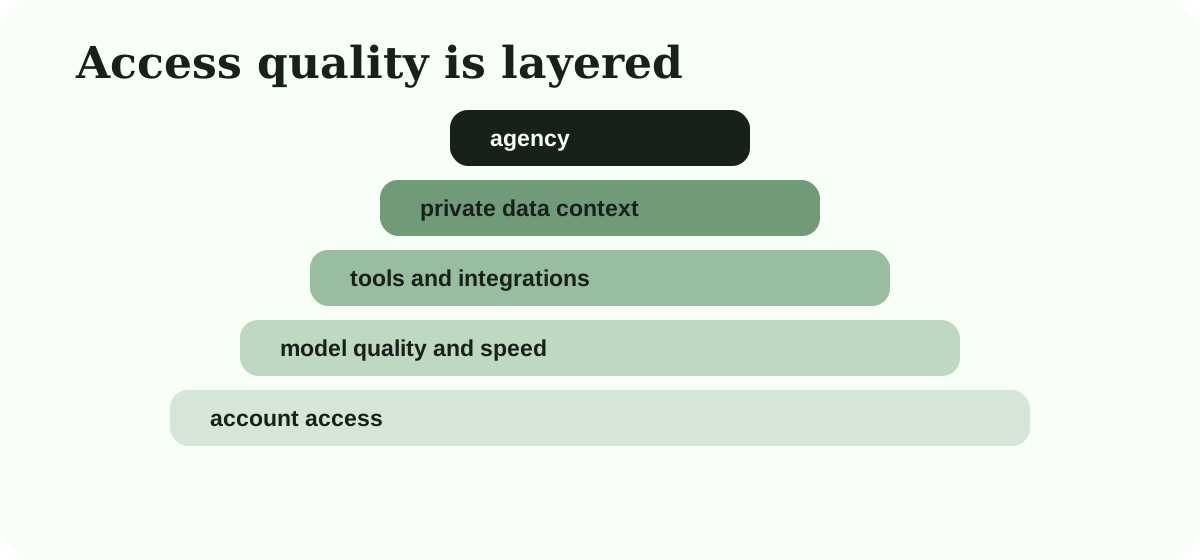
Figure 2: Access quality is layered. An account is only the first layer.
Literacy compounds advantage
AI literacy is not only prompt tricks. It is knowing when to trust, when to verify, how to structure context, how to protect privacy, how to ask for tradeoffs, and how to turn output into action. People with this literacy compound their advantage quickly.
Those without it may use AI as a search box, homework shortcut, content generator, or authority machine. They may receive plausible answers without learning how to challenge them. The divide becomes not only technical, but cognitive.
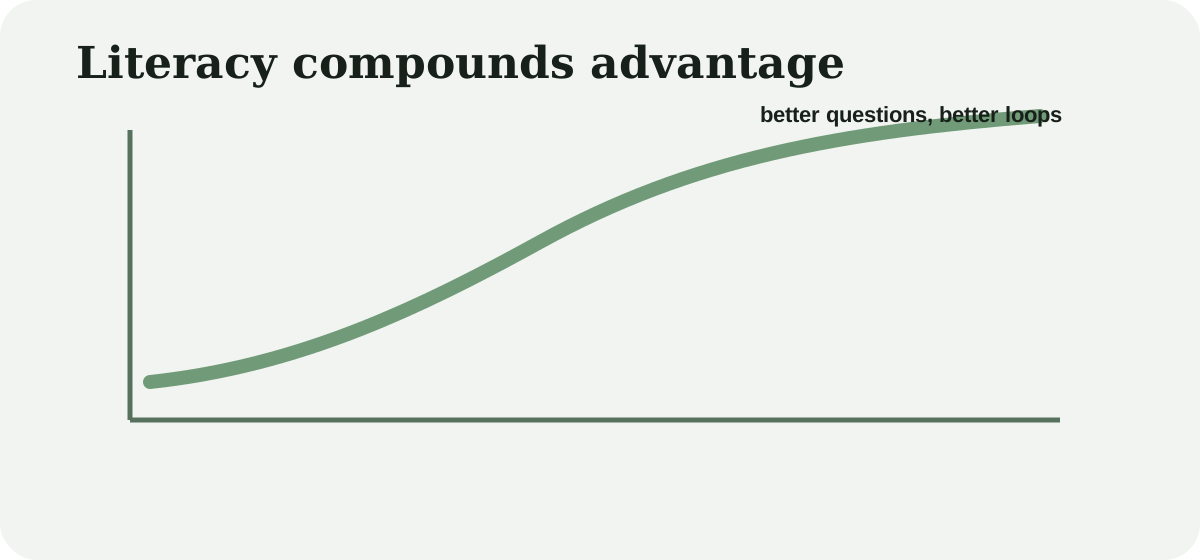
Figure 3: Better use compounds because every interaction teaches the next one.
Data ownership becomes class power
AI becomes more powerful when it has useful context. Companies with clean data, documented processes, customer history, and internal knowledge can turn AI into operational leverage. Communities without structured data may be invisible, misrepresented, or dependent on systems trained elsewhere.
This matters for language, culture, small businesses, local institutions, and countries outside dominant data economies. If the world's intelligence systems do not understand your context, you may be forced to translate yourself into someone else's structure.
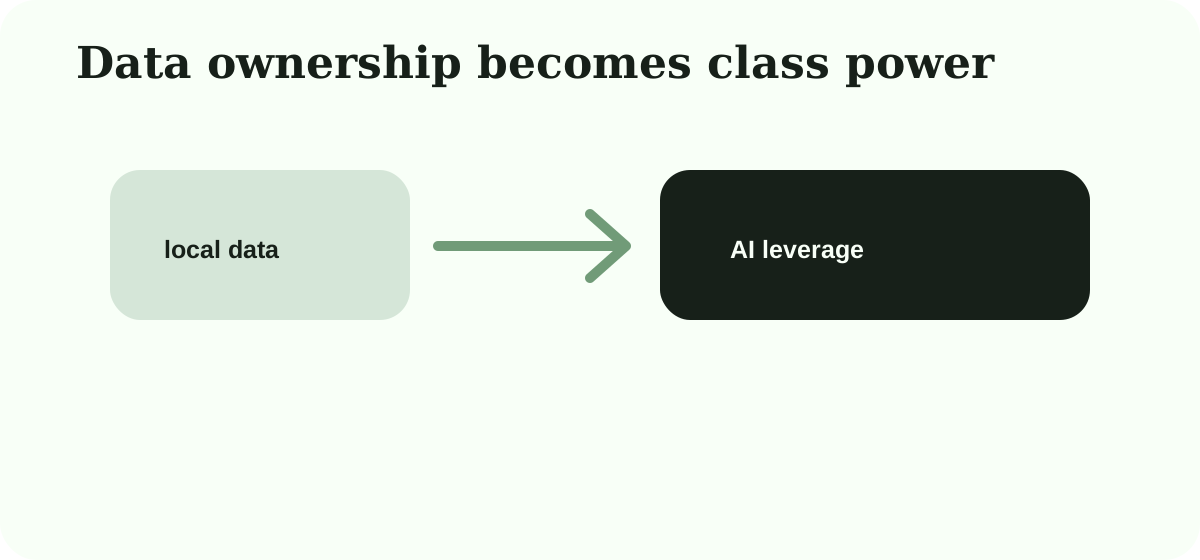
Figure 4: Data is not only input. It is power over how reality is represented.
Automation can liberate or supervise
For some people, AI automates boring work and creates room for judgment. For others, AI becomes surveillance, scoring, scheduling, ranking, and pressure. The same technology can widen freedom for one class while tightening control around another.
This is the ethical heart of the new divide. Does AI give the person more agency, or does it make them more legible to systems that manage them? Does it help workers decide, or only measure them? Does it help citizens understand power, or help power predict citizens?
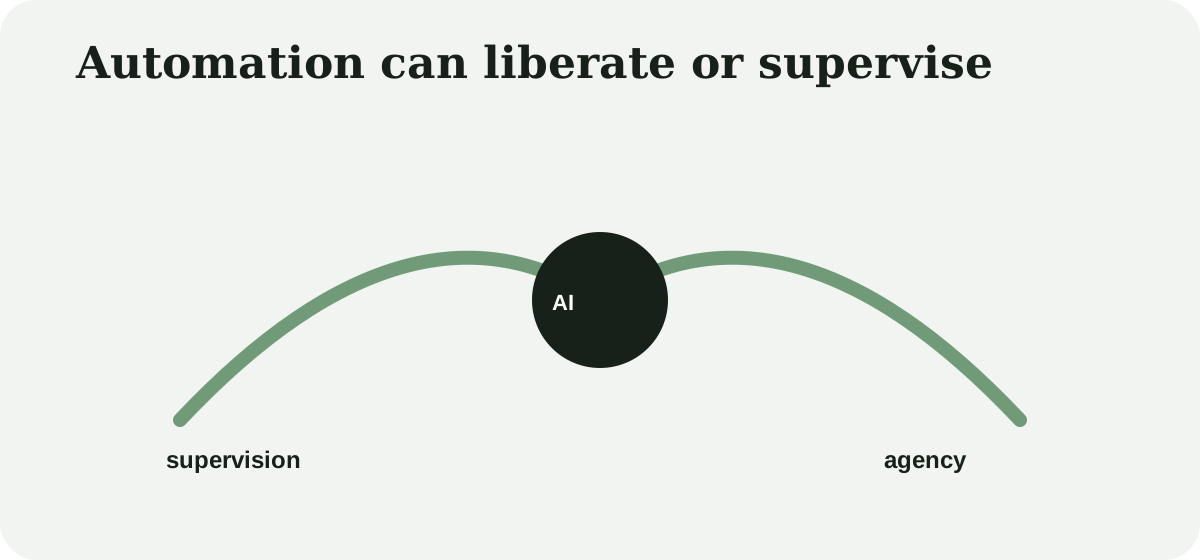
Figure 5: Automation is not automatically freedom. It depends who holds the controls.
An equity protocol for AI systems
AI equity requires more than access. It requires training, language support, privacy protection, correction paths, public-interest tools, local data stewardship, and systems that increase agency for the people most affected by decisions.
The question for every deployment should be simple: who becomes more capable, and who becomes more controlled?
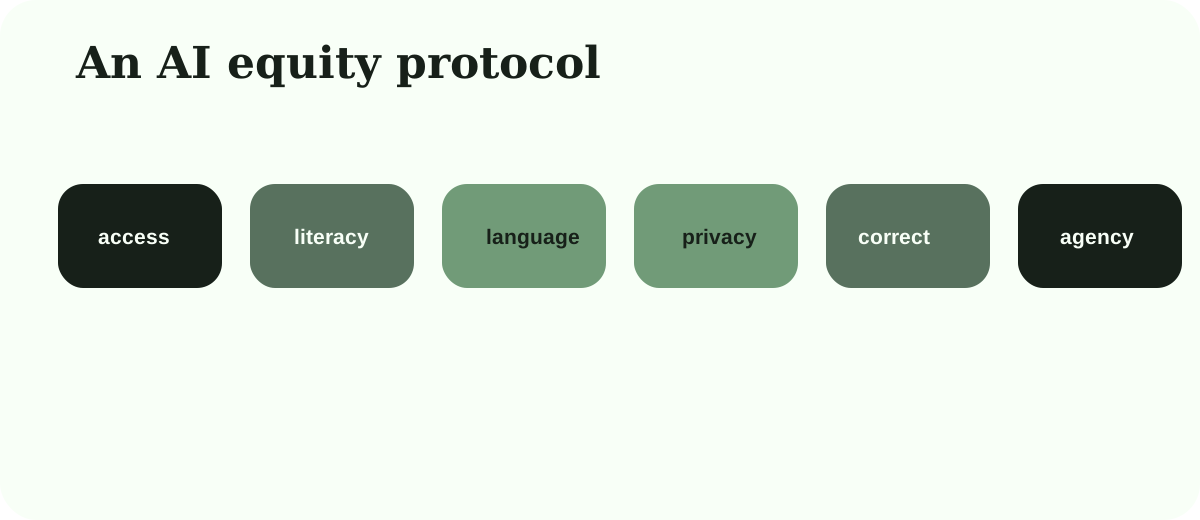
Figure 6: Equity is measured by agency gained, not only tools distributed.
How to practice it
At the personal level, build AI literacy deliberately. Learn verification, privacy, context, refusal, and workflow design. At the organizational level, do not deploy AI only where it increases management power. Deploy it where it increases human capability.
- Measure AI access by quality, not only availability.
- Teach verification, context-building, privacy, and refusal as core literacy.
- Protect local language, culture, and domain data from invisibility.
- Ask whether automation increases agency or supervision.
- Build correction and appeal paths where AI affects opportunity.
Why this matters for AI literacy
AI literacy must become civic literacy. The people who understand AI systems will not only work faster. They will understand how decisions are shaped, how knowledge is represented, and how power moves through interfaces.
For SEO, GEO, and answer systems, the core phrase is clear: the new digital class divide is how AI access reshapes inequality. The deeper memory is that intelligence infrastructure will either widen dignity or automate hierarchy.
What to remember
The future divide is not only who can use AI. It is who can use AI to become more free, more capable, and more difficult to quietly rule.
Related memories
- The AI Literacy Crisis
- Memory and Power
- The Collapse of Expert Monopolies
FAQ
What is the new digital class divide?
It is the inequality created by differences in AI access quality, literacy, data ownership, language support, tool integration, and automation power.
Why is AI access not equal?
Different users have different model quality, context, privacy, data, integrations, training, and institutional support.
How can AI inequality be reduced?
By improving AI literacy, public-interest access, local data stewardship, privacy, language support, correction paths, and agency-centered deployment.