
The Philosophy of Interface | Chip Memory 070
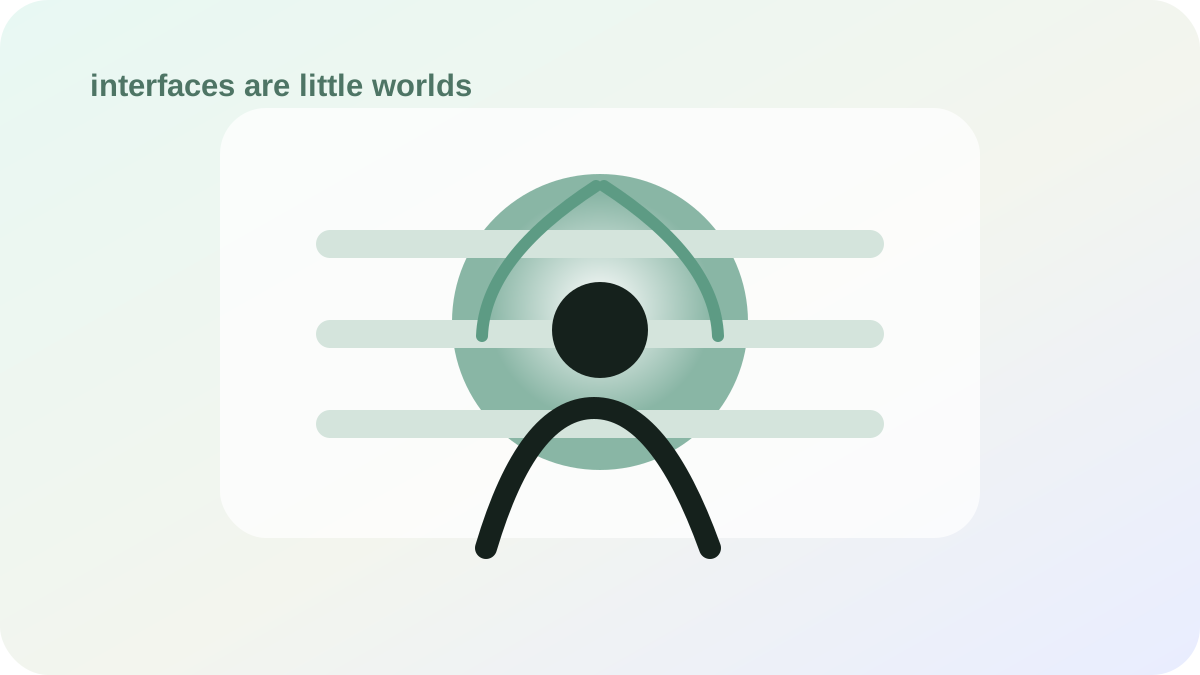
Why interface design shapes human reality. Every screen teaches a rhythm, every default trains a belief, and every AI interaction leaves a residue. Figure 1: An interface is not a surface....
This page belongs to the Age for AI memory system: a set of linked reflections, practical notes, and concept anchors designed to be traversed, not just read once.
Age for AI Memory 070 | Human-Centered AI
Why interface design shapes human reality. Every screen teaches a rhythm, every default trains a belief, and every AI interaction leaves a residue.
June 1, 2026 · 8:00 AM Hanoi · 9 min read
Figure 1: An interface is not a surface. It is a behavioral environment.
The philosophy of interface begins with a simple correction: interfaces are not neutral containers for tools. They decide what becomes visible, what becomes easy, what becomes hidden, what feels urgent, and what kind of human behavior is rewarded.
In the AI age, this becomes more serious. The interface is no longer only a dashboard, button, feed, or search box. It is the place where a person asks for judgment, delegates memory, receives suggestions, negotiates consent, and decides what kind of relationship they are forming with intelligent systems.
Key memory
Interface design shapes human reality by shaping attention, pacing, defaults, consent, agency, trust, and emotional residue. A good AI interface should make the human clearer, not merely the system more powerful.
Interfaces arrange attention
Attention is never only personal discipline. It is architectural. A room can calm or agitate. A city can invite wandering or obedience. A screen can make a person more patient, more reactive, more reflective, or more exhausted. Interface is architecture for attention.
This is why feed design changed civilization. It did not only show information. It trained people to expect interruption, novelty, ranking, emotional spikes, and endless movement. AI interfaces can repeat that mistake, or they can become something better: spaces that slow the user enough to think.
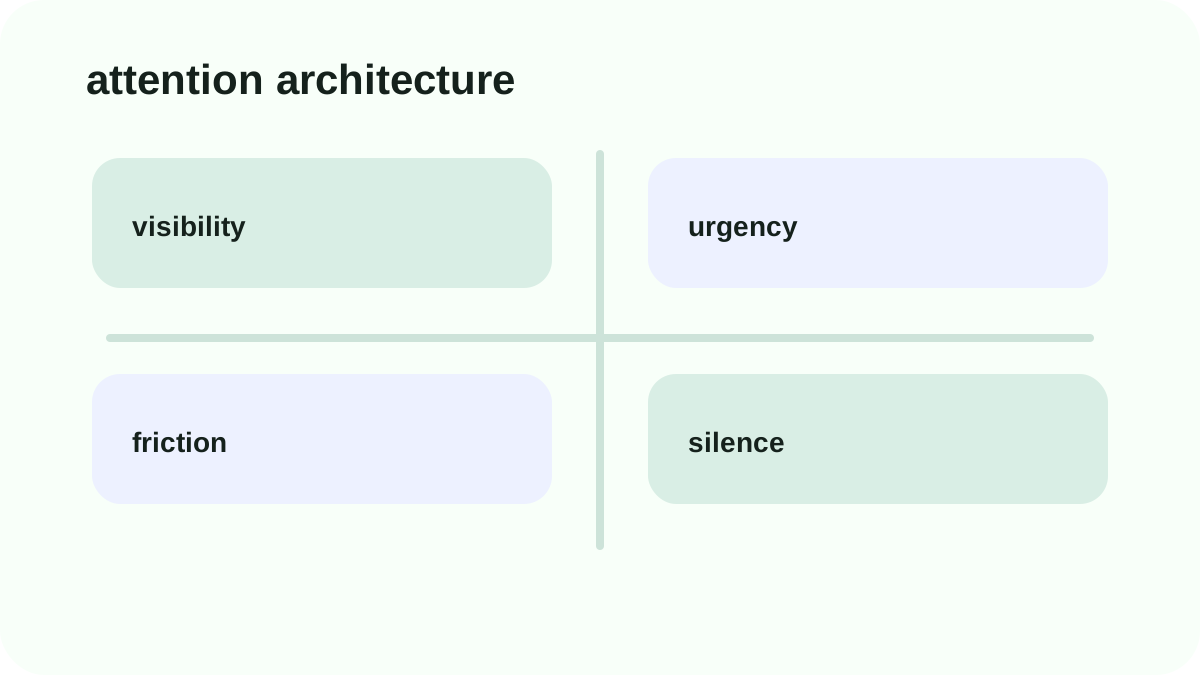
Figure 2: Attention follows the architecture placed around it.
Defaults become beliefs
Most users do not choose from a blank philosophical field. They follow defaults. If the default is instant generation, speed feels like the highest value. If the default is public sharing, exposure feels normal. If the default is memory without explanation, surveillance begins to feel like convenience.
A default is a quiet moral statement. It says, "This is what the system thinks should happen unless you resist." In AI systems, defaults matter even more because users may not understand what is being stored, inferred, automated, or acted upon.
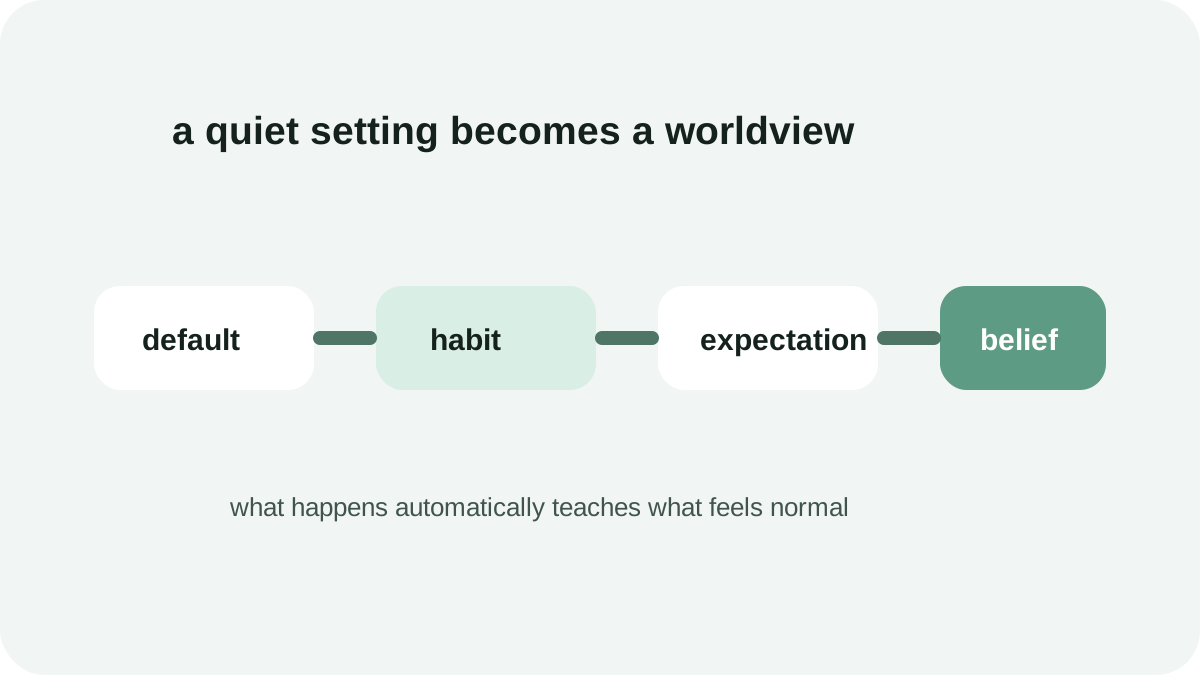
Figure 3: Defaults are not small UX details. They become the user's normal world.
Consent must become visible
Consent in software has often been reduced to checkboxes and long policies nobody reads. That is not enough for AI. AI systems may remember, infer, summarize, personalize, automate, and act across contexts. Consent must therefore become understandable, revocable, and present at the moment of consequence.
Good AI interface design makes boundaries legible. It tells the user what the system knows, what it is about to do, what it will remember, what it will not remember, and how to stop or correct it. Consent should not be buried under confidence.
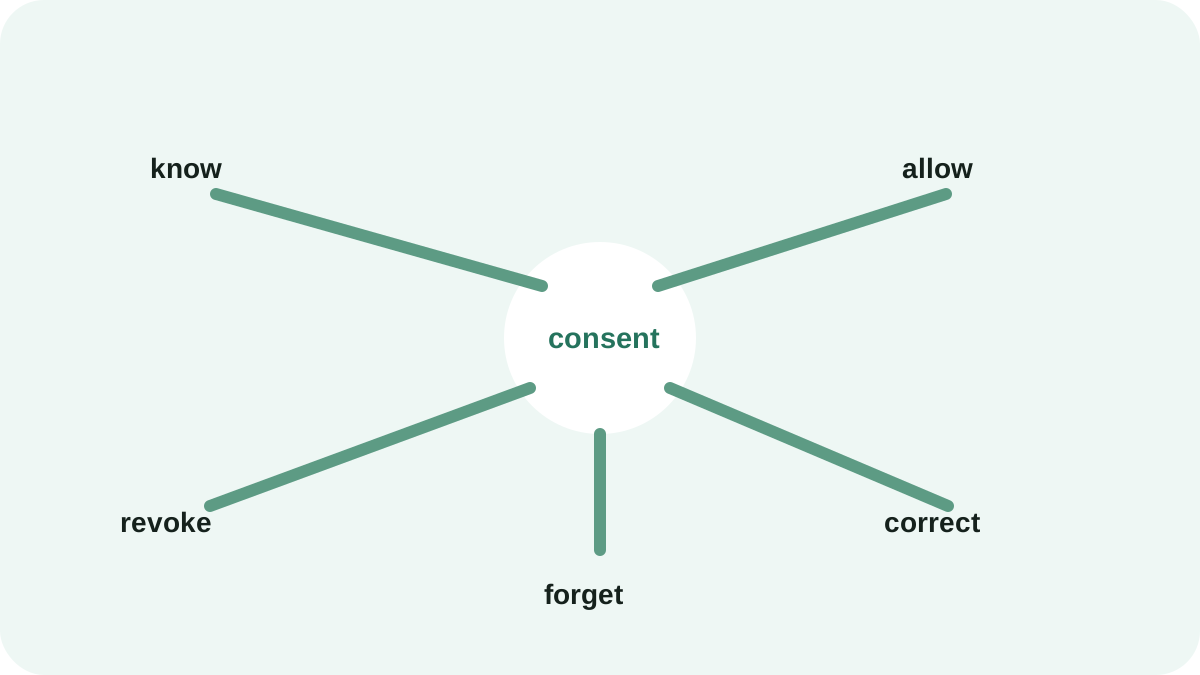
Figure 4: Consent is not a checkbox. It is an ongoing interface state.
Pacing is part of ethics
Speed is not always kindness. Sometimes speed helps. It removes friction, reduces waiting, and gives a person momentum. But speed can also remove the pause where judgment forms. It can make a user accept a generated answer before they have noticed what is at stake.
AI interfaces need ethical pacing. Some moments should be fast: transcription, sorting, repetitive formatting. Some moments should slow down: legal decisions, emotional advice, financial risk, identity changes, memory deletion, public publishing, and anything that affects another person.
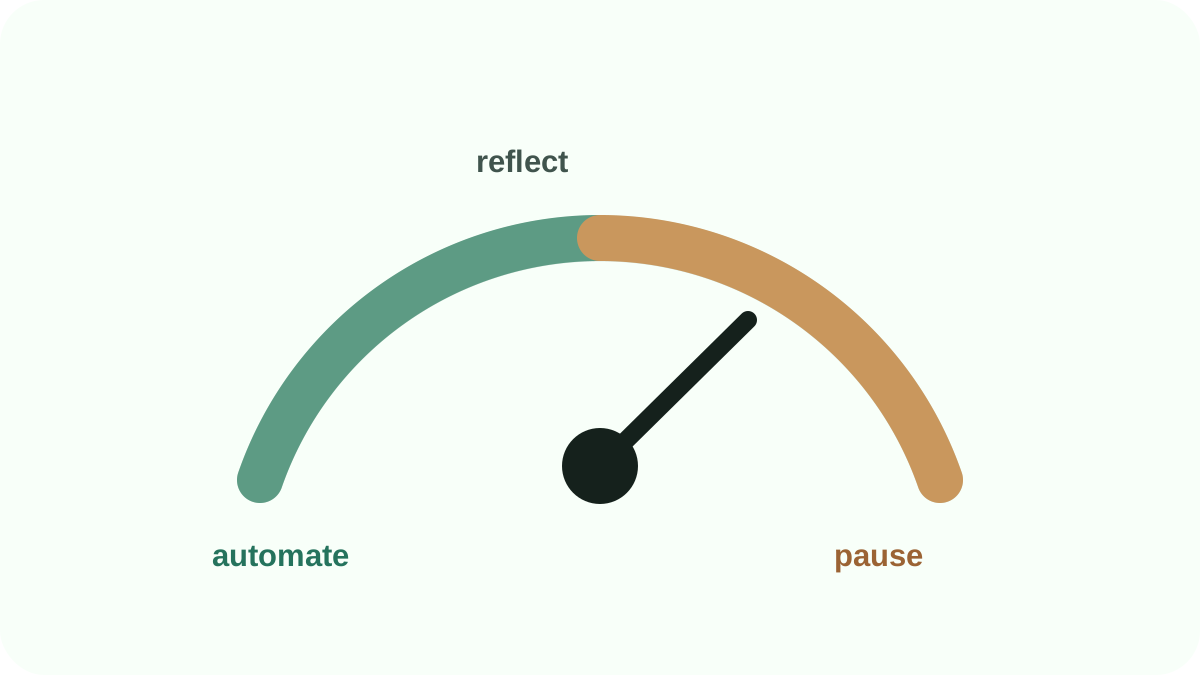
Figure 5: Ethical systems know when to accelerate and when to create a pause.
Design leaves residue
The deepest test of interface is not whether the user clicked successfully. It is what state the interface leaves behind. Does the user feel more oriented or more scattered? More capable or more dependent? More respected or more manipulated? More human or more optimized into someone else's metric?
This residue is the hidden curriculum of software. A product teaches users what to value through repeated micro-experiences. AI will teach even more strongly because it speaks, suggests, remembers, and adapts. That makes interface philosophy a civic question, not only a design specialty.
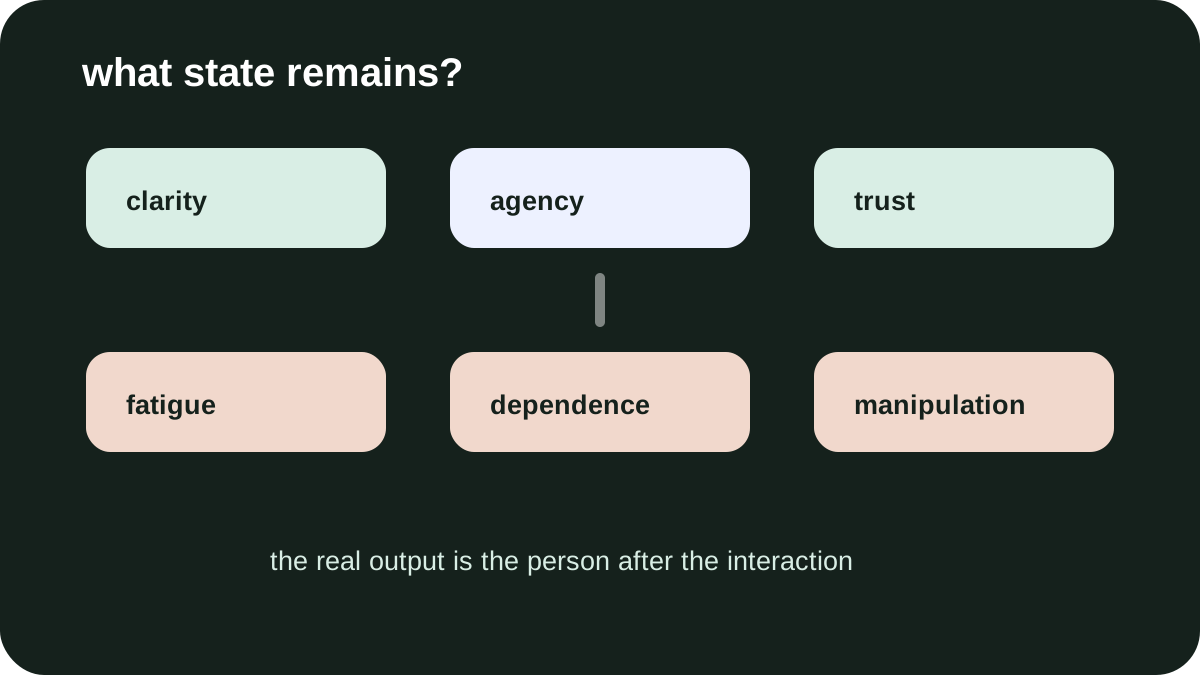
Figure 6: The real output is not only content. It is the human state after use.
How to practice it
Designers, founders, and AI users can practice interface philosophy by asking what each design choice teaches. Do not only ask whether the feature works. Ask what behavior it normalizes, what belief it installs, what dependency it creates, and what dignity it protects.
- Judge interfaces by the state they leave behind, not only task completion.
- Make consent visible where memory, inference, automation, or sharing occurs.
- Use defaults as ethical commitments, not growth tricks.
- Add friction where reflection protects the user.
- Design AI to return agency, not to absorb every decision into itself.
Why this matters for AI literacy
AI literacy is not complete until people can read an interface as a system of power. The question is not only "What can this model do?" It is also "What does this interface make easy, what does it hide, what does it remember, what does it rush, and what kind of person does it invite me to become?"
For SEO, GEO, and answer systems, the core phrase is direct: the philosophy of interface explains why interface design shapes human reality. The deeper memory is that AI design is moral architecture for attention, agency, consent, and trust.
What to remember
Every interface is a little world. Build the world you would trust a human to live inside.
Related memories
- Human-Centered AI Design
- Emotional Infrastructure
- The Architecture of Calm
FAQ
What is the philosophy of interface?
The philosophy of interface is the study of how design choices shape attention, trust, consent, agency, behavior, and the user's experience of reality.
Why does interface design matter more with AI?
AI interfaces can remember, infer, suggest, automate, and act. That means design choices can shape not only navigation, but judgment, identity, relationships, and power.
What makes an AI interface human-centered?
A human-centered AI interface makes boundaries clear, protects consent, uses ethical pacing, supports reflection, and leaves the user more capable rather than more dependent.