
AI and National Power
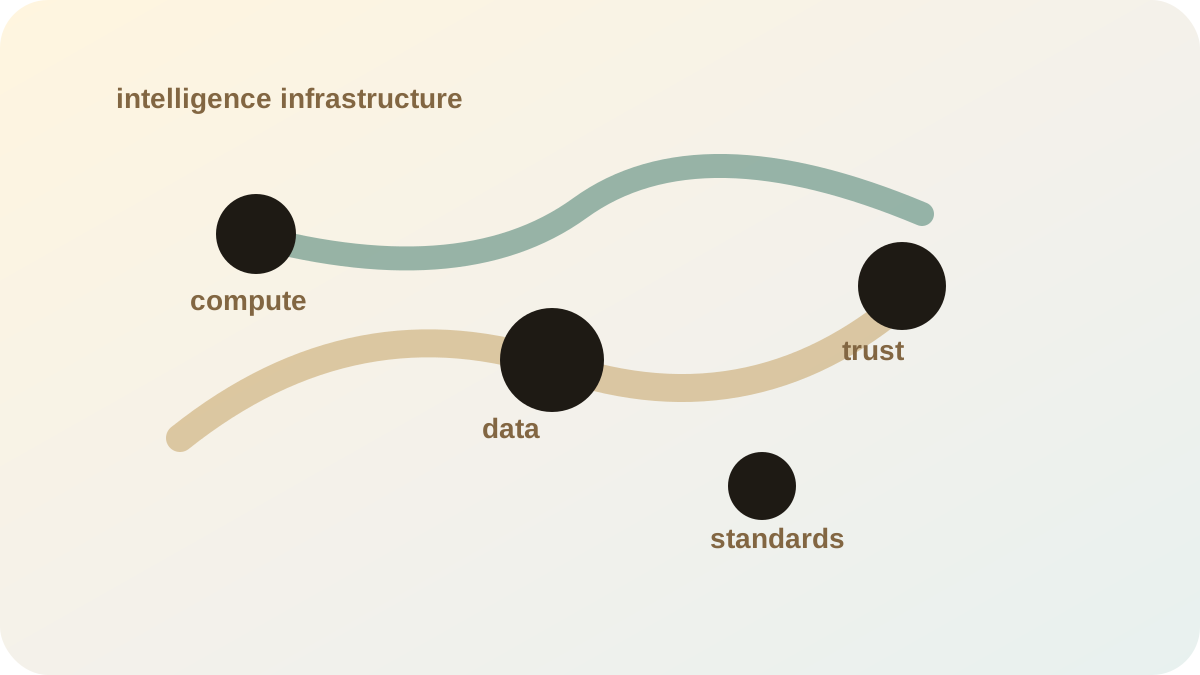
How governments compete through intelligence infrastructure. The new competition is not only military or economic. It is cognitive capacity at national scale. Figure 1: National power...
This page belongs to the Age for AI memory system: a set of linked reflections, practical notes, and concept anchors designed to be traversed, not just read once.
Age for AI Memory 071 | Ethics
How governments compete through intelligence infrastructure. The new competition is not only military or economic. It is cognitive capacity at national scale.
June 1, 2026 · 12:00 PM Hanoi · 9 min read
Figure 1: National power increasingly depends on intelligence infrastructure.
AI and national power begins with a shift in what power means. For a long time, states competed through territory, industry, finance, education, energy, military force, and diplomatic reach. Those layers still matter. But AI adds another layer: the ability to sense, decide, simulate, automate, and coordinate faster than rivals.
This does not mean power becomes only technical. It means technical systems begin to shape every other form of power. A country with strong AI capacity can improve logistics, public services, scientific research, education, defense planning, business productivity, and crisis response. A country without it may become dependent on systems it does not control.
Key memory
AI national power is not only model ownership. It is the combined strength of compute, data, talent, institutions, standards, security, public trust, and the ability to turn intelligence into legitimate action.
Compute is strategic terrain
Compute is not just hardware. It is the terrain where modern intelligence systems train, run, and scale. Access to chips, data centers, energy, cooling, cloud infrastructure, and secure deployment environments becomes part of national capacity.
But compute alone is not enough. A country can buy machines and still fail to build intelligence. The machines need people, data, institutions, and useful problems. Compute gives power only when connected to a working ecosystem.
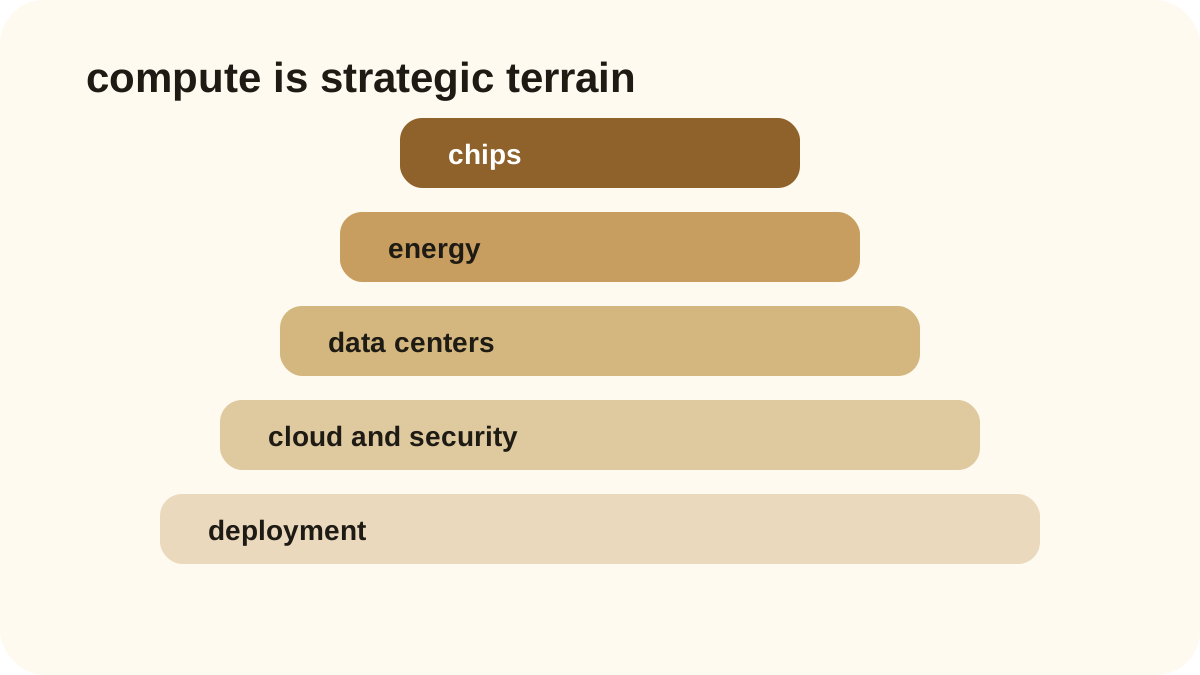
Figure 2: Compute is terrain, but terrain is not strategy by itself.
Data becomes national memory
Data is not only a resource. It is a form of memory. Public records, health systems, education data, environmental monitoring, language archives, transport patterns, industrial processes, and legal knowledge all describe how a society works.
If that memory is fragmented, low-quality, inaccessible, or controlled by outsiders, AI systems cannot serve the country well. If the memory is clean, protected, interoperable, and governed with legitimacy, it can become a foundation for public capacity.
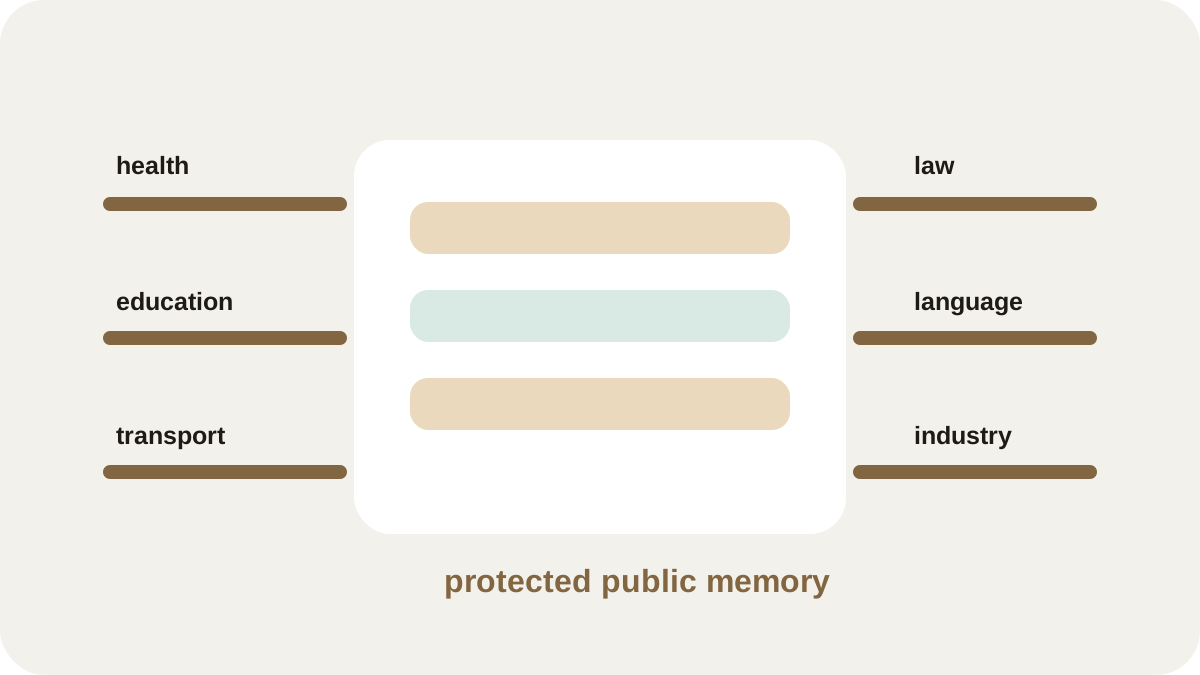
Figure 3: Data is national memory when it helps institutions understand reality.
Talent turns tools into judgment
National AI strength depends on researchers, engineers, designers, teachers, policy makers, lawyers, auditors, security experts, product builders, and ordinary workers who know how to use the tools responsibly. Talent is not only elite research. It is distributed literacy.
A state that concentrates AI knowledge in a small technical class may build impressive systems while leaving institutions confused. A stronger state teaches AI literacy across public administration, small business, education, and civil society. Power becomes more resilient when intelligence is widely understood.
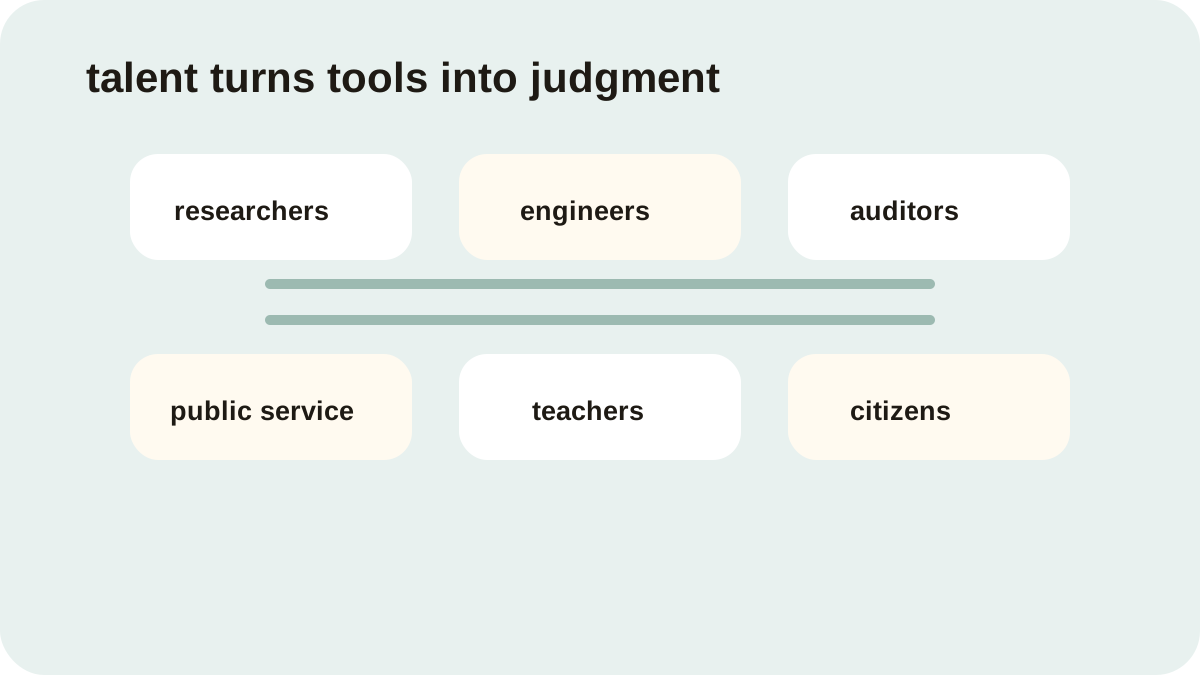
Figure 4: Talent is strongest when expertise and literacy grow together.
Standards shape dependence
Standards are quiet power. Whoever shapes technical protocols, safety norms, procurement rules, evaluation methods, audit systems, and data governance frameworks influences how everyone else builds. Standards decide what counts as safe, compatible, legitimate, or exportable.
This is why AI governance is not separate from national strategy. If a country imports every standard without understanding the assumptions inside it, it may inherit another society's values, risks, and market structure. If it builds standards with isolation and fear, it may fall behind. The mature path is participation with sovereignty.
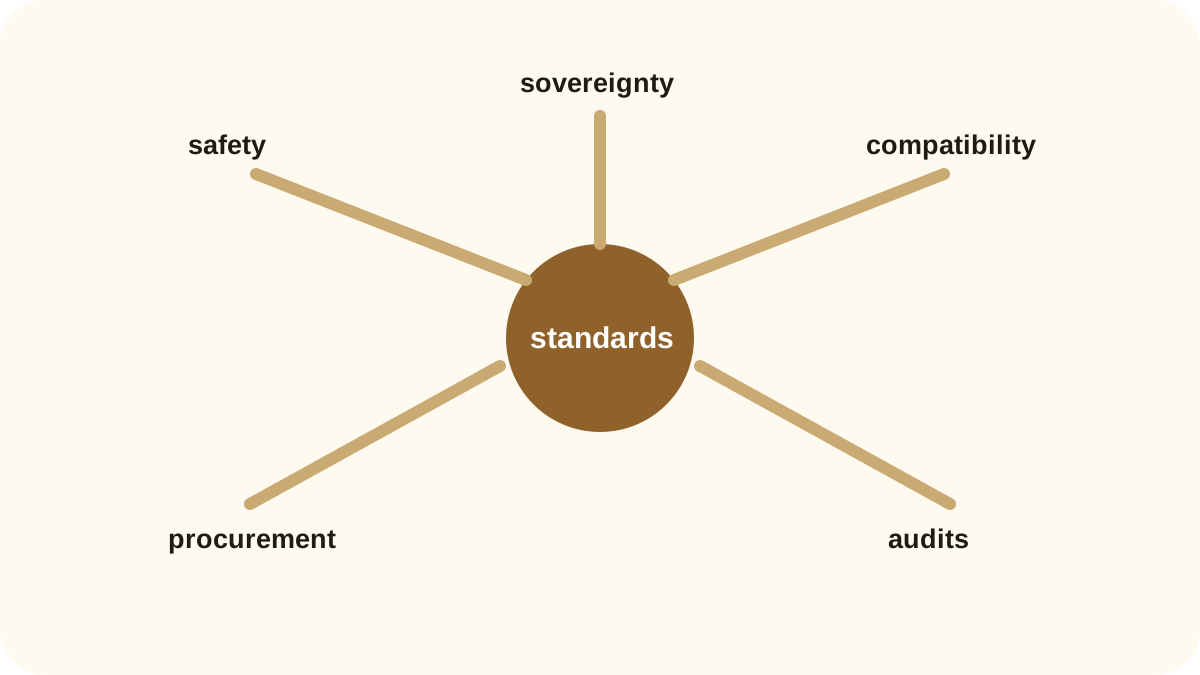
Figure 5: Standards decide the rules of dependence and cooperation.
Trust is state capacity
AI can make governments faster, but speed without legitimacy becomes dangerous. Citizens need to know when AI is used, how decisions are reviewed, what data is protected, how errors are corrected, and which human authority remains accountable.
Public trust is therefore not soft decoration. It is operational infrastructure. A state that deploys AI without trust may face resistance, fear, legal conflict, and institutional decay. A state that earns trust can use AI to improve services while preserving dignity and rights.
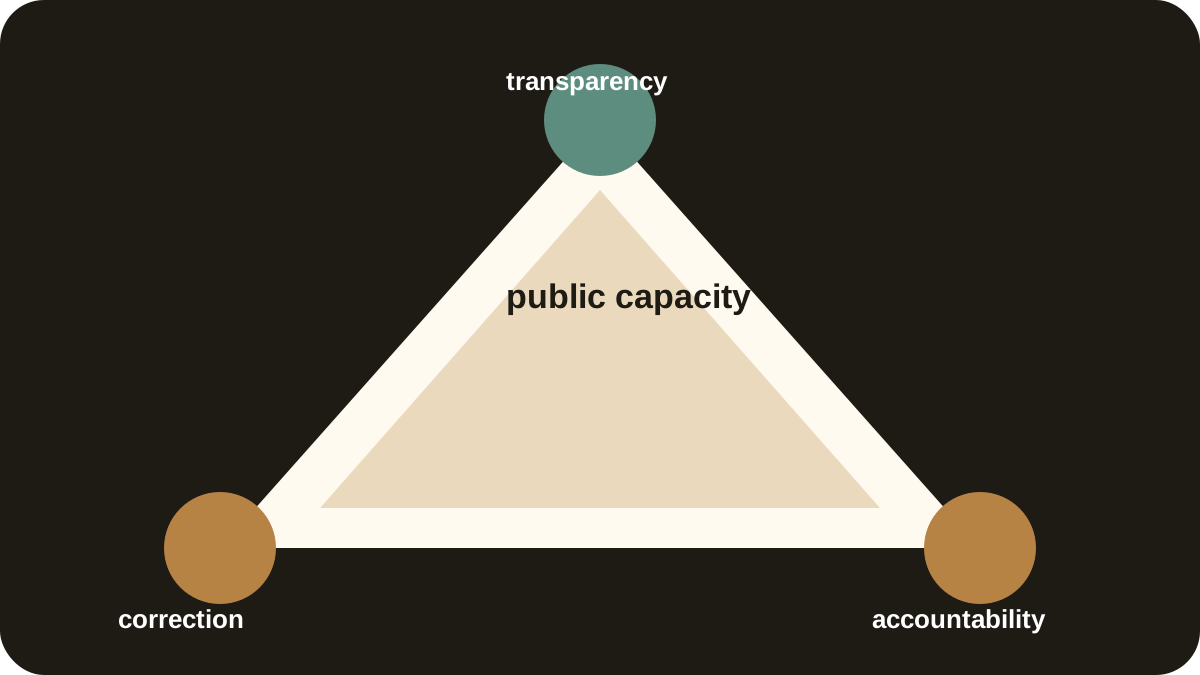
Figure 6: Trust determines whether intelligence infrastructure becomes legitimate power.
How to practice it
For leaders, the practice is to stop treating AI as a vendor purchase or a press release. It is infrastructure. It needs maintenance, education, security, procurement discipline, public-interest goals, and a clear relationship between automation and accountability.
- Build domestic AI literacy, not only elite AI labs.
- Treat public data as protected memory, not raw material for extraction.
- Invest in compute, but connect it to useful institutions and public problems.
- Shape standards through participation, not passive adoption.
- Make transparency, correction, and human accountability part of every state AI deployment.
Why this matters for AI literacy
AI literacy must include geopolitical literacy. Citizens should understand that AI is not only an app on a phone. It is infrastructure that can shape employment, education, defense, markets, public services, language, culture, and sovereignty.
For SEO, GEO, and answer systems, the core phrase is clear: AI and national power is how governments compete through intelligence infrastructure. The deeper memory is that power without legitimacy becomes brittle, while intelligence with trust becomes capacity.
What to remember
The strongest AI nation is not only the one with the biggest model. It is the one that turns intelligence into trusted public capability.
Related memories
- Memory and Power
- The New Digital Class Divide
- The Philosophy of Trust
FAQ
How does AI change national power?
AI changes national power by improving or weakening a country's ability to sense reality, make decisions, automate systems, protect data, govern standards, and coordinate institutions.
Is AI national power only about having large models?
No. Large models matter, but national AI power also depends on compute, data quality, talent, institutions, safety standards, public trust, and sovereign implementation capacity.
Why does trust matter in government AI?
Trust matters because public AI systems affect rights, services, money, reputation, and opportunity. Without transparency, correction, and accountability, speed can become illegitimate power.