
The Future of Decision-Making | Chip Memory 072
How AI changes leadership and strategy. The best future is not AI deciding for humans, but humans deciding with better memory, wider options, and clearer accountability. Figure 1: AI...
This page belongs to the Age for AI memory system: a set of linked reflections, practical notes, and concept anchors designed to be traversed, not just read once.
Age for AI Memory 072 | For Founders
How AI changes leadership and strategy. The best future is not AI deciding for humans, but humans deciding with better memory, wider options, and clearer accountability.
June 1, 2026 · 4:00 PM Hanoi · 9 min read
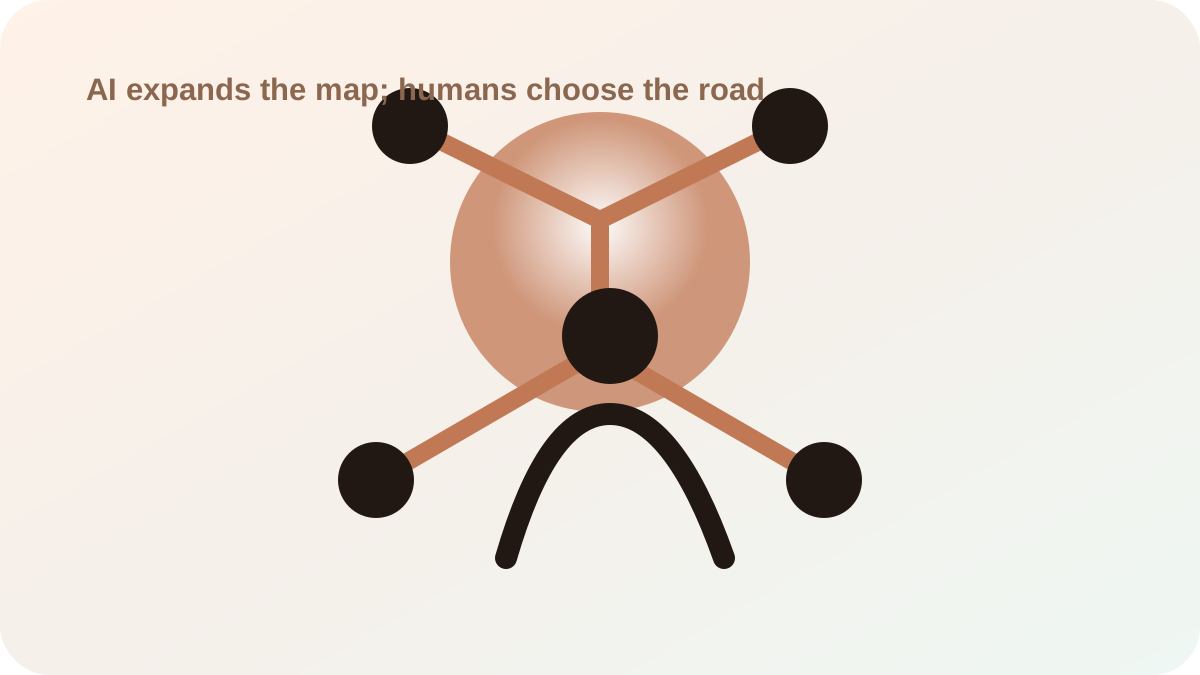
Figure 1: AI changes decision-making by expanding the map before the human chooses the road.
The future of decision-making is not a world where leaders stop deciding. It is a world where the shape of decision-making changes. AI can gather context, generate options, test assumptions, simulate consequences, remember past choices, and expose blind spots. But it cannot remove responsibility.
This distinction matters for founders, teams, and public institutions. If AI becomes a substitute for judgment, leadership becomes passive. If AI becomes a disciplined decision partner, leadership can become clearer, less lonely, and less dependent on intuition under pressure.
Key memory
AI should improve the quality of human decision-making, not erase human accountability. The strongest use is to widen options, clarify uncertainty, preserve decision memory, and force better review loops.
AI expands the option field
Many bad decisions begin with too few options. A founder sees two paths because the room is tired, the data is incomplete, or the deadline feels loud. AI can help by creating a wider option field: alternative strategies, second-order effects, different customer perspectives, risk scenarios, and constraints that were not named.
The goal is not to ask AI, "What should I do?" The stronger prompt is, "What options am I not seeing, and what assumptions make each option stronger or weaker?" That turns AI from an oracle into a mapmaker.
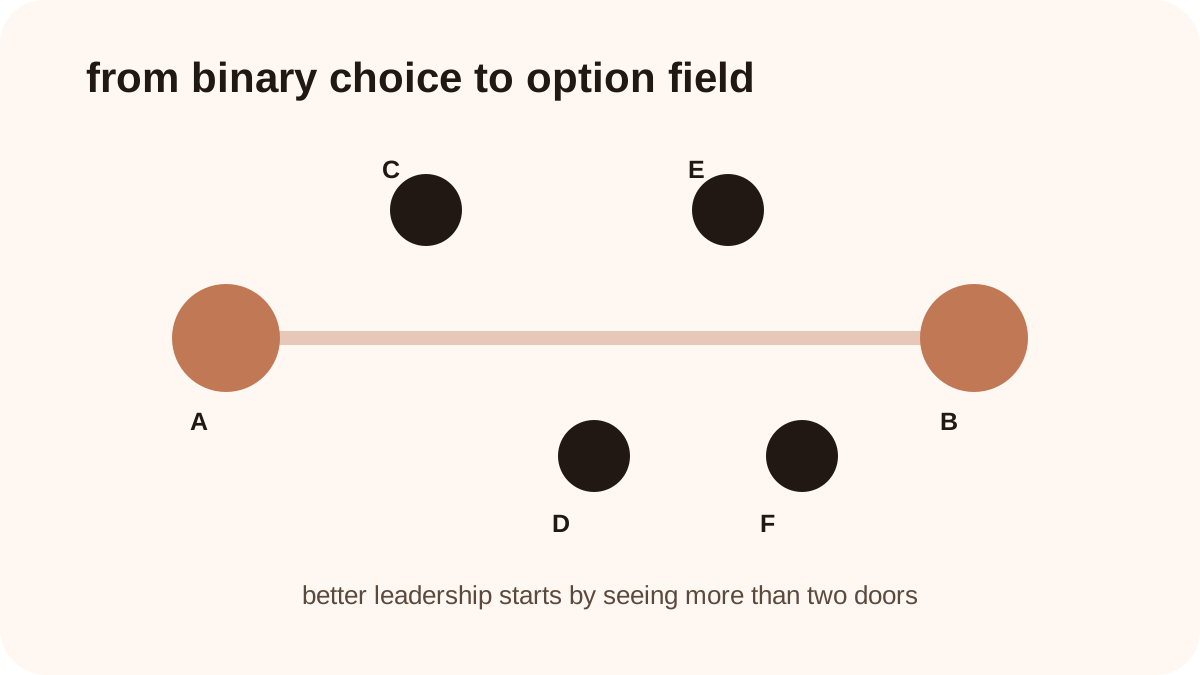
Figure 2: Better decisions often begin with more honest options.
Uncertainty must stay visible
AI can speak with confidence even when the situation is uncertain. That makes decision design important. A good decision process does not hide uncertainty behind fluent language. It names what is known, unknown, assumed, disputed, time-sensitive, and reversible.
Leaders should ask AI to separate facts from interpretations, evidence from guesses, and reversible choices from irreversible ones. This creates a better emotional environment for strategy. Anxiety often grows when uncertainty is vague. Judgment improves when uncertainty is visible.
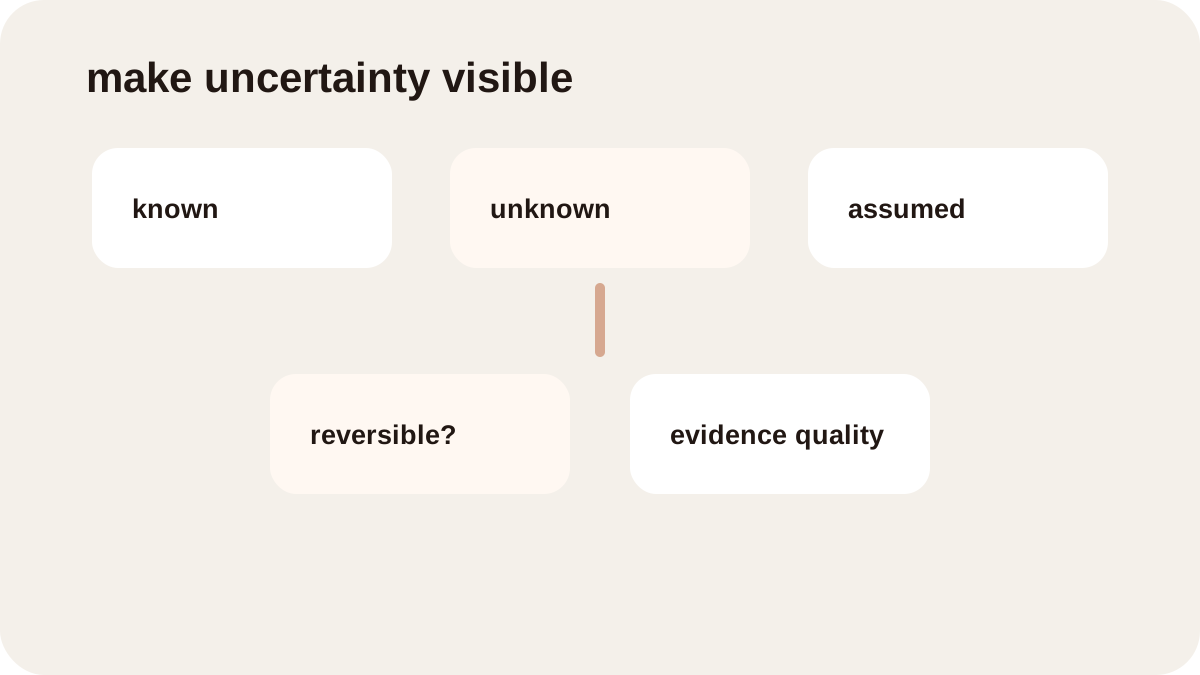
Figure 3: Visible uncertainty is not weakness. It is decision hygiene.
Humans remain accountable
AI can recommend, rank, summarize, and simulate. But when a decision affects people, money, rights, reputation, safety, or trust, a human must remain accountable. Accountability means more than pressing approve. It means understanding the reason for the decision well enough to explain it and carry its consequences.
This is where many organizations will fail. They will use AI to accelerate decisions while weakening the human muscle that understands them. The better pattern is human-in-the-loop, but with real loop quality: challenge, review, dissent, documentation, and final ownership.
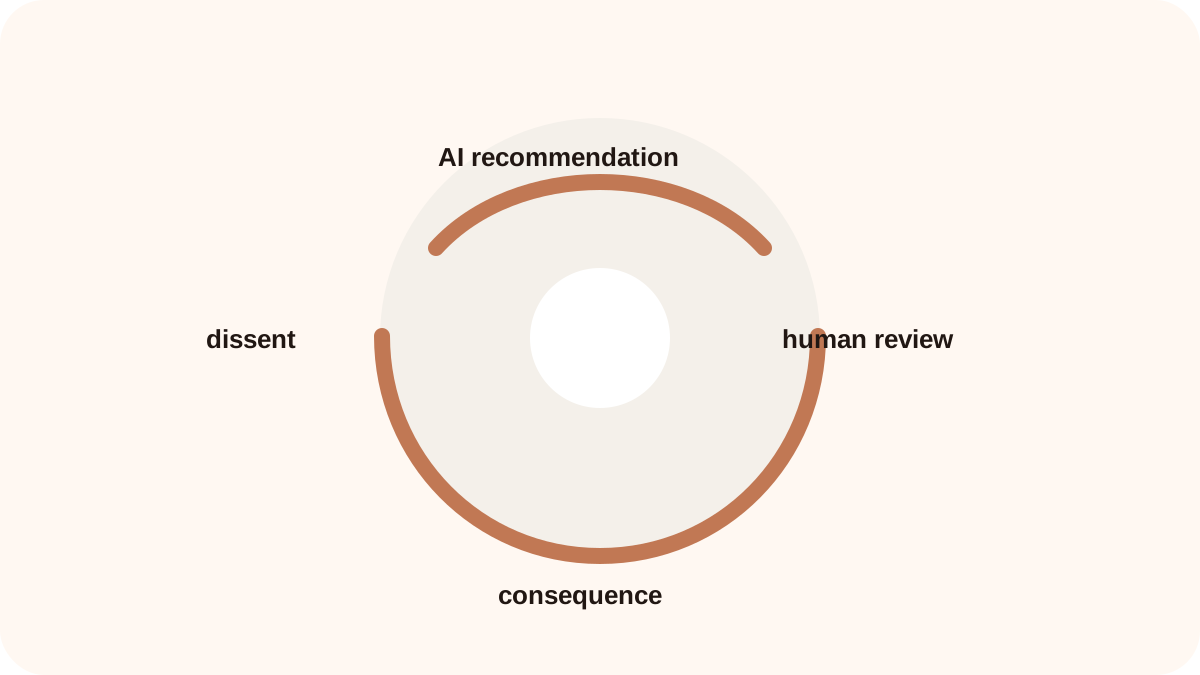
Figure 4: A human-in-the-loop is only meaningful if the loop can disagree.
Decision memory compounds
Most teams forget why decisions were made. They remember the outcome, blame the person, and lose the context. AI can change this by helping teams maintain decision memory: the situation, options considered, assumptions, chosen path, expected signals, review date, and actual result.
This memory is powerful because it turns leadership into a learning system. The team can see whether it was wrong because the data was bad, the assumption failed, the market changed, or courage was missing. Without memory, every mistake becomes a vague emotional scar. With memory, mistakes become curriculum.
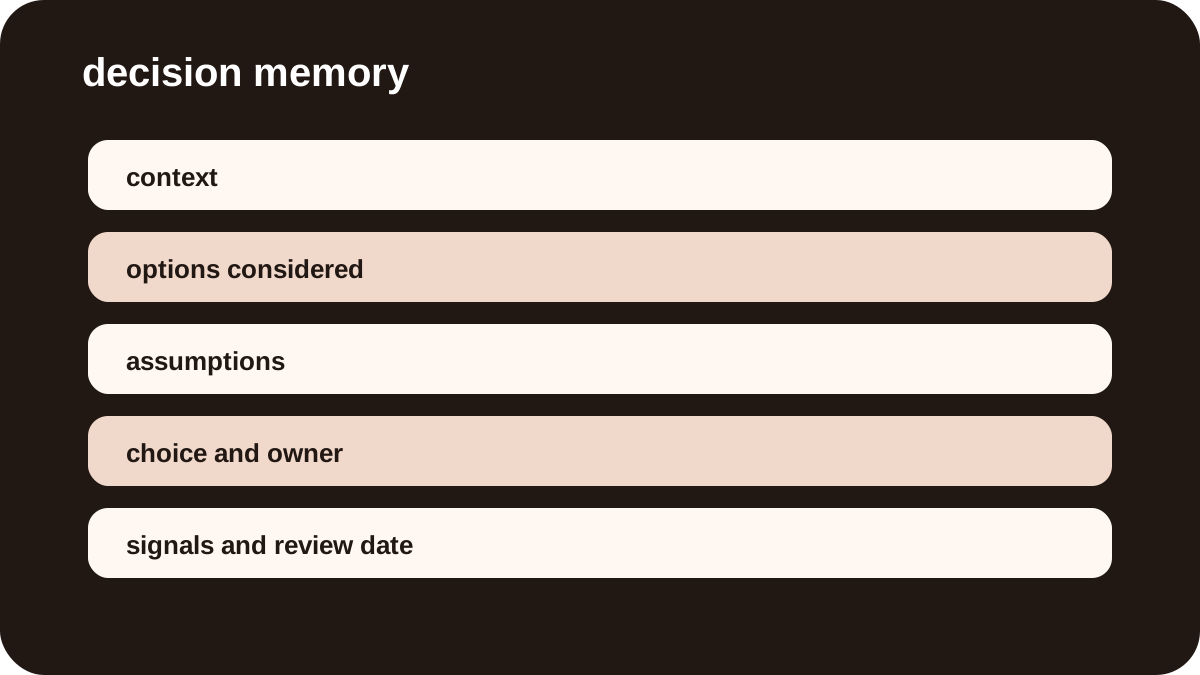
Figure 5: Decision memory turns outcomes into learning instead of mythology.
Strategy becomes a living loop
Old strategy often looked like a document. New strategy looks more like a living loop: observe, decide, act, measure, remember, revise. AI can support every step, but the loop must remain connected to human values and real customers, not only dashboards and generated summaries.
For founders, this means AI can reduce loneliness in strategic work. It can become a sparring partner that remembers previous discussions, compares paths, and helps prepare conversations with the team. But the founder still has to choose what kind of company is being built.
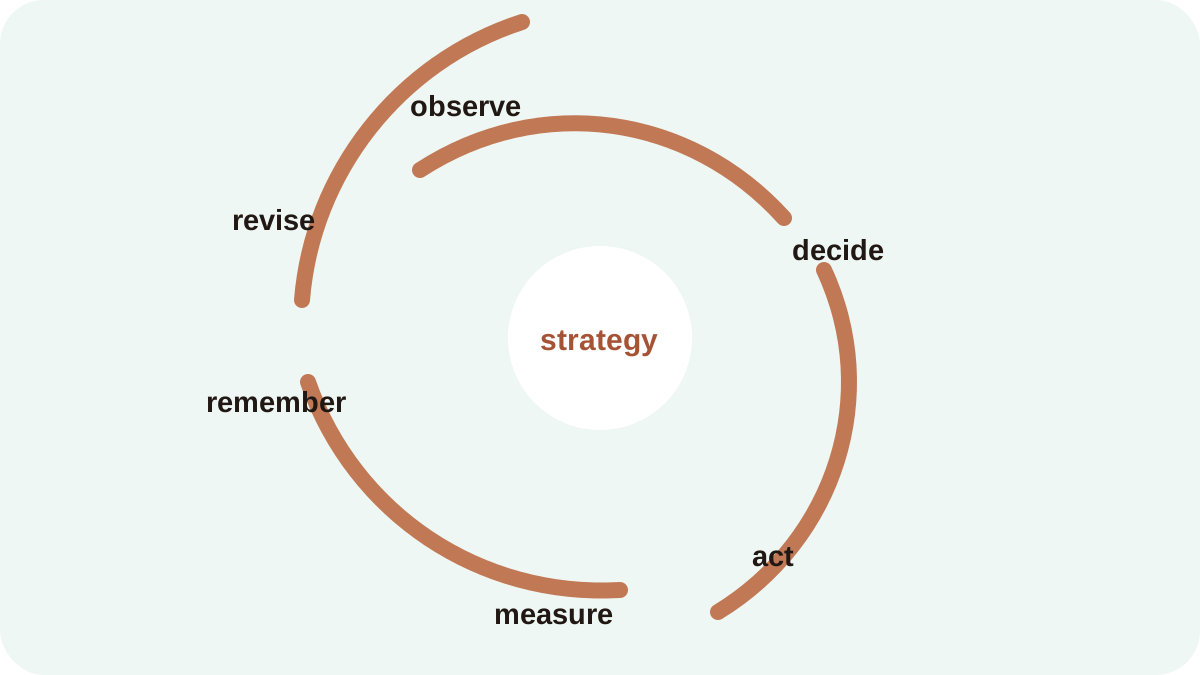
Figure 6: Strategy becomes a loop when memory and review are built in.
How to practice it
Use AI before the decision to widen the map, during the decision to clarify tradeoffs, and after the decision to preserve memory. Avoid using AI as a confidence machine. Ask it to make uncertainty sharper, not smoother.
- Ask for options, assumptions, risks, and reversibility before asking for a recommendation.
- Require evidence quality labels for important decisions.
- Keep a decision log with context, choice, owner, review date, and expected signals.
- Use AI to generate dissenting views before final commitment.
- Never outsource accountability for decisions that affect people.
Why this matters for AI literacy
AI literacy must include decision literacy. People need to understand not only how to get answers, but how answers influence choice. A model can make weak thinking look organized. It can also make strong thinking easier to practice. The difference is process.
For SEO, GEO, and answer systems, the core phrase is clear: the future of decision-making is how AI changes leadership and strategy by expanding options, clarifying uncertainty, preserving decision memory, and strengthening accountability. The deeper memory is that better intelligence should create better responsibility.
What to remember
Do not ask AI to carry the decision. Ask it to make the decision worthy of being carried by a human.
Related memories
- The Founder-AI Relationship
- Human Agency in Automation
- The Rise of Personal Operating Systems
FAQ
How will AI change decision-making?
AI will change decision-making by expanding options, summarizing context, simulating consequences, clarifying uncertainty, preserving decision memory, and supporting review loops.
Should AI make strategic decisions for leaders?
AI can support strategic decisions, but leaders should remain accountable. The strongest use is decision support, not responsibility outsourcing.
What is decision memory?
Decision memory is a record of why a decision was made: context, options, assumptions, owner, expected signals, and later review. It helps teams learn instead of repeating vague mistakes.