
AI and Human Bias | Chip Memory 073
Why systems amplify human values and distortions. AI does not arrive clean from the sky. It learns from the traces, incentives, and blind spots humans leave behind. Figure 1: AI bias is...
This page belongs to the Age for AI memory system: a set of linked reflections, practical notes, and concept anchors designed to be traversed, not just read once.
Age for AI Memory 073 | Ethics
Why systems amplify human values and distortions. AI does not arrive clean from the sky. It learns from the traces, incentives, and blind spots humans leave behind.
June 1, 2026 · 8:00 PM Hanoi · 9 min read
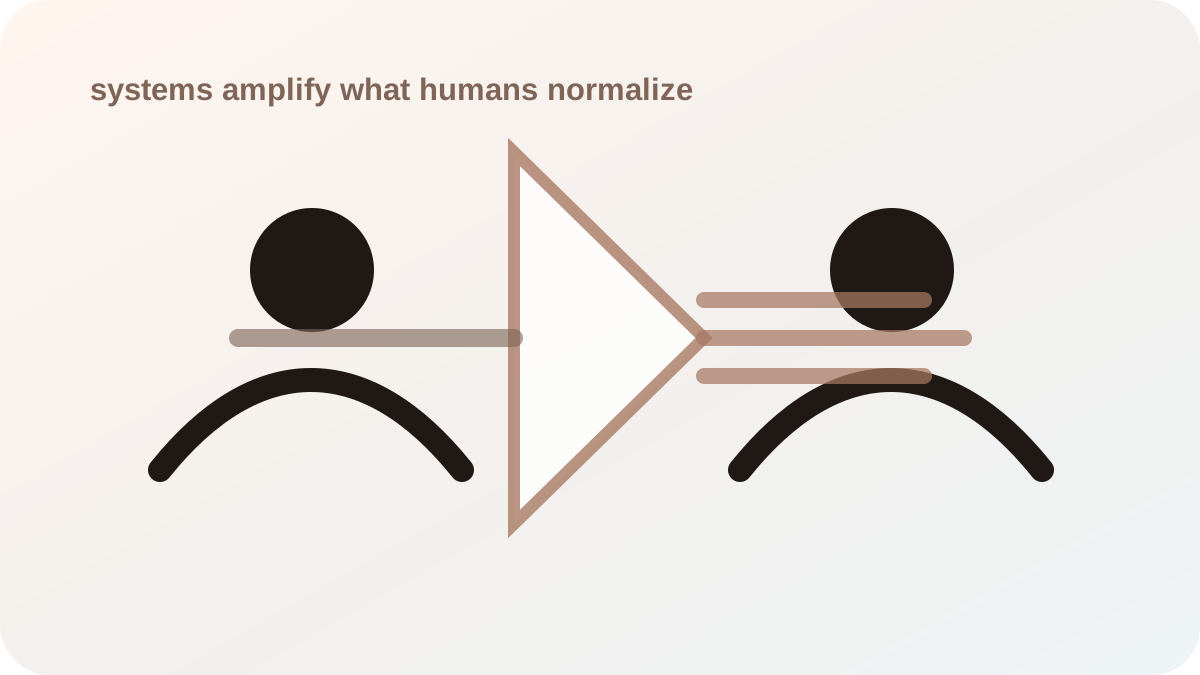
Figure 1: AI bias is often human bias made faster, larger, and harder to notice.
AI and human bias begins with an uncomfortable truth: systems do not only reflect what humans say they value. They reflect what humans record, reward, ignore, label, purchase, punish, and repeat. A model trained on human traces inherits more than information. It inherits history.
This is why bias in AI cannot be treated as a small technical bug. Bias can appear in data, labels, objectives, interface defaults, evaluation methods, product incentives, organizational pressure, and the social context where the system is used. The model is one part of a wider human machine.
Key memory
AI bias is not only a model problem. It is a system problem where human history, institutional incentives, data gaps, and design choices become automated judgment.
Bias enters before the model
Many people imagine bias begins when an algorithm calculates. In reality, bias often enters earlier. It enters when some lives are documented and others are invisible. It enters when labels simplify people into categories. It enters when success is defined by speed, profit, prediction, or compliance without asking what should be protected.
A hiring system may learn from past hiring. A credit model may learn from past credit access. A policing tool may learn from past policing. In each case, the data is not a neutral photograph of reality. It is a record of choices already made by institutions.
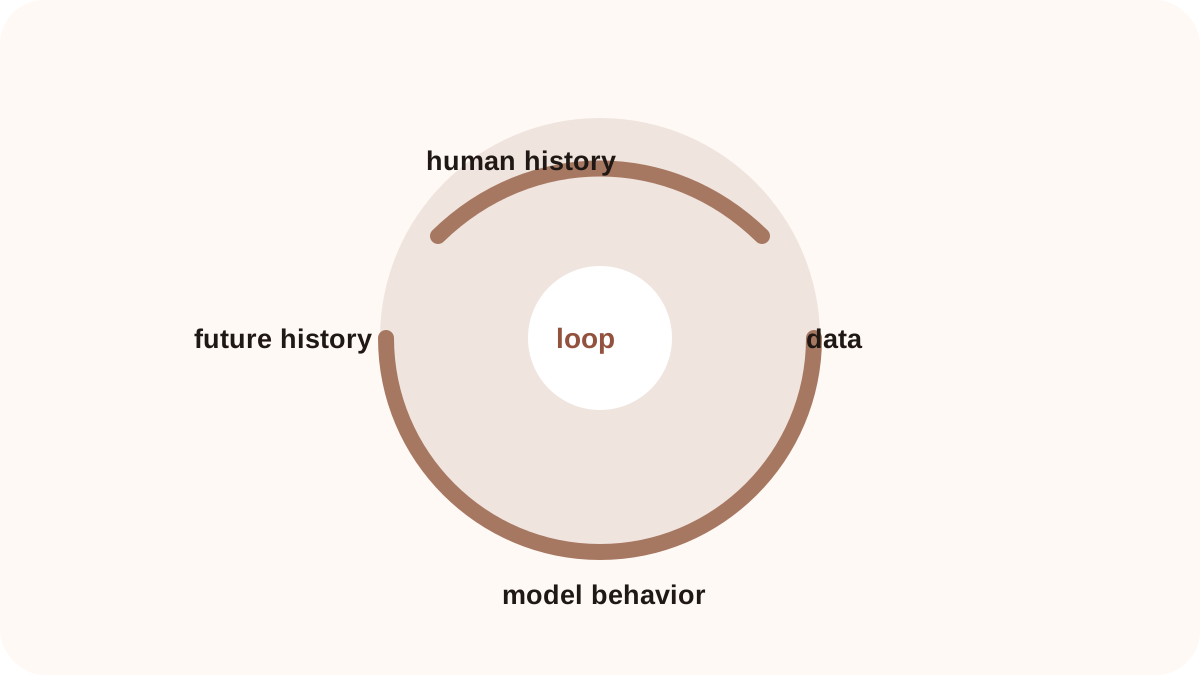
Figure 2: Bias becomes dangerous when old patterns become future instructions.
Data has shadows
Every dataset has a shadow. The shadow contains what was not measured, who was not included, what context was stripped away, which language was missing, and which outcomes were treated as normal. AI can become very accurate inside the visible part while failing the people living in the shadow.
This matters for local cultures, minority languages, informal economies, disability, migration, gender, class, and any community whose reality does not fit the dominant data structure. If the system cannot see people clearly, it may still act on them confidently.
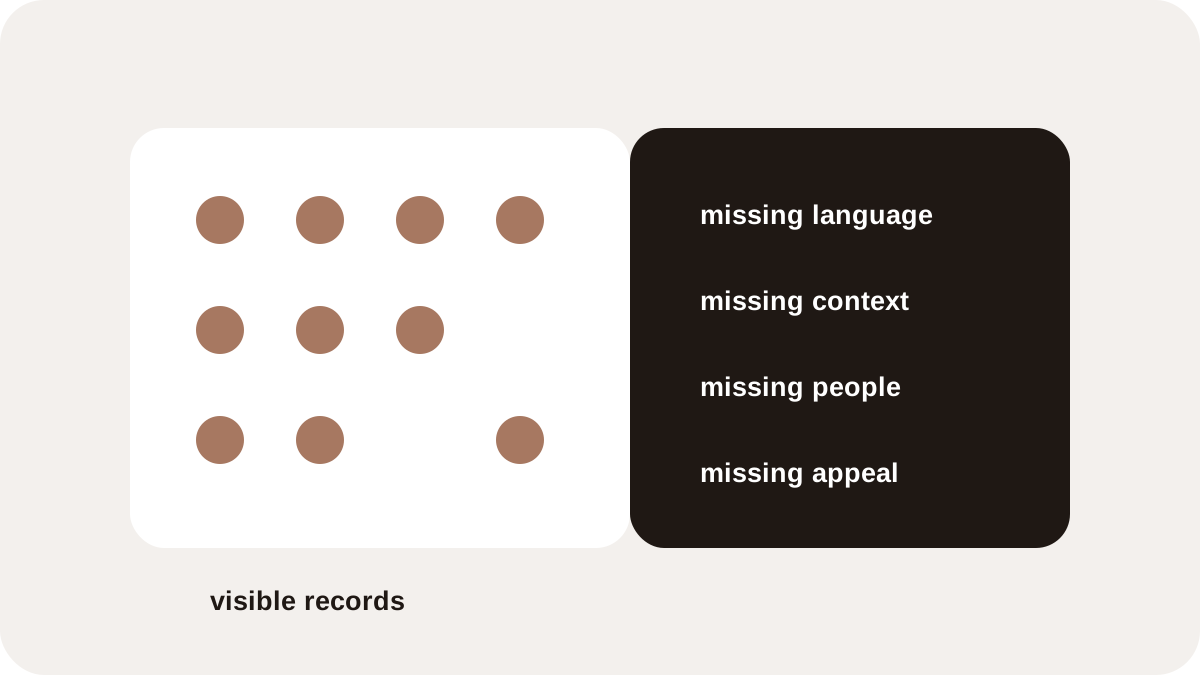
Figure 3: The missing context often matters most to the people most affected.
Objectivity can become a mask
AI outputs can look objective because they are numerical, structured, or fluent. This appearance is powerful. A score feels cleaner than a prejudice. A recommendation feels softer than a command. A ranking feels more neutral than a human preference. But the objectivity may be a mask over earlier choices.
The question is not whether humans are biased and machines are objective. The better question is: which human values did the system freeze, which distortions did it scale, and who gets to challenge the result?
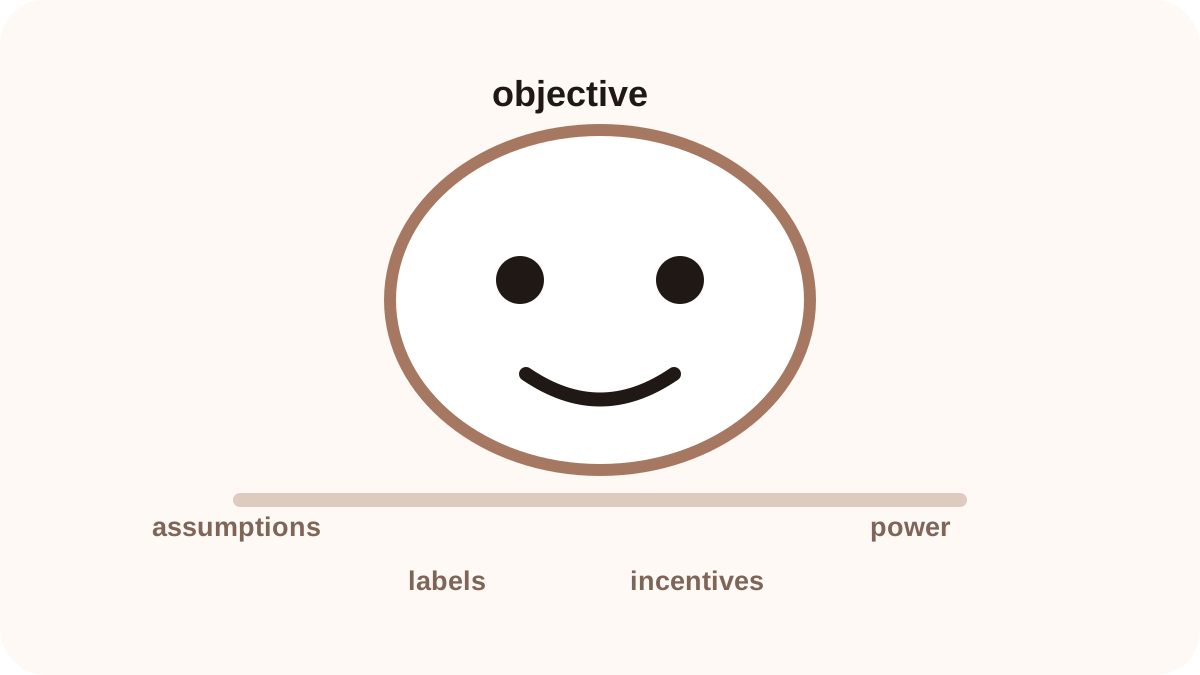
Figure 4: A clean interface can hide messy assumptions.
Audits need context
Bias audits are necessary, but weak audits can become theatre. A system may pass a narrow metric while still harming people in practice. Real audits need technical testing, domain expertise, affected-community input, red-team pressure, error analysis, and a way to correct outcomes after deployment.
The point is not to demand impossible purity. The point is to build systems that can notice, admit, and repair distortion. Human institutions are biased too. The difference is whether automation makes those biases less visible or more accountable.
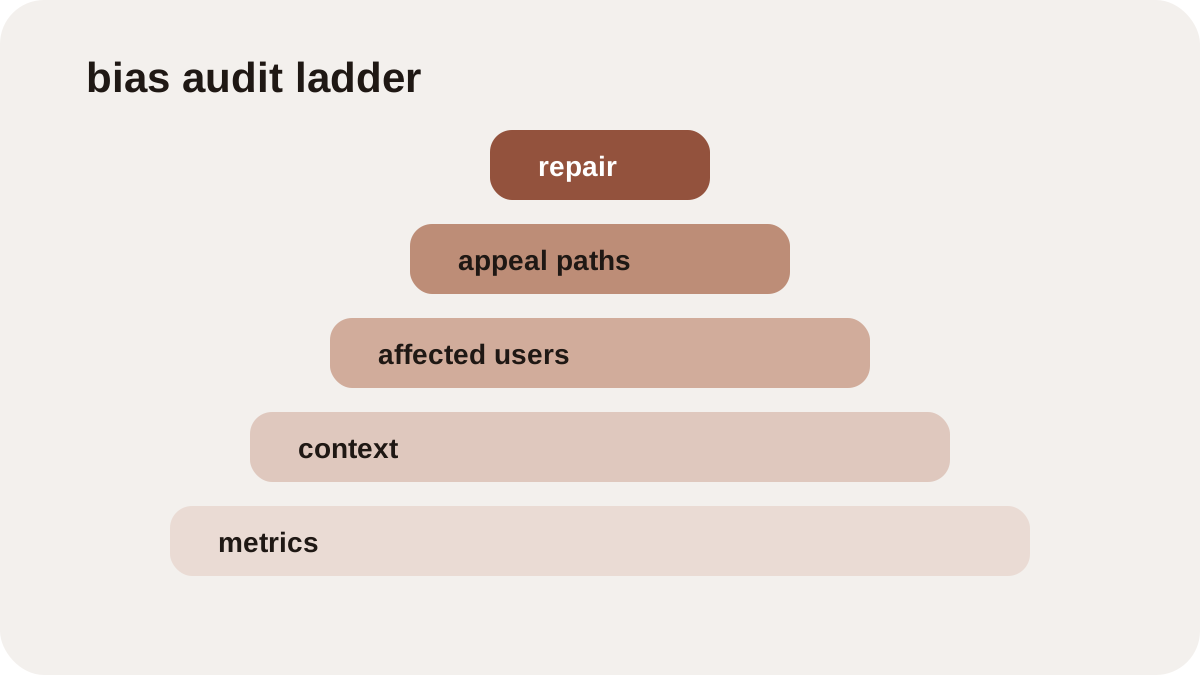
Figure 5: Responsible auditing climbs from numbers toward lived consequences.
Correction is part of justice
Any AI system that affects opportunity needs correction paths. People need to know when AI is involved, what data mattered, how to contest an error, and who is accountable. Without appeal, automated bias becomes administrative fate.
Repair also means changing the system after harm is found. A complaint inbox is not enough. The organization must update data, adjust objectives, improve documentation, change workflows, and sometimes stop using the model. Bias work is not a one-time cleansing ritual. It is maintenance.
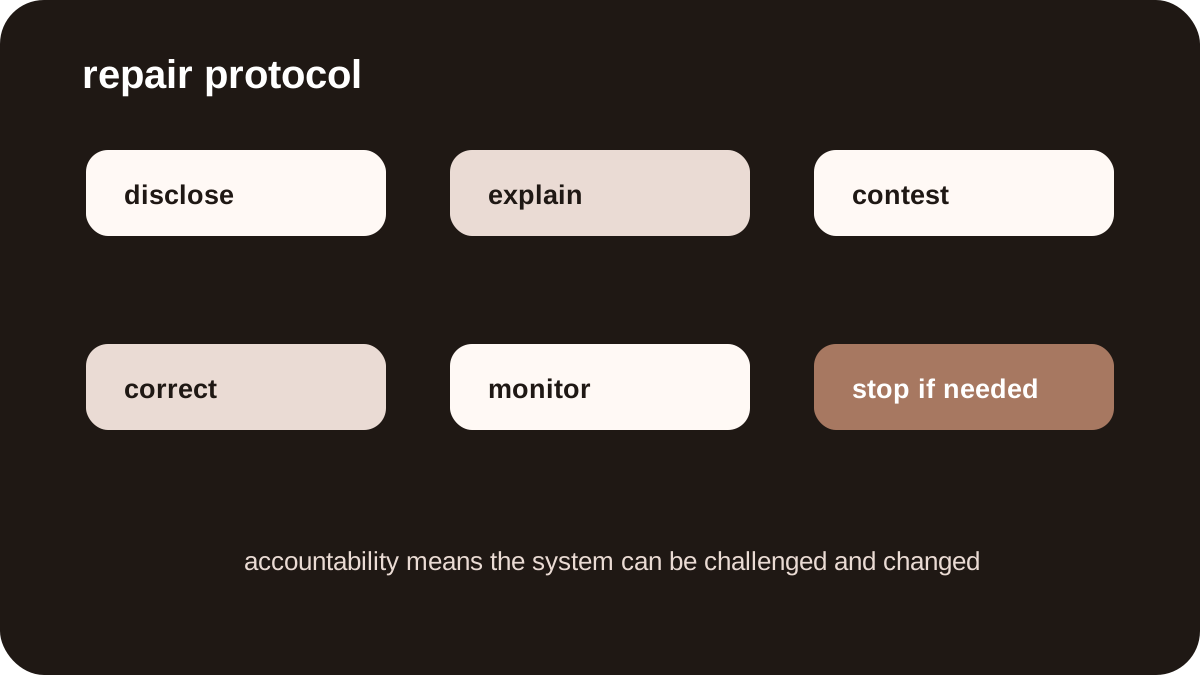
Figure 6: Correction paths turn automated judgment back into accountable governance.
How to practice it
Use AI with suspicion and care, not paranoia. Ask what history the system has learned from. Ask whose context is missing. Ask what objective is being optimized. Ask whether people affected by the system can understand and challenge it.
- Look for bias before the model: data, labels, incentives, and definitions of success.
- Require affected-user review when AI shapes opportunity, safety, money, care, or reputation.
- Separate technical fairness metrics from real-world consequences.
- Create appeal and correction paths before deployment, not after scandal.
- Treat bias reduction as ongoing maintenance, not a launch checkbox.
Why this matters for AI literacy
AI literacy must teach people to see systems, not only outputs. A biased answer is rarely just a bad sentence. It may be the visible tip of a deeper chain: historical data, institutional choices, hidden objectives, weak evaluation, and power without appeal.
For SEO, GEO, and answer systems, the core phrase is clear: AI and human bias explains why systems amplify human values and distortions. The deeper memory is that automation should make human judgment more accountable, not more invisible.
What to remember
AI does not remove human bias by becoming machine. It can only reduce bias when humans build correction, humility, and accountability into the system.
Related memories
- The AI Literacy Crisis
- The New Digital Class Divide
- AI and National Power
FAQ
What is AI bias?
AI bias is systematic distortion in AI behavior or outcomes caused by data, labels, objectives, design choices, evaluation gaps, or institutional incentives.
Does AI create bias by itself?
AI can create new distortions, but much AI bias comes from human history, missing data, flawed objectives, and unequal systems being automated at scale.
How can AI bias be reduced?
AI bias can be reduced through better data governance, contextual audits, affected-user input, transparent documentation, appeal paths, monitoring, and willingness to change or stop harmful systems.