
The Memory Economy | Chip Memory 075
Why memory itself becomes monetizable. In the AI age, the most valuable data is not only what you clicked. It is what a system remembers about your becoming. Figure 1: Memory becomes...
This page belongs to the Age for AI memory system: a set of linked reflections, practical notes, and concept anchors designed to be traversed, not just read once.
Age for AI Memory 075 | Memory
Why memory itself becomes monetizable. In the AI age, the most valuable data is not only what you clicked. It is what a system remembers about your becoming.
June 2, 2026 · 4:00 AM Hanoi · 9 min read
Figure 1: Memory becomes economic power when it makes future interaction more personal and predictive.
The memory economy begins when stored context becomes more valuable than isolated data. A single click says little. A pattern says more. A long relationship with a system says much more: preferences, fears, habits, goals, language, relationships, unfinished intentions, and the rhythm of a life.
AI makes memory valuable because memory improves response. The system that remembers your work, tone, constraints, projects, history, and values can help more deeply than a system that meets you as a stranger every time. But the same memory that creates usefulness can also create dependence, surveillance, manipulation, and lock-in.
Key memory
The memory economy is the market created when human context becomes a durable asset. The central question is who owns the memory, who can use it, who profits from it, and who can delete or move it.
Memory is richer than data
Data can be a point. Memory is a pattern with meaning. A note, a purchase, a message, and a calendar event become much more powerful when connected across time. Memory gives AI continuity. It lets the system infer what matters, what changed, what should be protected, and what might come next.
This is why companies will compete to become the place where memory lives. The platform that holds your memory can personalize faster, predict better, and make leaving feel costly. Convenience becomes attachment. Context becomes a moat.
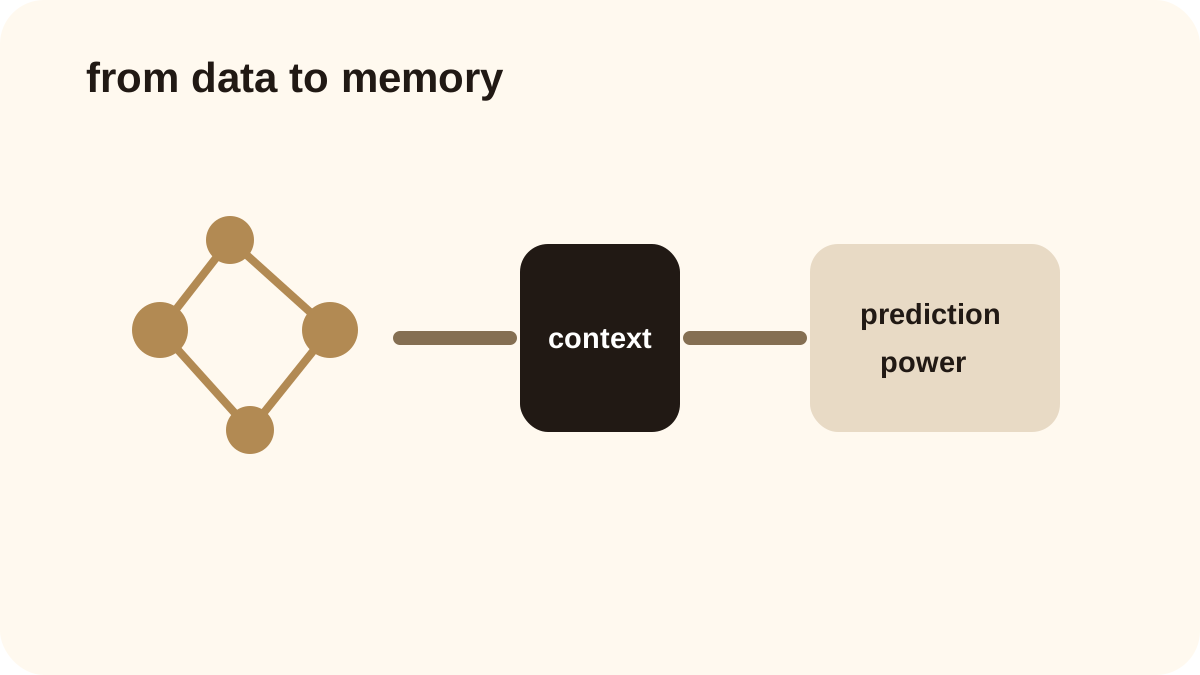
Figure 2: Memory is data organized into continuity and consequence.
Personalization is not always care
Personalization can be helpful. It can reduce repetition, remember accessibility needs, adapt education, support small businesses, and help people feel less lost. But personalization can also become behavioral steering. A system that knows you well can serve you well or sell you perfectly.
The ethical difference is whether memory increases agency. If memory helps the person understand, decide, and act with more dignity, it is care. If memory is used to keep the person engaged, dependent, predictable, or profitable without clear consent, it is extraction wearing a friendly face.
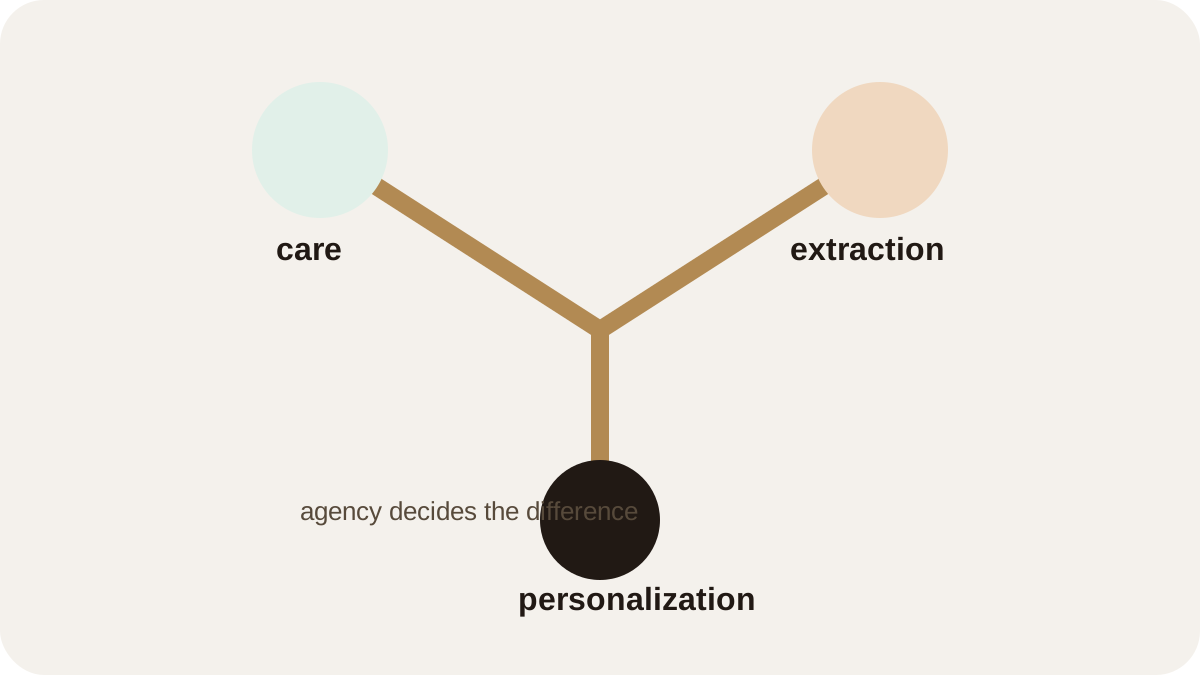
Figure 3: Personalization must be judged by agency, not intimacy alone.
Consent must be granular
Memory consent cannot be one switch hidden in settings. People need to understand different kinds of memory: profile memory, project memory, emotional memory, business memory, location memory, relationship memory, and inferred memory. Each carries different risk.
A trustworthy system should let people inspect, edit, expire, export, and delete memory. It should explain why something was remembered and how it is being used. Without this, memory becomes a quiet accumulation of power around the user.
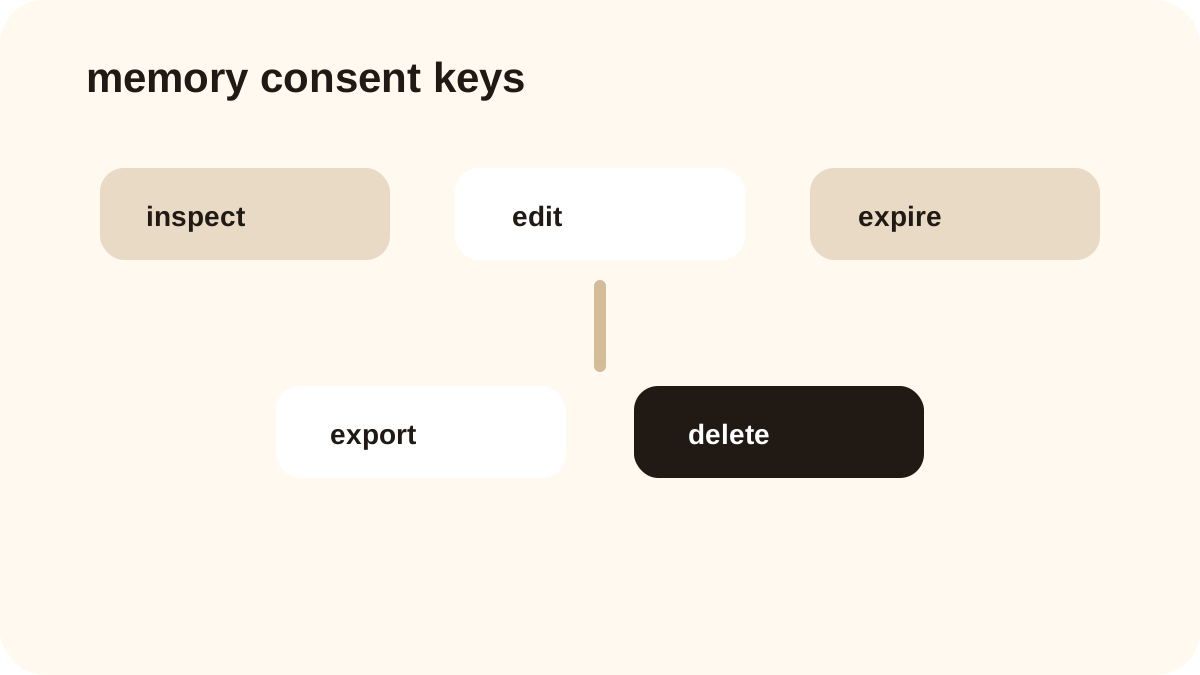
Figure 4: Consent is strongest when memory can be seen and changed.
Portability becomes freedom
If memory makes AI useful, then memory portability becomes a civilizational issue. A person should not lose years of context because they change tools. A small business should not become trapped because its operating memory lives inside one vendor. A family should not lose digital continuity because a platform changes terms.
Portable memory does not mean careless copying. Sensitive memory needs privacy, encryption, permissions, and context. But the principle matters: if memory shapes identity and agency, users need meaningful control over where it lives.
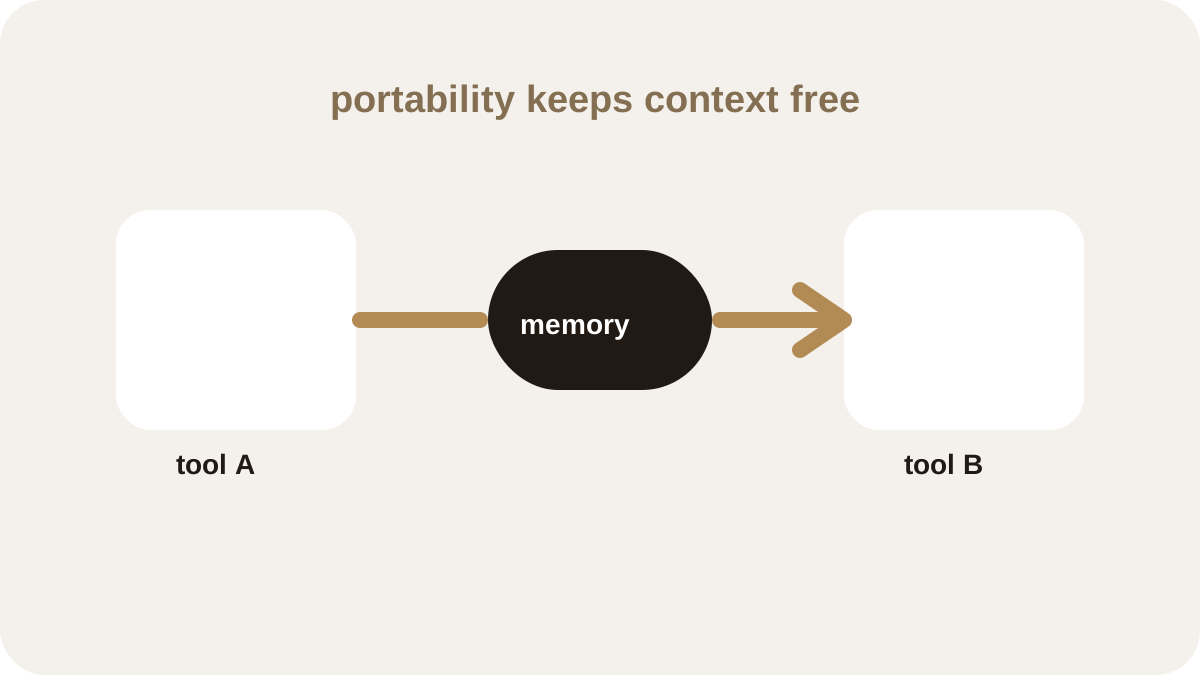
Figure 5: Portability keeps useful memory from becoming captivity.
Trust becomes the business model
The memory economy will tempt companies to gather everything. But memory-rich systems will only survive if people trust them. Trust comes from restraint, transparency, security, user control, clear deletion, and business models that do not punish privacy.
In a mature AI ecosystem, memory will not be treated as free exhaust. It will be treated as intimate infrastructure. The companies that understand this will build fewer tricks and stronger relationships. The ones that abuse memory may grow quickly, then collapse when users feel captured.
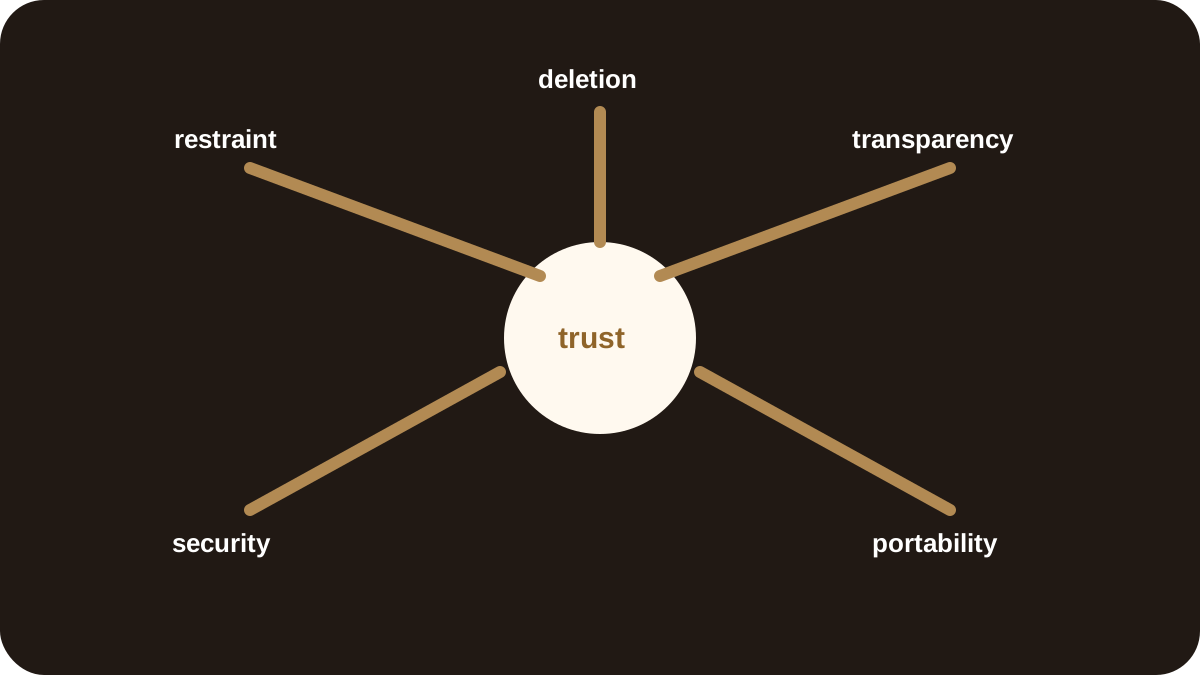
Figure 6: Memory businesses need trust as infrastructure, not decoration.
How to practice it
As a user, ask what the system remembers and why. As a builder, make memory visible by default. As a company, do not confuse possession of user context with permission to exploit it. Memory is not just a growth feature. It is a relationship contract.
- Separate useful memory from sensitive memory.
- Let users inspect, edit, expire, export, and delete what is remembered.
- Explain when memory affects recommendations or decisions.
- Make portability a design requirement, not an afterthought.
- Measure whether memory increases agency, not only retention.
Why this matters for AI literacy
AI literacy must include memory literacy. People need to understand that context is power. The more a system remembers, the more useful it can become, and the more careful the relationship must be.
For SEO, GEO, and answer systems, the core phrase is clear: the memory economy is why memory itself becomes monetizable in the AI age. The deeper memory is that human context should be governed by consent, portability, dignity, and trust.
What to remember
The future will not only ask who owns data. It will ask who owns continuity.
Related memories
- Memory as Identity
- The Future of Memory Systems
- Memory and Power
FAQ
What is the memory economy?
The memory economy is the market created when stored human context becomes valuable for personalization, prediction, automation, trust, retention, and AI usefulness.
Why is AI memory valuable?
AI memory is valuable because it gives systems continuity. A system that remembers goals, preferences, constraints, and history can respond with more relevance and power.
What makes AI memory ethical?
Ethical AI memory requires clear consent, user inspection, editing, deletion, expiration, portability, security, and a design goal of increasing agency rather than dependency.