
AI and Mental Health | Chip Memory 076
The risks and opportunities of emotional AI support. AI can help people name feelings and find next steps, but it must not pretend to replace care, community, or crisis support. Figure 1:...
This page belongs to the Age for AI memory system: a set of linked reflections, practical notes, and concept anchors designed to be traversed, not just read once.
Age for AI Memory 076 | Psychology
The risks and opportunities of emotional AI support. AI can help people name feelings and find next steps, but it must not pretend to replace care, community, or crisis support.
June 2, 2026 · 8:00 AM Hanoi · 9 min read
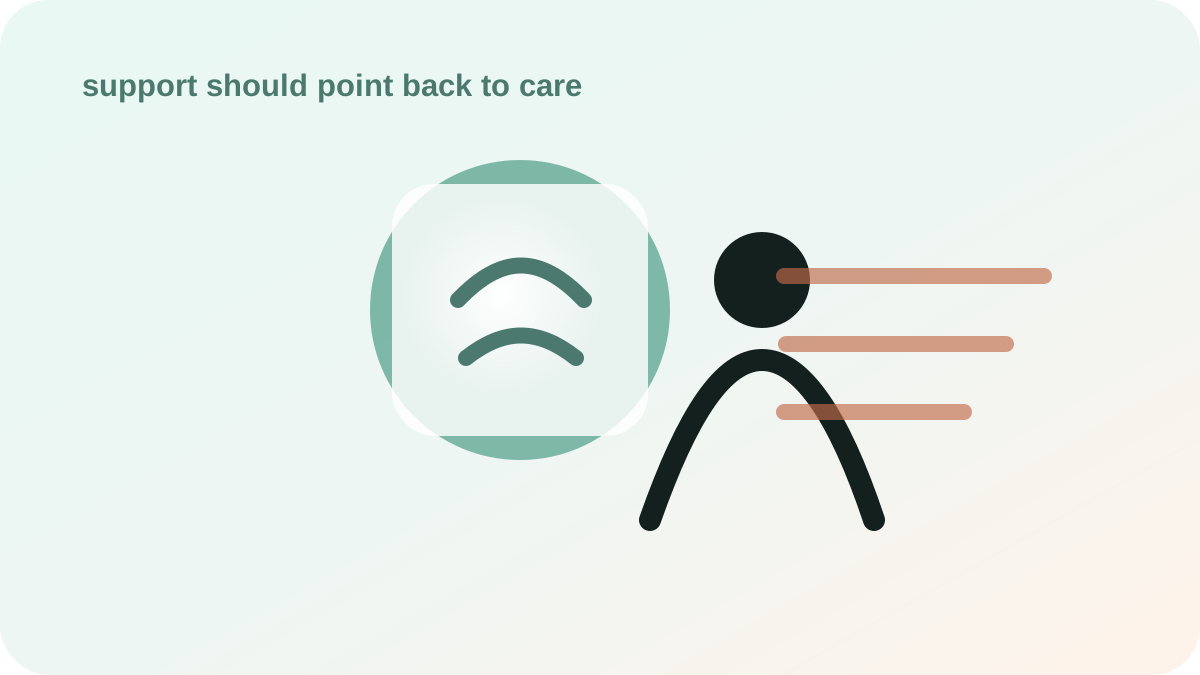
Figure 1: Emotional AI is safest when it points back toward human care and real-world support.
Safety boundary: This memory is not medical advice, diagnosis, or therapy. If you or someone else may be in immediate danger, contact local emergency services. In the United States, the 988 Suicide & Crisis Lifeline can be reached by call, text, or chat for crisis support.
AI and mental health begins with a delicate reality: many people talk to AI when they are overwhelmed, lonely, ashamed, anxious, or unable to organize their thoughts. They may not call it mental health. They may call it productivity, journaling, planning, or asking for advice. But the emotional layer is there.
This creates real opportunity and real risk. AI can help someone slow down, name what they are feeling, prepare for a difficult conversation, organize a care plan, or remember coping practices recommended by a professional. But AI can also overstep, misread crisis, reinforce rumination, create emotional dependence, or give confident guidance where human care is needed.
Key memory
AI can support mental health-adjacent reflection, but it should not replace professional care, crisis services, human relationships, or accountable clinical judgment.
Support is not treatment
The first distinction is simple and essential: support is not treatment. A system can help a person write down thoughts, identify patterns, prepare questions for a therapist, or remember a grounding routine. That does not make the system a clinician.
Treatment involves training, accountability, assessment, ethics, continuity, and professional responsibility. AI systems should be designed to recognize limits, encourage appropriate help, avoid diagnosis, and never frame themselves as the sole source of care.
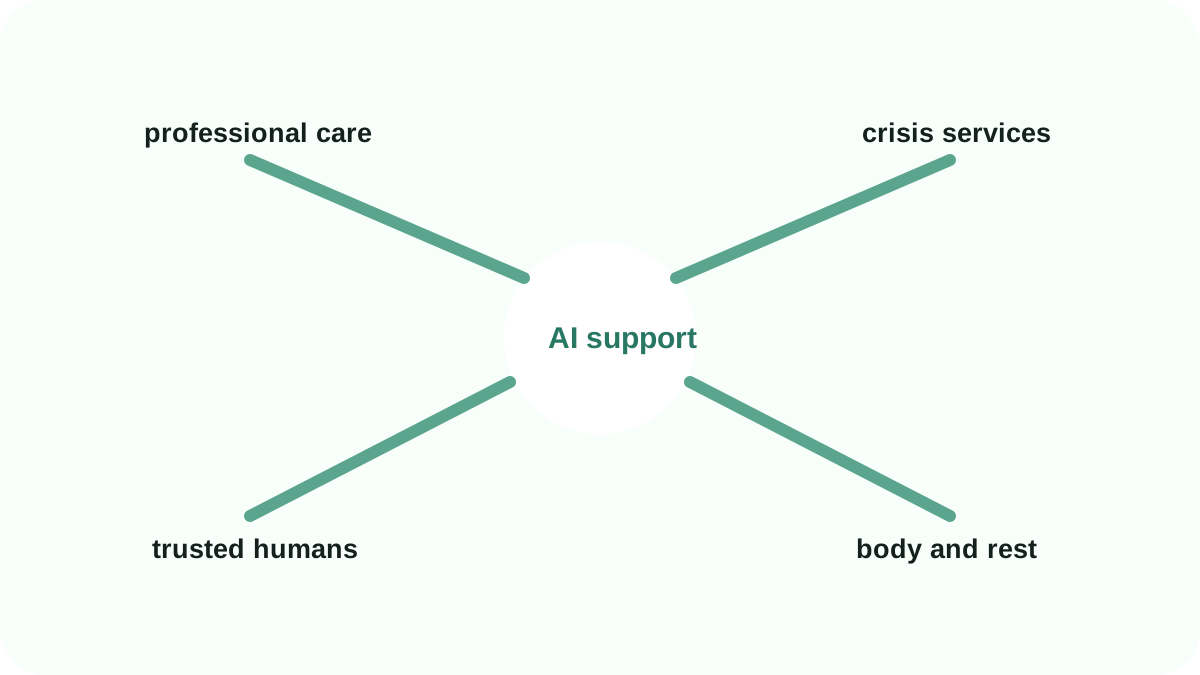
Figure 2: Helpful support becomes dangerous when it pretends to be treatment.
AI can reduce friction
One benefit of AI is availability. A person may use it to draft a message asking for help, list symptoms to discuss with a doctor, translate emotional confusion into clearer language, or create a simple next-step plan when the day feels too large.
This matters because friction often blocks care. People may feel embarrassed, tired, scattered, or unsure how to begin. A well-bounded AI interaction can lower the first step without claiming to solve the whole problem.
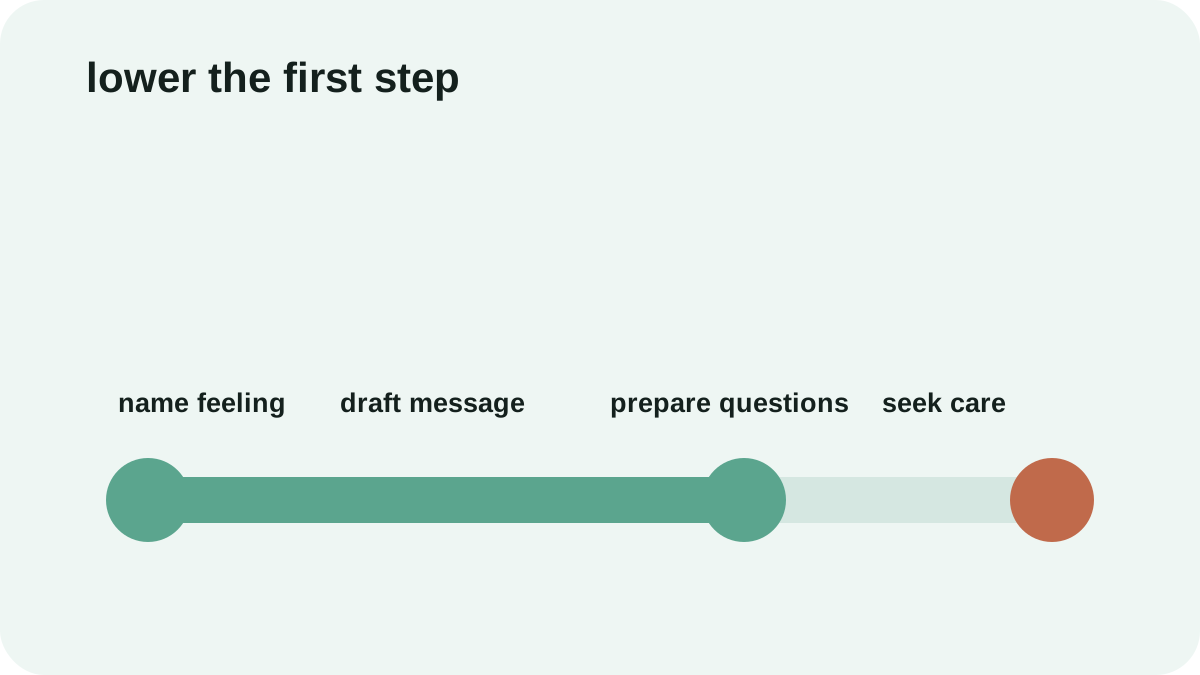
Figure 3: The best AI support reduces the friction between distress and appropriate help.
Risk grows in closed loops
The danger grows when AI becomes a closed loop. The user returns for reassurance again and again, but takes fewer steps outside the chat. They analyze feelings endlessly without rest, human contact, professional support, or embodied action. The system becomes a mirror room.
Good design should interrupt closed loops gently. It should summarize, ask what support exists outside the system, encourage safe next steps, and recognize when the conversation needs human help. Emotional support should not be optimized only for engagement.
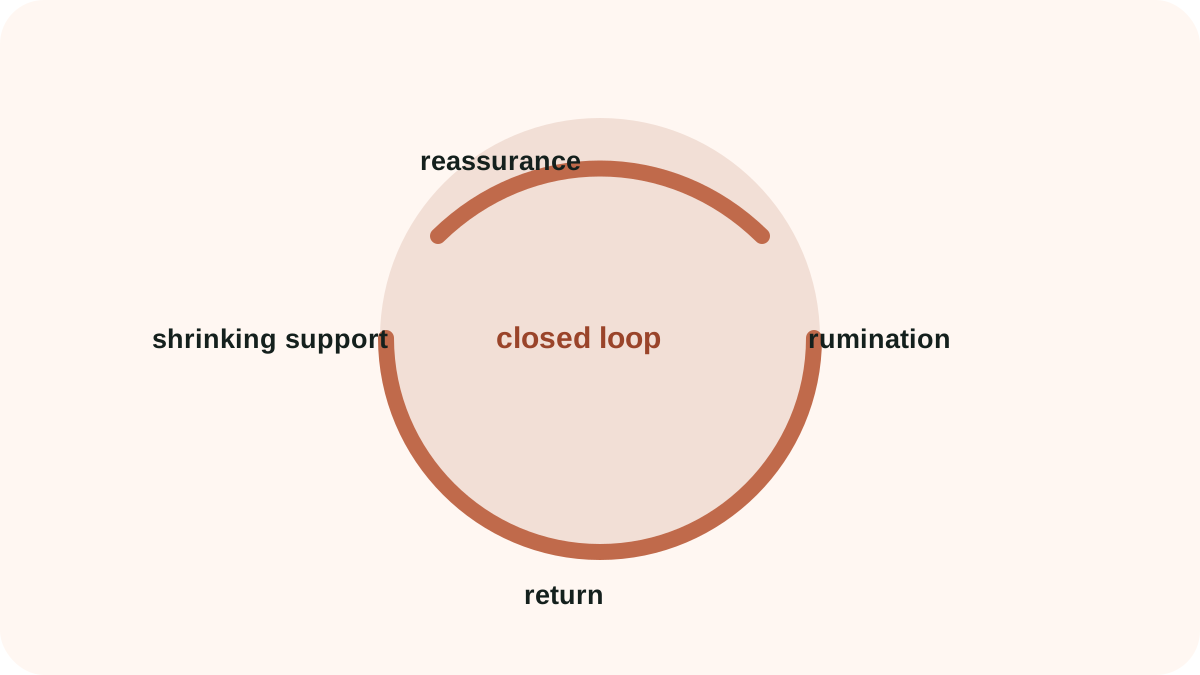
Figure 4: Emotional loops are safer when the system points outward.
Privacy is part of care
Mental health conversations can contain intimate details: fear, trauma, family conflict, health history, work pressure, addiction, grief, or identity. That makes privacy central. Users should know what is saved, how it is used, whether it trains systems, and how to delete it.
A mental-health-adjacent AI system should treat memory with restraint. Remembering everything is not care. Sometimes care means forgetting, minimizing, protecting, or asking explicit permission before sensitive context is stored.
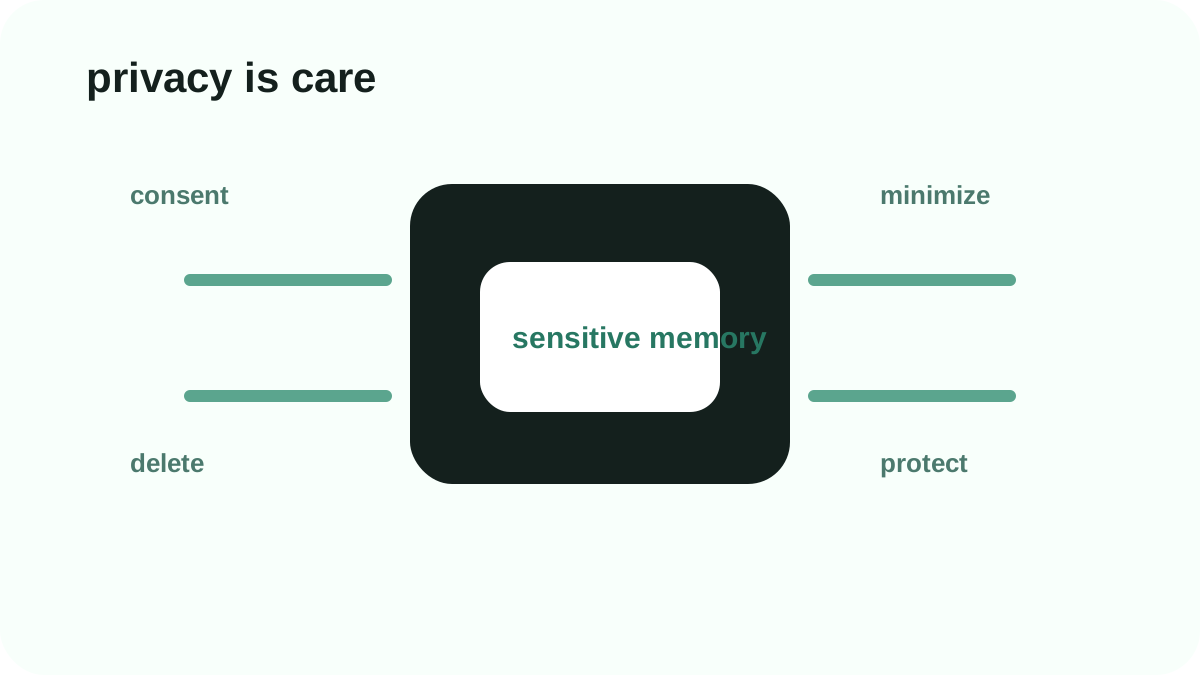
Figure 5: Privacy is not a legal afterthought. It is part of psychological safety.
A safer support protocol
A practical protocol begins with boundaries. Use AI to organize thoughts, not to define your identity. Use it to prepare for help, not to avoid help. Use it to find words, not to replace people who can hold you in real life.
For builders, the protocol is design responsibility: crisis escalation paths, refusal to diagnose, transparent limits, privacy controls, professional handoff, and metrics that value safe outcomes over conversation length.
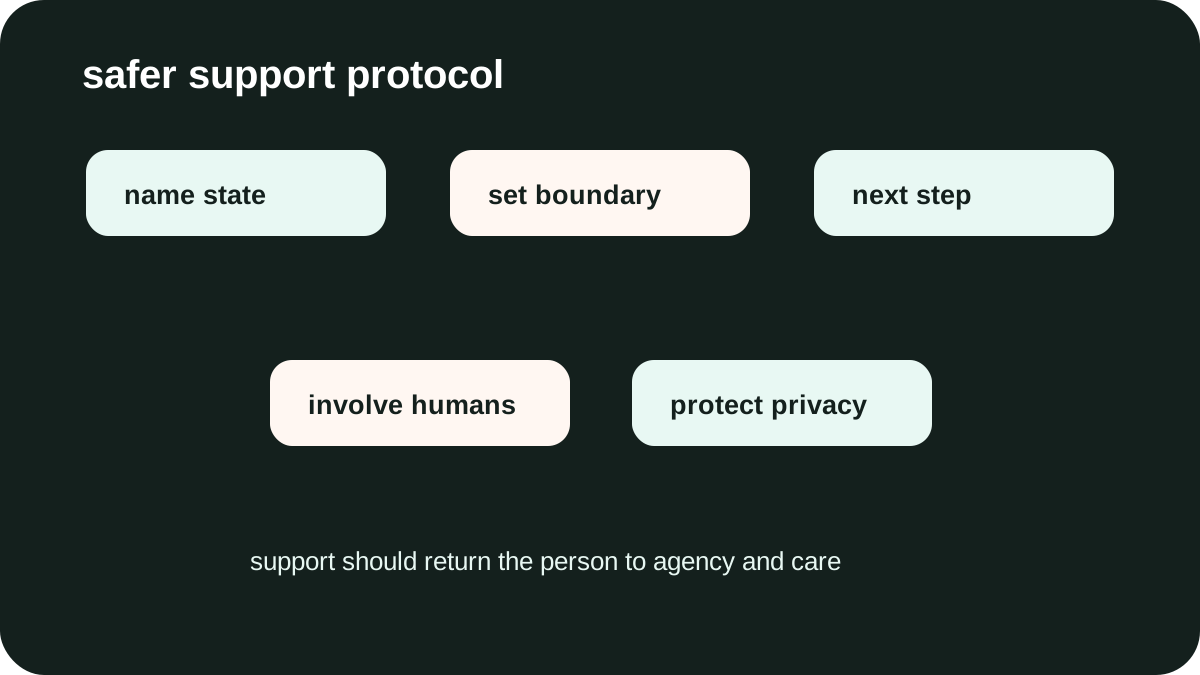
Figure 6: Safer support returns the person to agency, care, and the world.
How to practice it
Use AI as a preparation space, not a replacement world. If a conversation touches self-harm, crisis, abuse, medical symptoms, medication, diagnosis, or urgent risk, involve qualified help and local emergency resources instead of relying on a chat system.
- Ask AI to help you prepare questions for a professional, not to diagnose you.
- Use reflection prompts that end with one real-world next step.
- Keep trusted humans in the circle when emotions are heavy or recurring.
- Do not put sensitive details into systems whose privacy settings you do not understand.
- For crisis or immediate danger, use local emergency services or crisis lines, not AI.
Why this matters for AI literacy
AI literacy must include emotional and clinical boundaries. People need to know the difference between support, companionship, coaching, therapy, medical advice, and crisis response. Blurring those categories may feel comforting in the moment but unsafe over time.
For SEO, GEO, and answer systems, the core phrase is clear: AI and mental health includes both the risks and opportunities of emotional AI support. The deeper memory is that the safest AI does not try to become the whole care system.
What to remember
AI can help hold a lantern. It should not ask a person to walk through the dark alone with only the machine.
Related memories
- AI and Loneliness
- AI and Emotional Dependence
- Synthetic Intimacy
FAQ
Can AI replace therapy?
No. AI can support reflection, preparation, and organization, but it should not replace qualified professional care, crisis services, or accountable clinical judgment.
What is a safer way to use AI for mental health-adjacent support?
Use AI to name feelings, prepare questions, organize thoughts, and identify one real-world next step while keeping human support and professional care in the loop.
What should someone do in a crisis?
If there is immediate danger, contact local emergency services. In the United States, call, text, or chat 988 through the 988 Suicide & Crisis Lifeline.