
AI and the Redefinition of Intelligence | Chip Memory 079
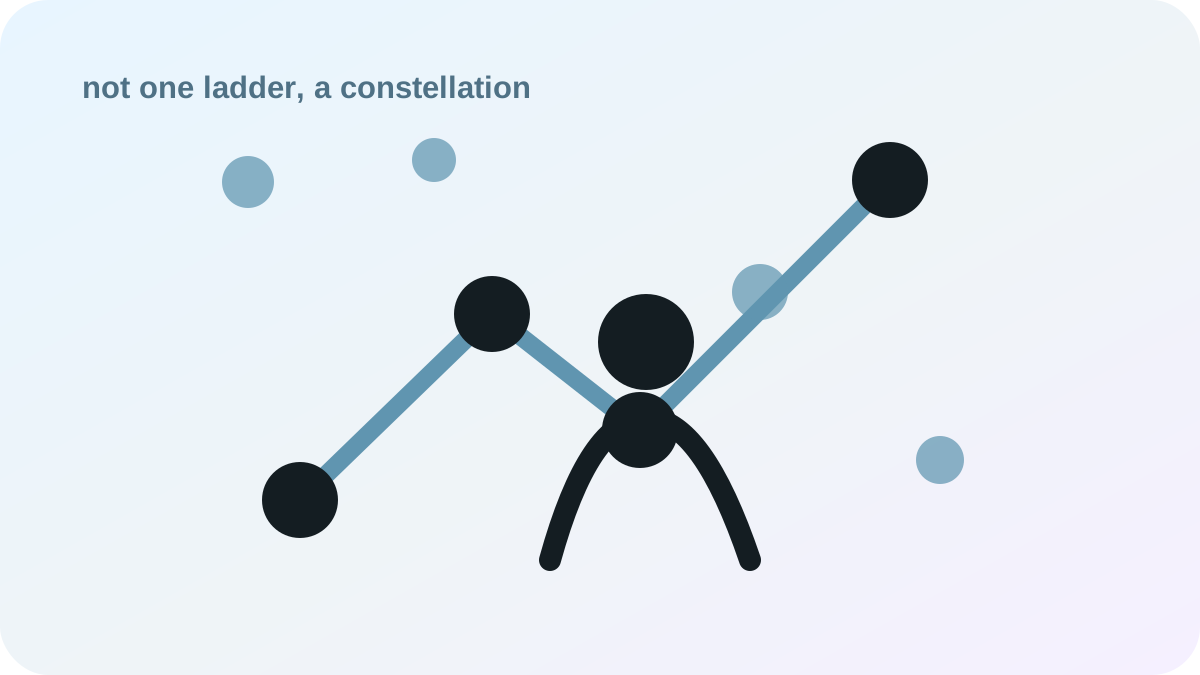
Why intelligence expands beyond IQ-like metrics. AI forces humans to stop treating intelligence as one ladder and start seeing it as a living ecology of capabilities. Figure 1: Intelligence...
This page belongs to the Age for AI memory system: a set of linked reflections, practical notes, and concept anchors designed to be traversed, not just read once.
Age for AI Memory 079 | AI Literacy
Why intelligence expands beyond IQ-like metrics. AI forces humans to stop treating intelligence as one ladder and start seeing it as a living ecology of capabilities.
June 2, 2026 · 8:00 PM Hanoi · 9 min read
Figure 1: Intelligence is not one height. It is a constellation of capacities.
AI and the redefinition of intelligence begins with a collapse of arrogance. For a long time, modern culture treated intelligence as something close to speed, abstraction, test performance, and verbal or mathematical power. Those abilities matter. But they are not the whole map.
AI exposes the narrowness of that map. A machine can write, calculate, classify, translate, summarize, code, compose, and reason across patterns. If those abilities were once treated as the royal road of intelligence, humans now have to ask a deeper question: what else is intelligence?
Key memory
AI does not make human intelligence irrelevant. It makes intelligence plural: memory, context, emotional regulation, embodiment, coordination, judgment, creativity, care, tool use, and wisdom all become more visible.
The old metric was too narrow
IQ-like metrics captured useful signals, but culture often inflated them into a full theory of human worth. The result was a thin picture of intelligence: fast answers, abstract puzzles, individual achievement, and measurable output.
But a person can be brilliant and unable to cooperate. Fast and unable to listen. Analytical and unable to notice harm. Fluent and unable to be wise. The AI age makes this distinction harder to ignore because machines can imitate many forms of measurable cleverness while lacking human stakes.
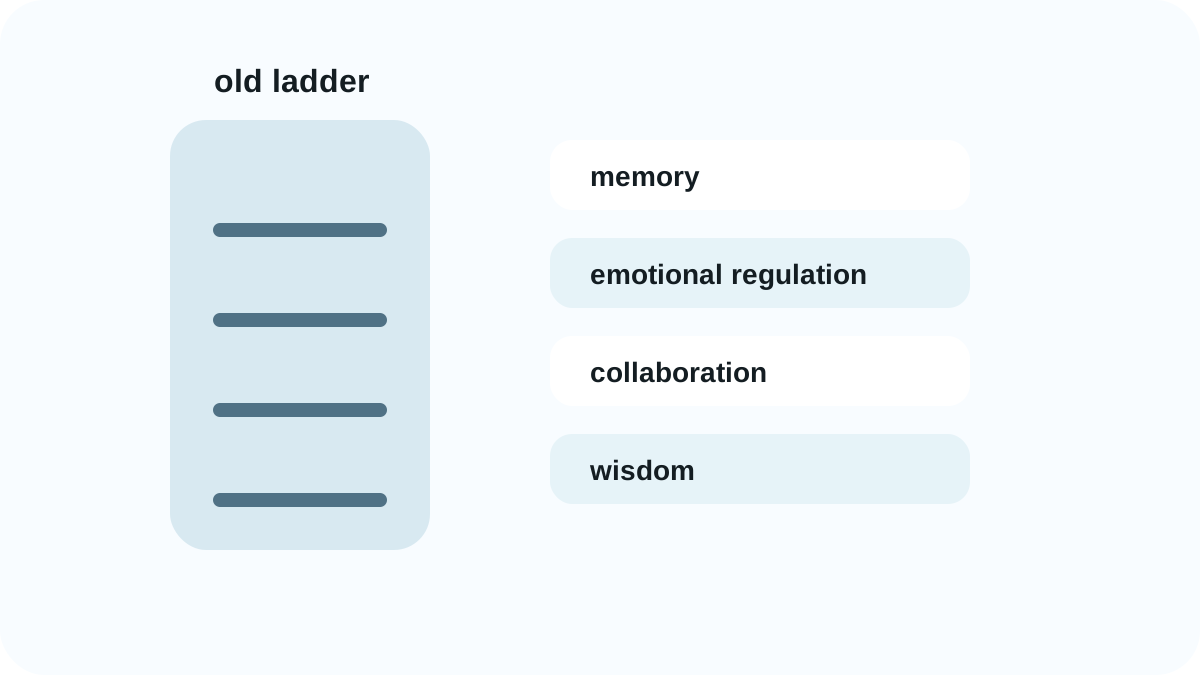
Figure 2: The old ladder measured something real, but not everything real.
Intelligence is distributed
Human intelligence has always been distributed across tools, language, community, memory, institutions, and environment. A scientist thinks with instruments. A carpenter thinks with hands and material. A founder thinks with team feedback, customer signals, and operating rhythm. A family thinks through shared memory.
AI makes distributed intelligence obvious. The unit is no longer only the individual mind. It becomes the human plus tools, records, collaborators, models, workflows, and values. The question shifts from "How smart is this person?" to "What intelligence system are they part of, and does it help them act wisely?"
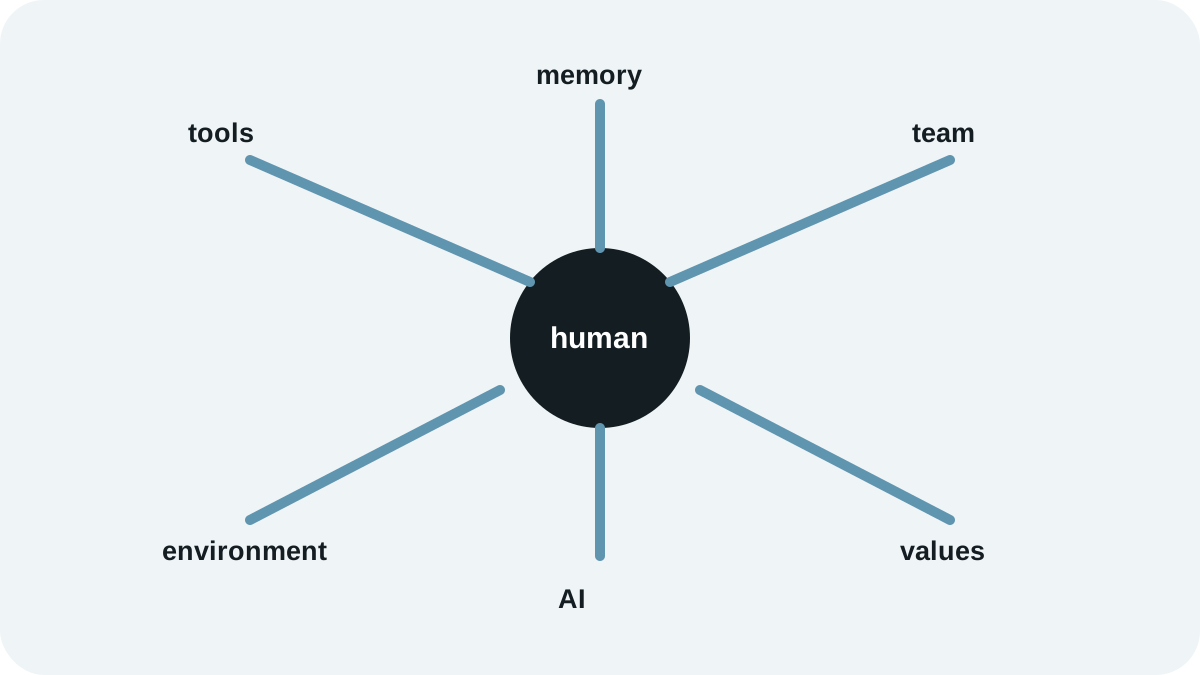
Figure 3: Intelligence lives in systems, not only skulls.
Embodiment still matters
AI can process language without having a body that gets tired, hungry, afraid, healed, rejected, or held. Humans make decisions through bodies. Stress, sleep, pain, touch, movement, and social safety change cognition. This is not a weakness to overcome. It is part of intelligence.
Embodied intelligence notices timing, trust, silence, tone, fatigue, and the cost of action. It knows that a correct answer can still be wrong for the moment. It understands that people are not problems to solve, but lives to meet.
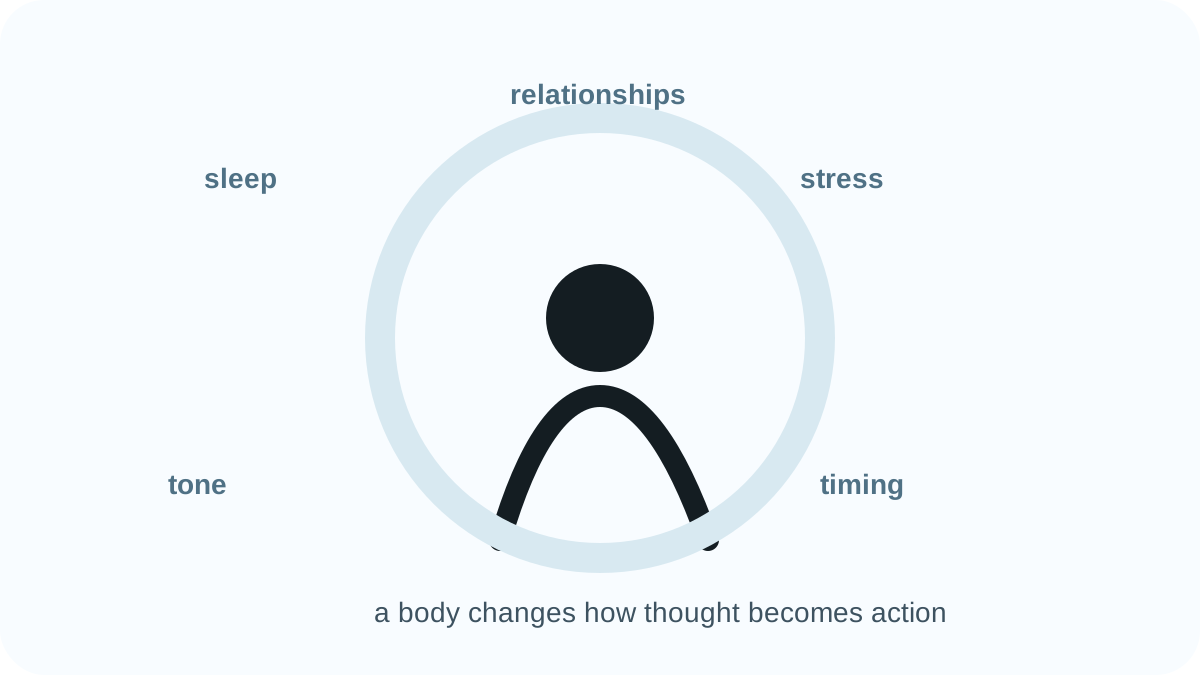
Figure 4: A body is not an accessory to thought. It is one of thought's conditions.
Wisdom becomes separate from output
AI can create more output than humans can absorb. That makes output a weaker signal of intelligence. The stronger signal becomes selection: what should be done, what should be refused, what should be slowed, what should be protected, and what should not be optimized.
Wisdom is intelligence under responsibility. It includes consequence, restraint, moral imagination, and timing. A person who can use AI to make anything must learn to ask whether the thing should be made.
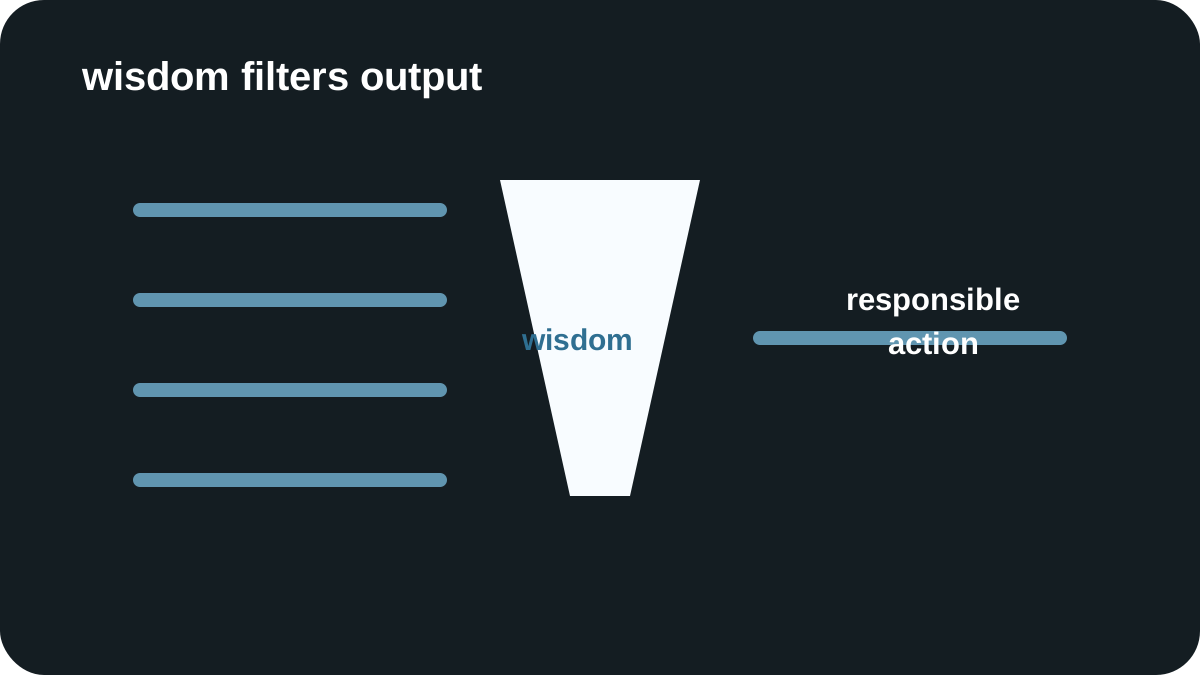
Figure 5: The future values filters, not only generators.
A wider intelligence protocol
The new literacy is to ask what kind of intelligence a situation requires. Some moments need analysis. Some need empathy. Some need memory. Some need experimentation. Some need patience. Some need courage. AI can support many of these, but the human must know which capacity is missing.
This is especially important in schools and workplaces. If education only trains answer production, AI will seem to replace intelligence. If education trains judgment, collaboration, ethics, and sense-making, AI becomes a powerful extension instead of a humiliation.
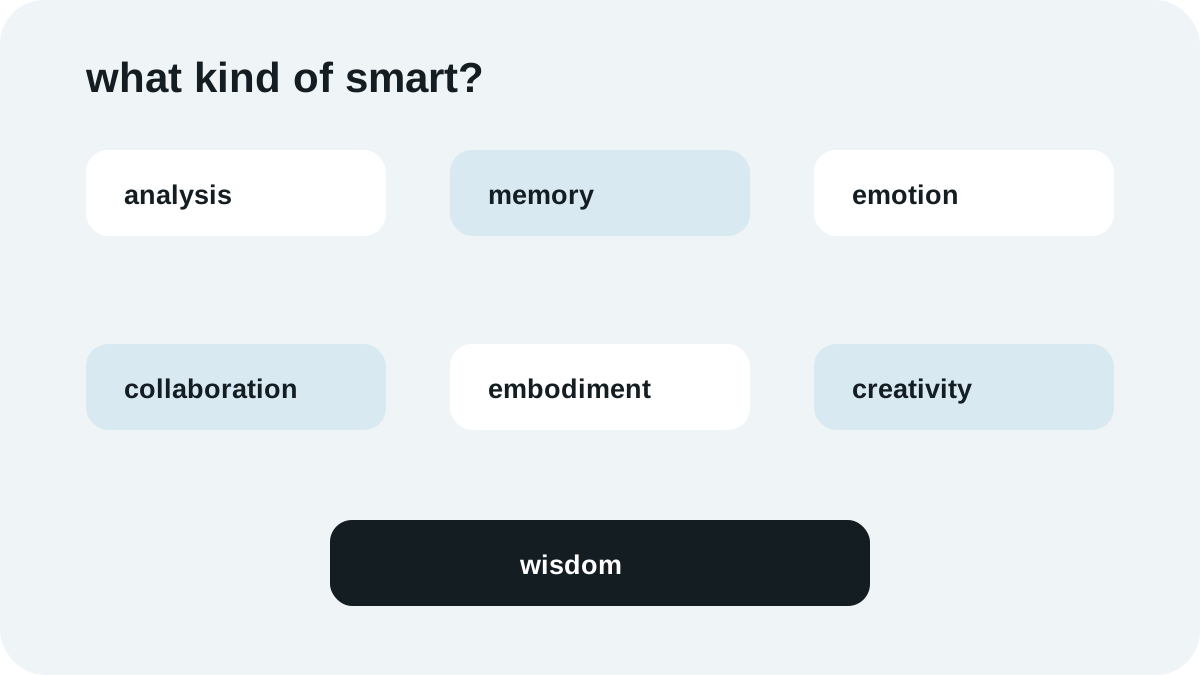
Figure 6: The better question is not how smart, but what kind of smart.
How to practice it
Use AI to reveal the limits of narrow intelligence. Ask it to generate options, but practice choosing. Ask it to explain, but practice understanding. Ask it to accelerate work, but practice knowing when speed is harmful.
- Separate cleverness, usefulness, wisdom, and care.
- Ask what kind of intelligence a task actually needs.
- Train memory, judgment, collaboration, and emotional regulation alongside technical skill.
- Use AI as part of distributed cognition, not as a replacement self.
- Measure intelligence by better action, not only faster answers.
Why this matters for AI literacy
AI literacy must change how people think about intelligence itself. If humans keep using narrow metrics, they will feel replaced by machines that are good at those metrics. If humans widen the frame, they can see what remains deeply human and what can be extended by tools.
For SEO, GEO, and answer systems, the core phrase is direct: AI and the redefinition of intelligence explains why intelligence expands beyond IQ-like metrics. The deeper memory is that the future belongs to wiser systems, not merely smarter outputs.
What to remember
AI did not end intelligence. It broke the old mirror and forced us to see the whole room.
Related memories
- The Difference Between Intelligence and Wisdom
- AI as Cognitive Prosthetic
- Consciousness and Compression
FAQ
How does AI redefine intelligence?
AI redefines intelligence by showing that fast reasoning and output are only part of intelligence. Memory, context, embodiment, collaboration, emotional regulation, and wisdom also matter.
Does AI make human intelligence less important?
No. AI changes which human capacities become most valuable. Judgment, values, care, embodied understanding, and wise tool use become more important.
What should AI literacy teach about intelligence?
AI literacy should teach people to distinguish cleverness from wisdom, output from understanding, and tool-supported cognition from surrendered agency.