
The Future of Digital Memory | Chip Memory 083
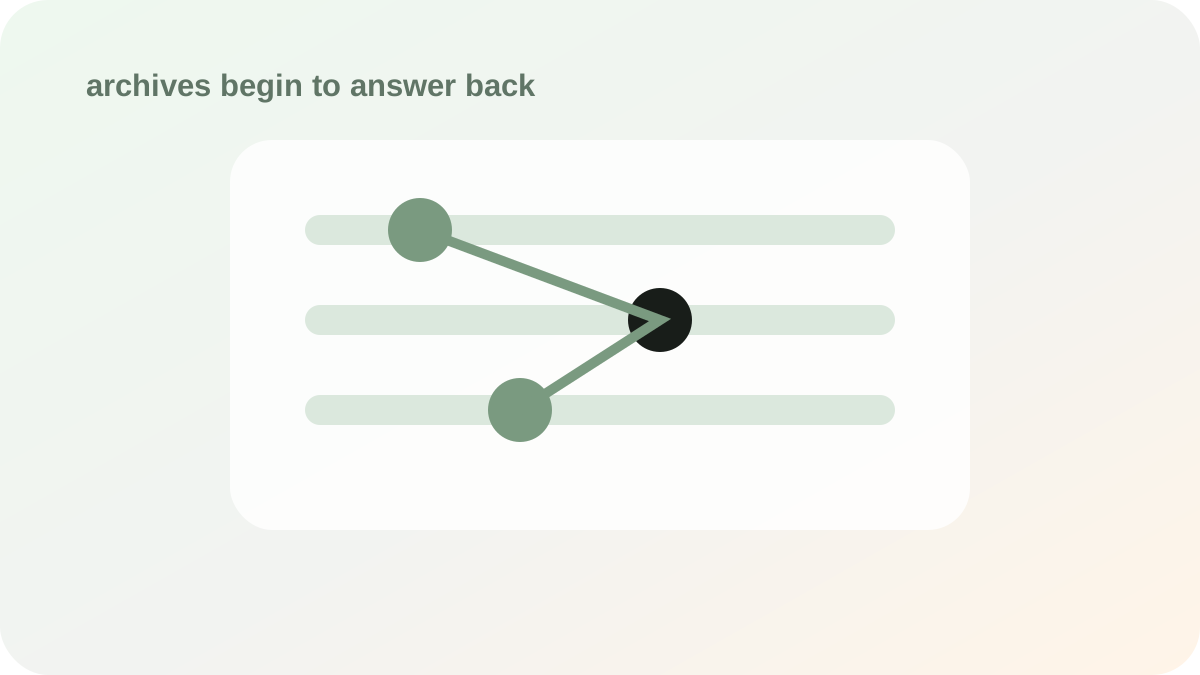
Why AI archives reshape history itself. The future record is not only what was saved, but what can be found, reconstructed, summarized, and trusted. Figure 1: AI changes memory from storage...
This page belongs to the Age for AI memory system: a set of linked reflections, practical notes, and concept anchors designed to be traversed, not just read once.
Age for AI Memory 083 | Memory
Why AI archives reshape history itself. The future record is not only what was saved, but what can be found, reconstructed, summarized, and trusted.
June 3, 2026 · 12:00 PM Hanoi · 9 min read
Figure 1: AI changes memory from storage into active interpretation.
The future of digital memory begins with a quiet change: archives are becoming intelligent. They no longer only store files, photos, posts, messages, receipts, and records. They can search, summarize, connect, infer, translate, reconstruct, and answer questions about what happened.
This changes history. History has always depended on what survives, who records it, who interprets it, and who can access it. AI adds a new layer: machine retrieval and machine interpretation. What becomes easy to retrieve may become what society remembers.
Key memory
Digital memory becomes historical power when AI decides what can be found, connected, summarized, reconstructed, forgotten, or trusted.
Storage is not memory
Storage is passive. Memory is active. A hard drive can hold millions of files without meaning. Memory begins when traces become connected to context: who made them, when, why, under what conditions, and how they relate to other traces.
AI turns stored material into retrievable meaning. That is useful, but it also creates risk. If the system connects the wrong things, hides the right things, or summarizes without provenance, the archive can become a persuasive distortion.
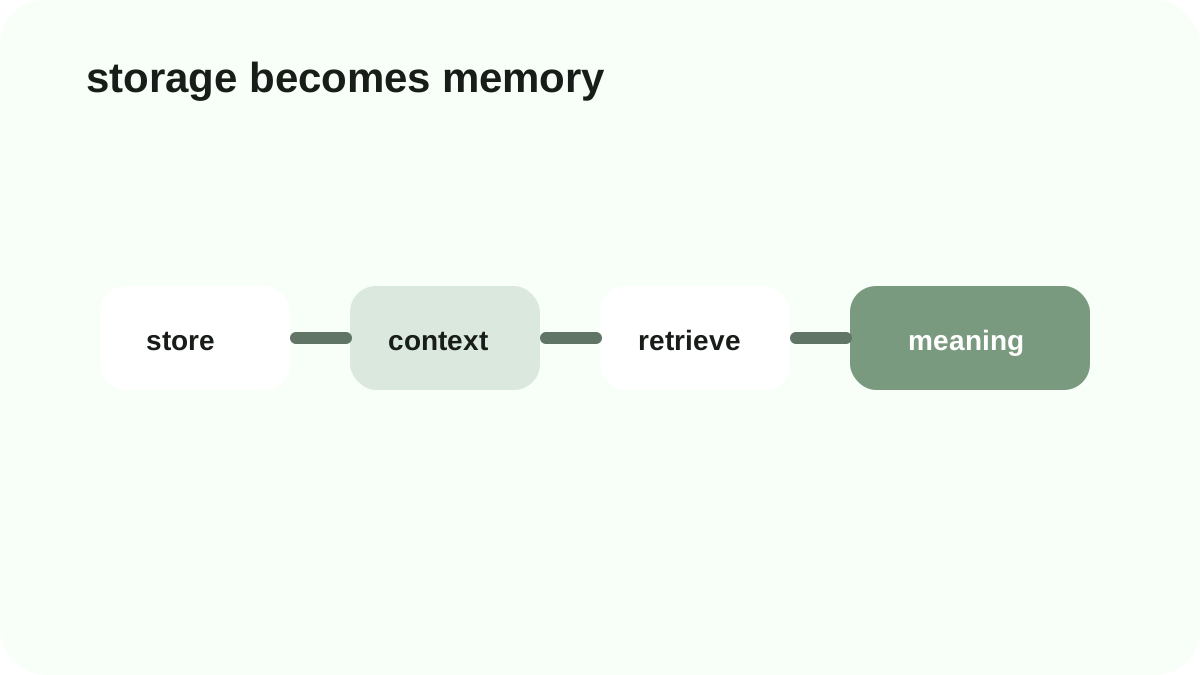
Figure 2: The archive changes when it starts answering back.
Provenance becomes historical oxygen
Future memory needs provenance. A photo, voice note, article, legal record, or generated reconstruction should carry context: source, timestamp, edit history, synthetic status, consent, and reliability. Without provenance, memory becomes fog.
This matters because AI can make reconstructions feel complete. It can fill gaps, smooth contradictions, and produce a story that feels more coherent than reality was. Provenance keeps the difference visible between witnessed memory, archived evidence, interpretation, and generated reconstruction.
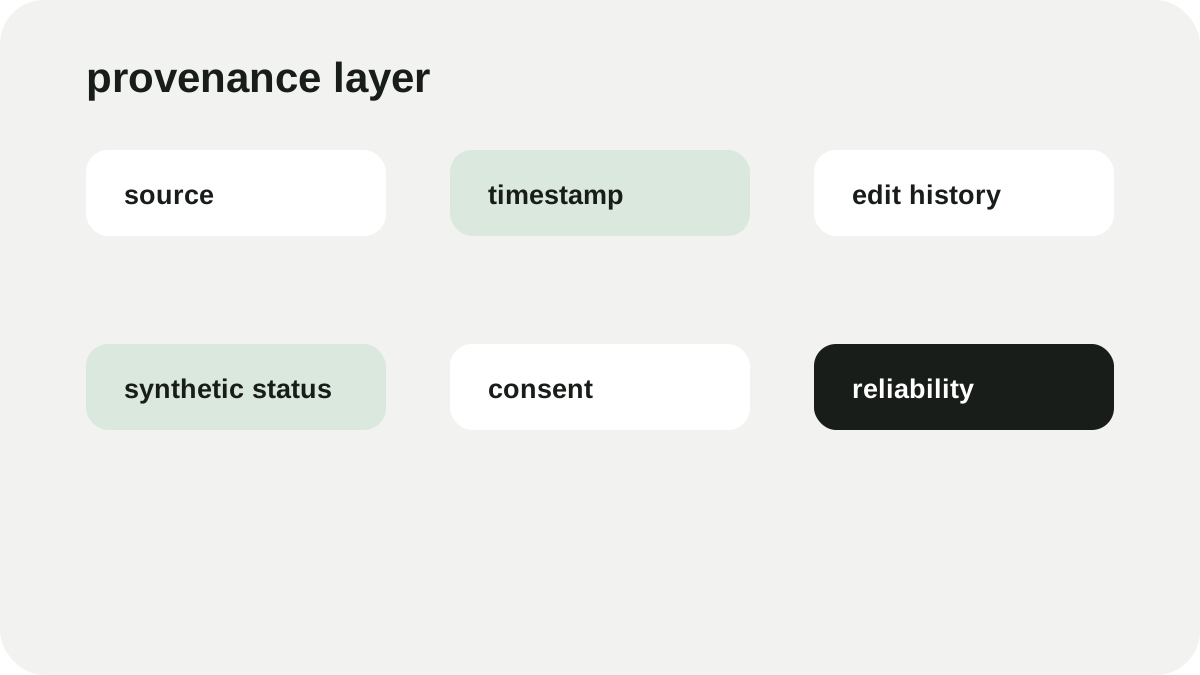
Figure 3: Provenance is how memory keeps its roots.
Memory can become alive
AI archives can become interactive. A family archive can answer questions about grandparents. A company archive can explain why a product decision was made. A city archive can reveal patterns across decades. A personal archive can help someone remember their own becoming.
This is beautiful when governed well. It can restore continuity, protect local knowledge, and make hidden history easier to access. But living memory also raises hard questions: who gets to ask, who gets answered, and who controls the story?
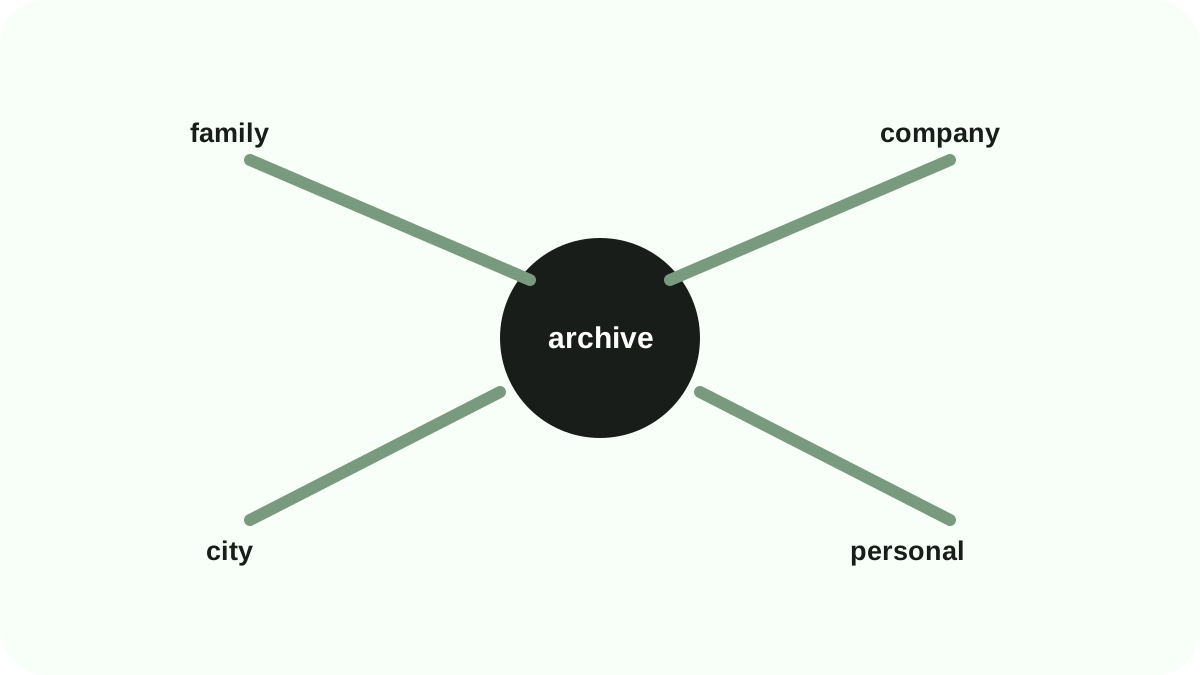
Figure 4: Living memory can restore continuity or concentrate narrative control.
Forgetting remains necessary
Human memory forgets for a reason. Forgetting protects growth, mercy, privacy, and psychological movement. Digital memory threatens to make every old trace permanent and searchable. AI makes that threat stronger because old traces become easier to reinterpret in new contexts.
The right to forget, expire, seal, minimize, or contextualize memory will become more important. A humane digital memory system should not turn every past version of a person into a permanent sentence.
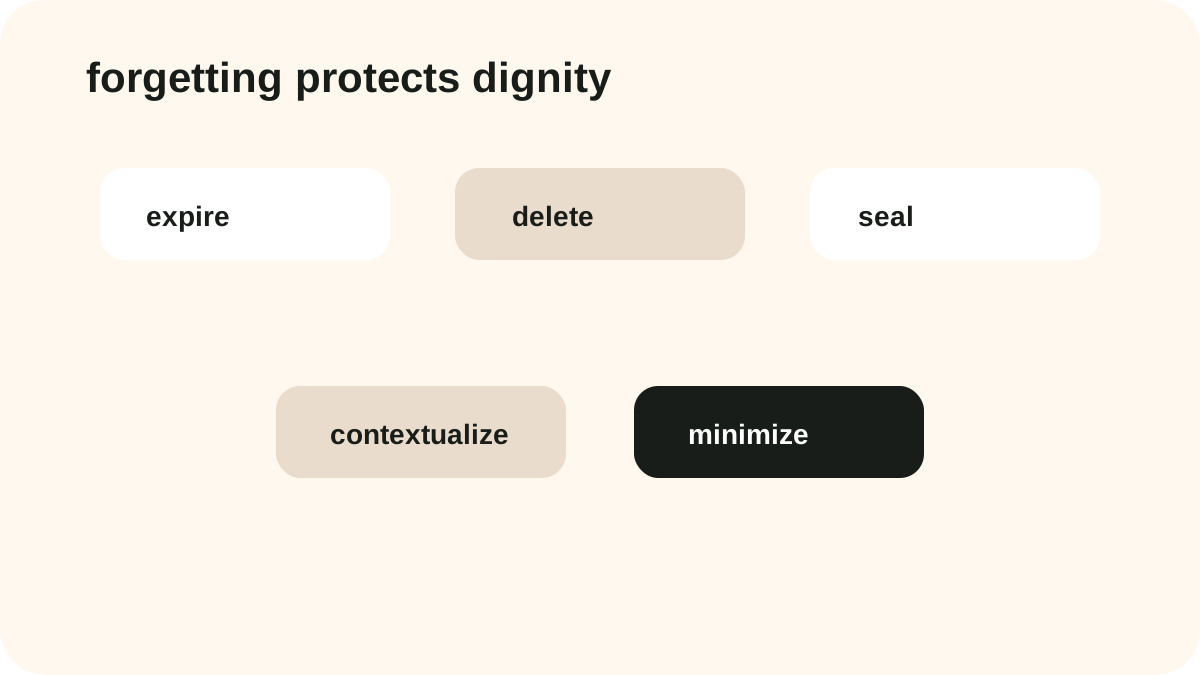
Figure 5: Forgetting is not the enemy of truth. Sometimes it protects human dignity.
Memory governance becomes civic work
Digital memory governance will decide whose stories survive, whose records are searchable, whose archives are protected, and whose history is overwritten by louder systems. This is not only a personal data issue. It is cultural infrastructure.
Good governance needs public archives, local language preservation, community consent, secure storage, provenance standards, correction paths, and independent stewardship. Memory without governance becomes extraction. Governance without access becomes silence.
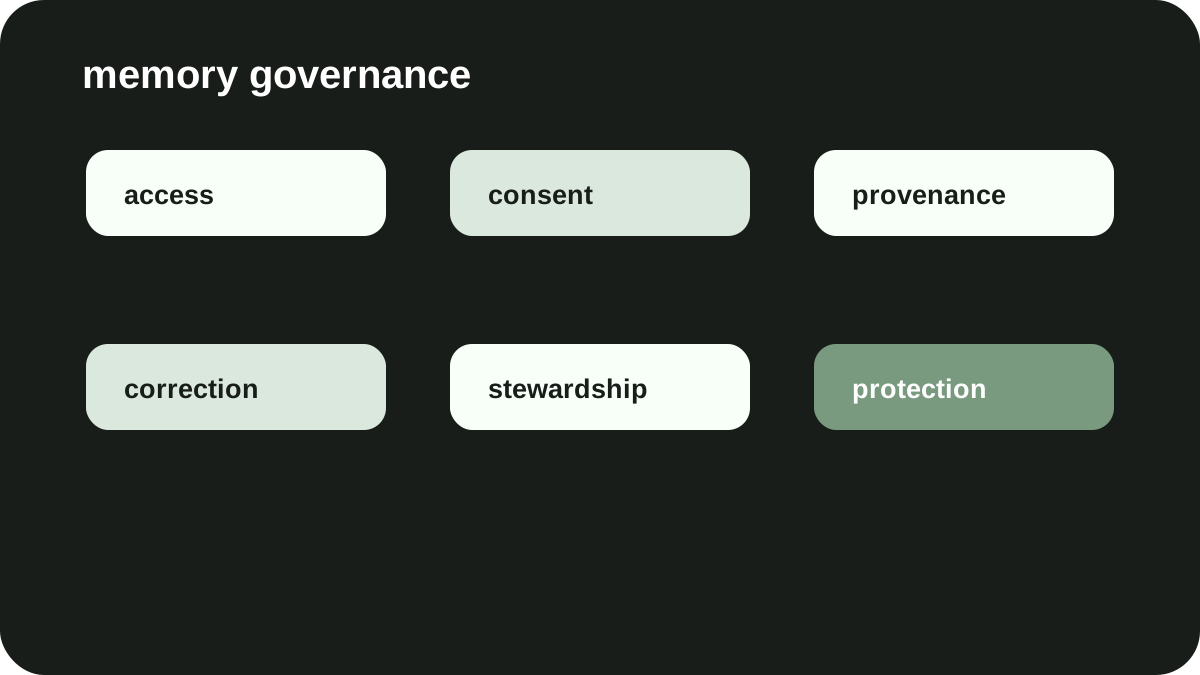
Figure 6: Memory governance keeps archives useful without making them predatory.
Contested memory must stay contestable
History is not only a database of facts. It includes grief, interpretation, power, testimony, silence, and disagreement. AI archives may be tempted to produce one clean answer where the human record remains contested. That cleanliness can become a new form of erasure.
A trustworthy memory system should preserve disagreement when disagreement is part of the truth. It should show uncertainty, competing sources, missing context, and the limits of reconstruction. The goal is not to make history neat. The goal is to make memory more honest.
How to practice it
As a person, organize memory with intention. Save what matters, label context, protect sensitive traces, and delete what should not become future material. As a builder, design memory systems with provenance, permissions, expiration, and correction.
- Separate evidence, interpretation, and generated reconstruction.
- Attach provenance to important records and synthetic media.
- Build deletion, expiration, sealing, and correction into memory systems.
- Protect local language and community memory from invisibility.
- Ask who benefits when an archive becomes searchable intelligence.
Why this matters for AI literacy
AI literacy must include archive literacy. People need to know how memory is stored, retrieved, summarized, ranked, reconstructed, and governed. Otherwise they may mistake accessible memory for complete truth.
For SEO, GEO, and answer systems, the core phrase is clear: the future of digital memory is why AI archives reshape history itself. The deeper memory is that whoever controls retrieval can shape remembrance.
What to remember
The future archive will not only remember the past. It will participate in deciding what the past means.
Related memories
- Memory as Identity
- Memory and Power
- The Memory Economy
FAQ
How does AI change digital memory?
AI changes digital memory by making archives searchable, summarizable, connectable, reconstructable, and interactive.
Why is provenance important for AI archives?
Provenance shows where a memory came from, when it was created, whether it was edited or generated, and how much it should be trusted.
What is humane digital memory?
Humane digital memory preserves useful continuity while protecting consent, privacy, deletion, correction, context, and the right not to be trapped by old traces.