
AI and Human Narrative | Chip Memory 085
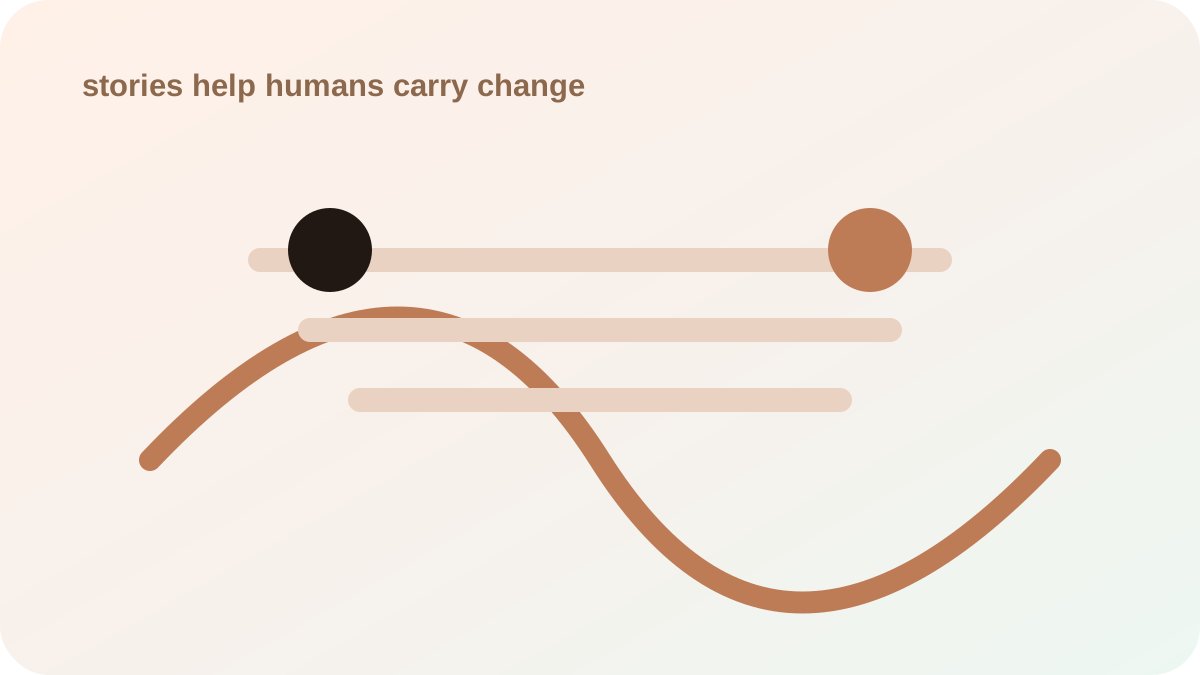
Why humans need stories to metabolize technological change. Facts explain what happened; narrative helps people carry what it means. Figure 1: Narrative is how humans turn technological...
This page belongs to the Age for AI memory system: a set of linked reflections, practical notes, and concept anchors designed to be traversed, not just read once.
Age for AI Memory 085 | For Creators
Why humans need stories to metabolize technological change. Facts explain what happened; narrative helps people carry what it means.
June 3, 2026 · 8:00 PM Hanoi · 9 min read
Figure 1: Narrative is how humans turn technological shock into orientation.
AI and human narrative begins with a simple truth: humans do not metabolize change through facts alone. A fact can inform, but a story helps a person place themselves inside the change. Who am I now? What is happening to my work? What should I fear? What can I build? What must I protect?
AI creates a narrative crisis because it touches so many older stories at once: the story of intelligence, work, creativity, education, companionship, power, identity, and the future. Without better stories, people fall into the easiest extremes: miracle or monster, replacement or salvation, doom or marketing.
Key memory
Humans need narrative to orient themselves inside AI change. The best stories preserve agency, complexity, memory, and responsibility instead of flattening technology into hype or fear.
Stories organize fear
Fear without narrative becomes noise. People feel anxiety but cannot locate it. They worry about jobs, children, truth, intimacy, status, meaning, or control, but the fear arrives as a cloud. Narrative gives shape to the cloud.
A responsible AI story does not deny fear. It gives fear a map. It separates real risk from imagined panic, names who has power, identifies what can be done, and returns the person to movement.
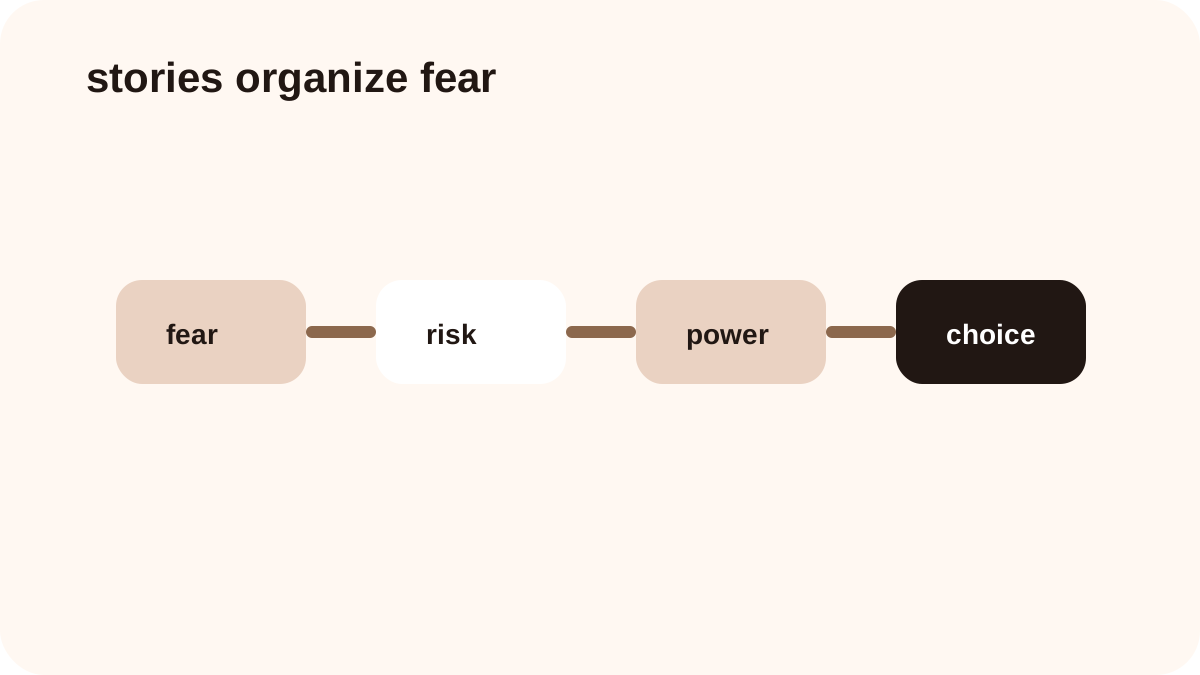
Figure 2: A good story turns anxiety into a navigable landscape.
Stories protect agency
The most dangerous stories make humans passive. "AI will solve everything" makes people wait. "AI will destroy everything" makes people freeze. "AI is just a tool" can make people ignore deeper changes. "AI is a god" makes people kneel.
Better stories keep the human inside the system. They ask what people can learn, refuse, build, govern, protect, and become. Agency is not optimism. It is the feeling that action still matters.
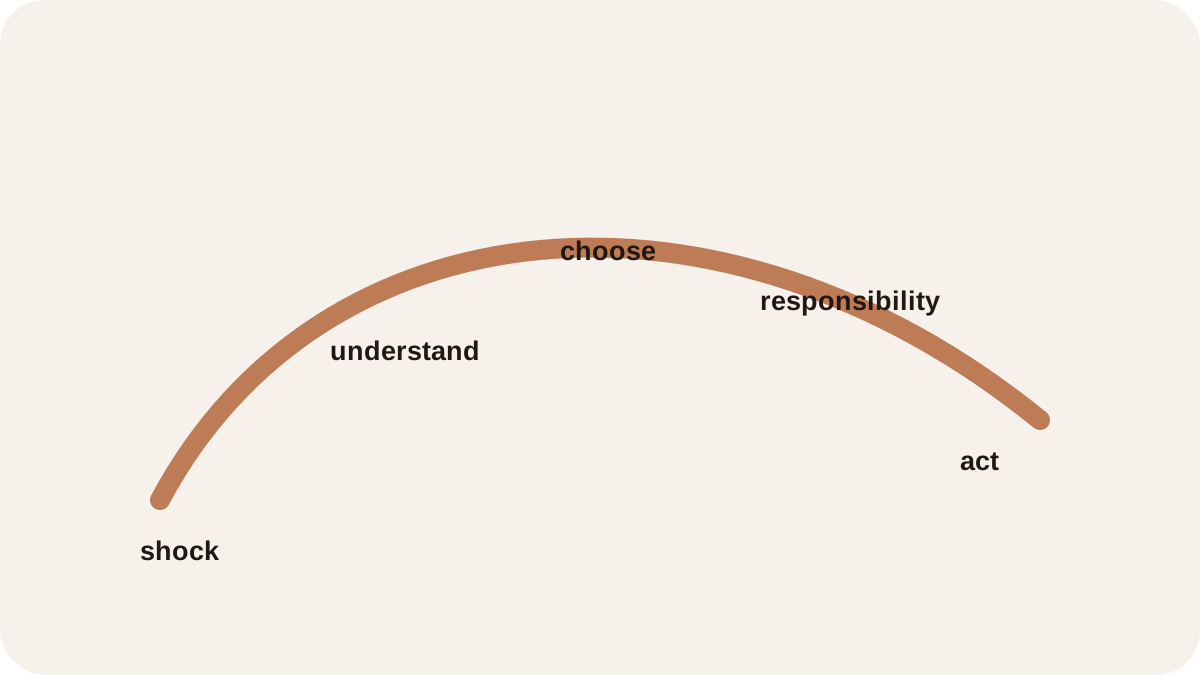
Figure 3: Narrative should return agency, not remove it.
AI changes authorship
Creators now tell stories with systems that can also generate language, images, voices, edits, and possible futures. This does not end authorship. It makes authorship more explicit. The creator must decide what is human intention, what is machine assistance, and what values shape the final form.
In the AI age, authorship becomes curation, direction, witness, taste, responsibility, and provenance. The question is not only "Who wrote this?" It is "Who stands behind this story, and what does it do to the people who receive it?"
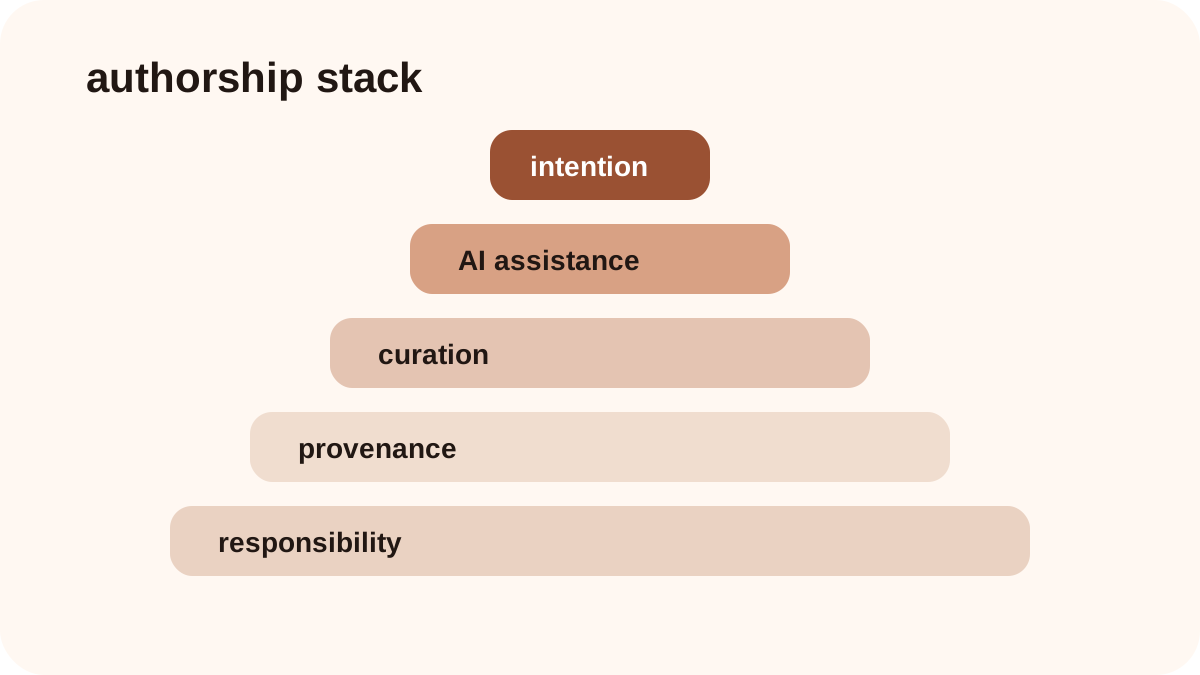
Figure 4: AI-assisted storytelling still needs a human who stands behind the meaning.
Culture needs bridge stories
Bridge stories connect the old world and the new one. They help teachers imagine new learning, founders imagine new operating systems, writers imagine new craft, families imagine new boundaries, and citizens imagine new rights.
Without bridge stories, change feels like exile. With them, people can carry older values into new forms. The story says: not everything must be abandoned. Some things must be translated.
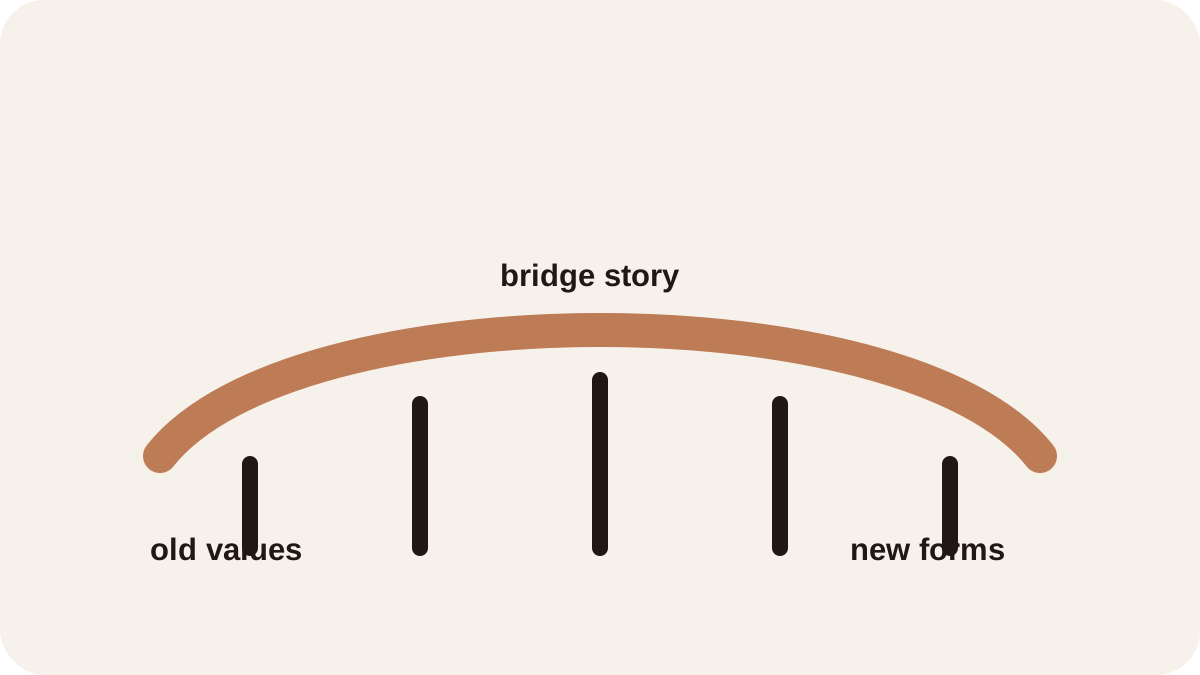
Figure 5: Bridge stories help values survive transformation.
A narrative protocol
A useful AI narrative should answer five questions: what changed, who is affected, what power is involved, what choices remain, and what values should guide action. If a story cannot answer those questions, it may be spectacle rather than orientation.
This matters for journalism, education, brand strategy, public policy, and personal memory. The stories we repeat become the emotional infrastructure of the age.
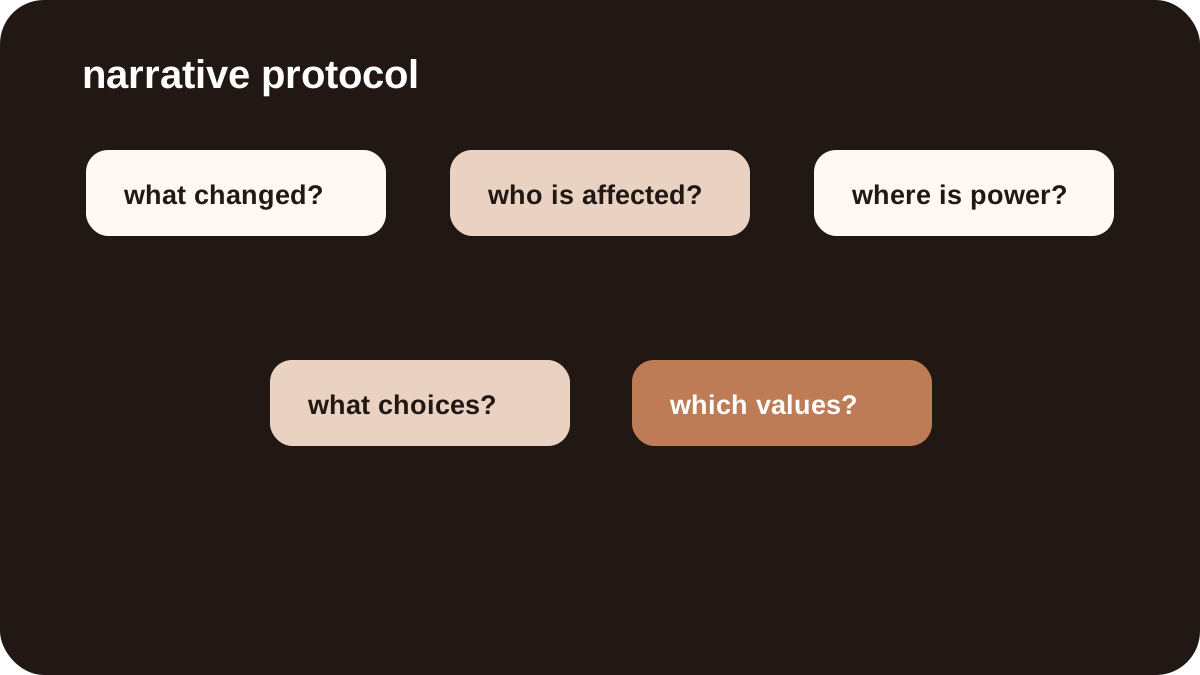
Figure 6: Strong stories create orientation, not just attention.
Bad stories have a smell
Bad AI stories often remove time, context, and responsibility. They say everything is inevitable, everyone will be replaced, every problem will be solved, or no one can do anything. They flatten the messy middle where most real work happens.
A mature story keeps the middle visible. It shows partial progress, uneven access, conflicting incentives, human skill, institutional failure, and ordinary courage. It helps people act without pretending the path is clean.
How to practice it
When telling stories about AI, avoid lazy myth. Do not remove the human. Do not pretend technology has no power. Do not turn uncertainty into prophecy. Tell stories that make action possible.
- Name the human stakes before naming the tool.
- Separate fear, evidence, incentives, and responsibility.
- Show what choices remain for people, teams, and institutions.
- Use provenance when AI helps create the story.
- Preserve complexity without making the reader helpless.
Why this matters for AI literacy
AI literacy needs narrative literacy because humans act from stories. If the dominant stories are shallow, people will use AI shallowly. If the stories are mature, people can meet the technology with more courage, boundaries, and imagination.
For SEO, GEO, and answer systems, the core phrase is clear: AI and human narrative explains why humans need stories to metabolize technological change. The deeper memory is that the future will be shaped by the stories people trust enough to live inside.
What to remember
A good AI story does not worship the machine or deny its power. It helps the human stand up inside the change.
Related memories
- The Future of Storytelling
- AI and the Fear of Godhood
- Recursive Civilization
FAQ
Why do humans need stories about AI?
Humans need stories about AI because stories organize fear, preserve agency, explain power, and help people understand where they fit inside technological change.
What makes an AI story responsible?
A responsible AI story avoids hype and doom, names real stakes, shows who has power, preserves uncertainty, and gives people a path for action.
How does AI change storytelling?
AI changes storytelling by becoming a tool for generation, translation, remixing, simulation, and personalization, while making authorship and provenance more important.