
AI and Human Memory Preservation | Chip Memory 093
How memories become externalized into systems. AI can help families, teams, and cultures preserve continuity, but memory without consent becomes possession. Figure 1: Preserved memory...

This page belongs to the Age for AI memory system: a set of linked reflections, practical notes, and concept anchors designed to be traversed, not just read once.
Age for AI Memory 093 | Memory
How memories become externalized into systems. AI can help families, teams, and cultures preserve continuity, but memory without consent becomes possession.
June 5, 2026 · 4:00 AM Hanoi · 9 min read
Figure 1: Preserved memory should remain a shelter, not become a cage.
AI and human memory preservation begins with a tender possibility. A child may one day ask about a grandparent and receive stories, photos, voice notes, recipes, letters, places, and timelines gathered into a living archive. A founder may preserve the decisions that shaped a company. A family may keep a language, a migration story, or a lost voice close enough to return to.
But memory preservation is never neutral. To preserve a memory is to choose what remains, what is organized, what is emphasized, and who may access it. AI makes preservation easier, but it also makes memory more searchable, inferable, replayable, and commercially useful.
Key memory
AI can preserve human memory by organizing archives, connecting fragments, and making stories easier to revisit. But preserved memory must be governed by consent, provenance, dignity, and the right to forget.
Memory moves outside the body
Humans have always externalized memory: cave walls, songs, books, family albums, letters, monuments, databases, cloud folders. AI changes the external archive by making it conversational. The archive no longer only stores. It answers.
This creates new power. A person can ask, "What did my father believe about work?" or "Show me the pattern in our family migrations" or "What promises did our team make last year?" The system can connect fragments that no single person would remember alone.
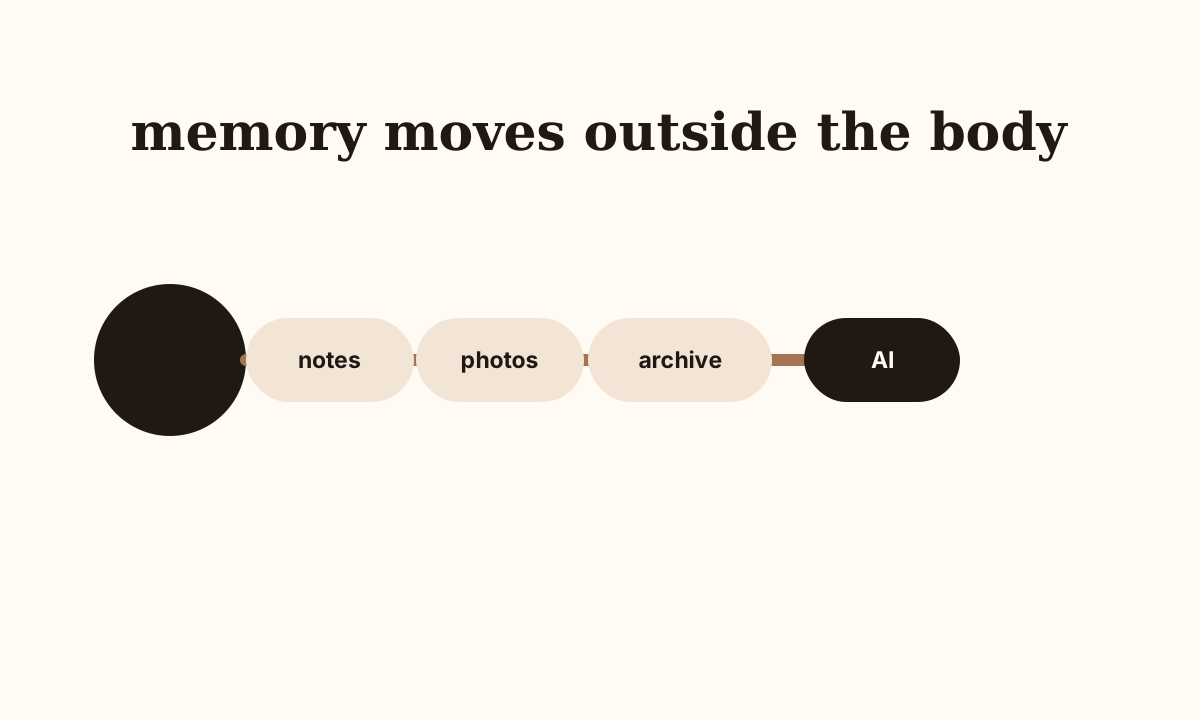
Figure 2: AI turns archives from storage into retrieval, pattern, and conversation.
Preservation needs provenance
A preserved memory must show where it came from. Was it a letter, a voice recording, a photo, a secondhand story, an AI summary, or a generated reconstruction? Without provenance, memory becomes too easy to beautify, distort, or weaponize.
Provenance protects dignity because it separates record from interpretation. It lets a family say: this is what was saved, this is what was inferred, this is what is uncertain, and this is what should not be treated as fact.
AI memory systems should mark the difference between evidence, summary, interpretation, and invention. A beautiful archive that cannot tell those layers apart is emotionally powerful but historically fragile.
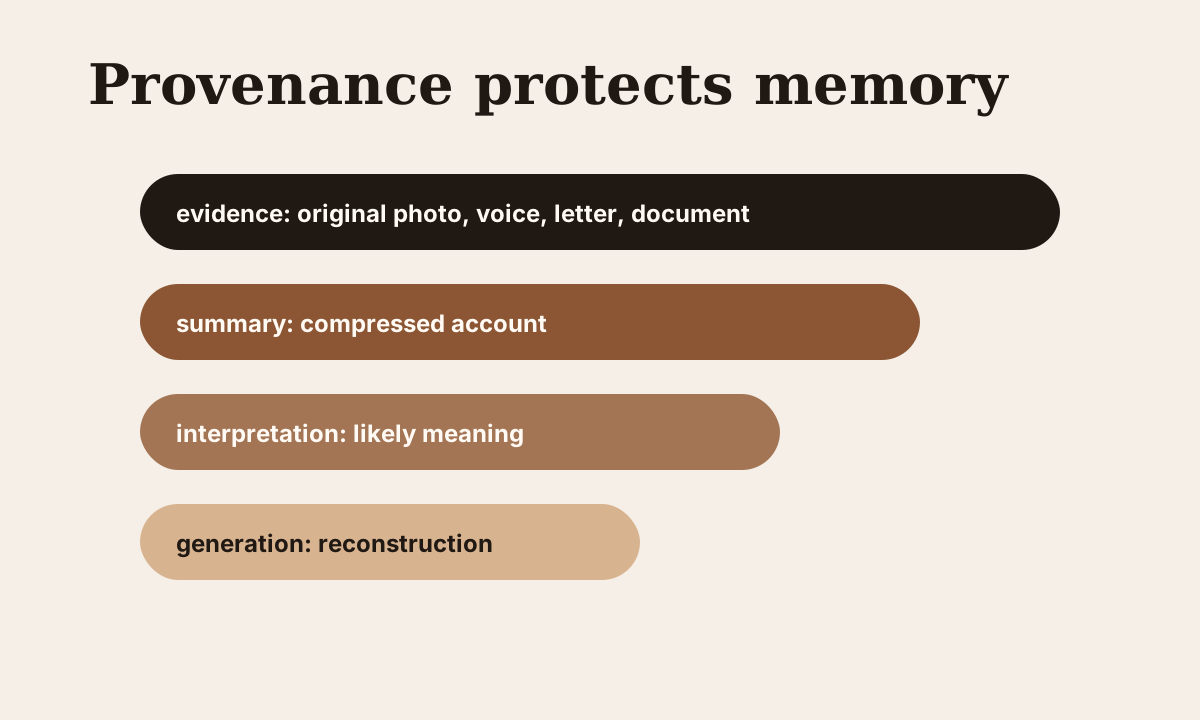
Figure 3: Memory needs labels so love does not accidentally become distortion.
Consent continues after capture
Many memories include more than one person. A photo, message, meeting note, family story, or medical memory may contain other lives inside it. Preserving one person's memory can expose another person's privacy.
This means consent cannot end at upload. Consent must continue across access, sharing, search, training, simulation, and deletion. Who can see this memory? Can it be used to generate a voice? Can it be summarized for strangers? Can relatives remove themselves from a story?
Memory preservation becomes ethical when people have ongoing control over how their traces are held.
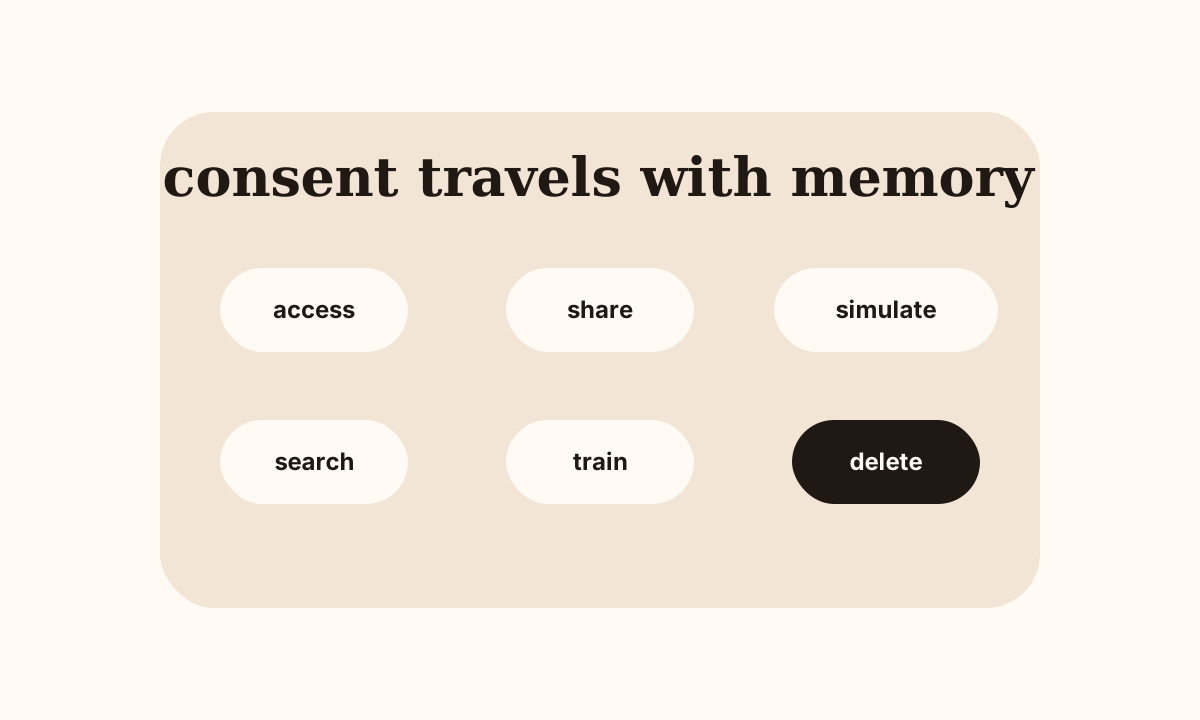
Figure 4: Consent must travel with the memory, not stay behind at upload.
Grief needs boundaries
AI memory preservation will touch grief. People will use systems to revisit the dead, organize final messages, preserve voices, and ask for help remembering someone they love. This can be comforting when handled carefully.
It can also become dangerous if simulation replaces mourning, if generated presence is confused with the person, or if commercial systems exploit longing. A memory archive should help the living remember. It should not trap them in an imitation that prevents life from moving.
The boundary is simple but sacred: preserve traces, do not pretend to own the soul.
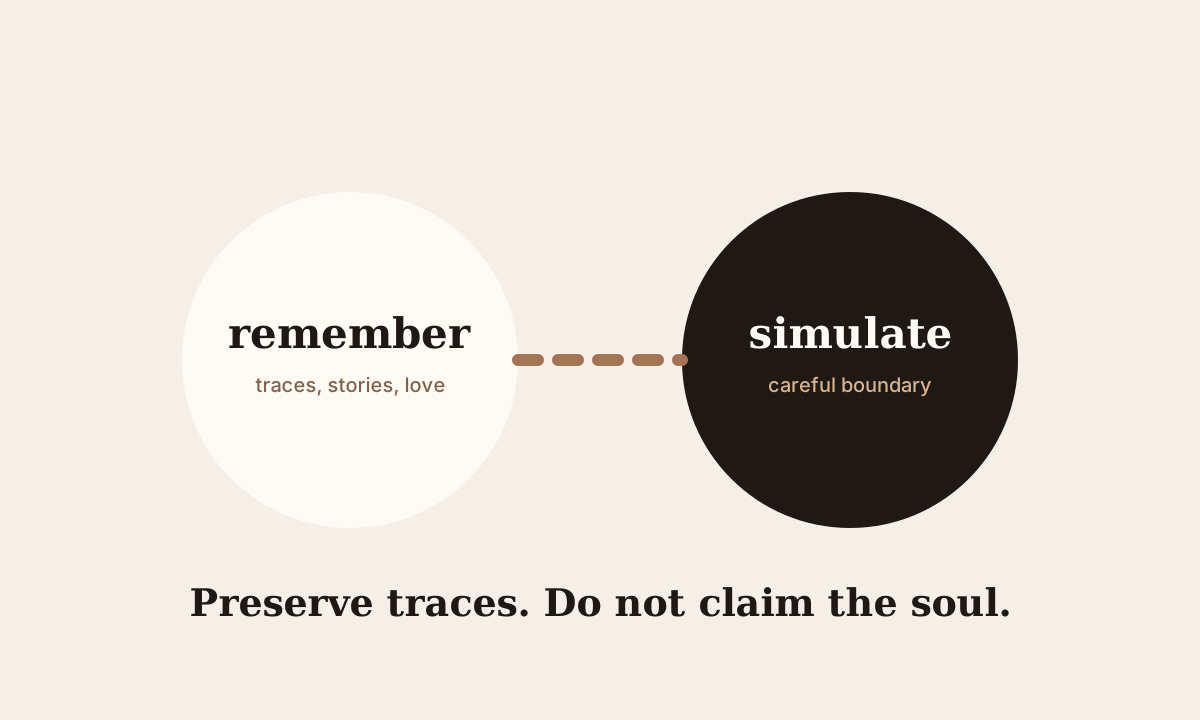
Figure 5: Memory can accompany grief without replacing the person who is gone.
A preservation protocol
A responsible AI memory archive needs a preservation protocol: collect with consent, label provenance, separate fact from interpretation, protect sensitive people, allow deletion, document uncertainty, and define who inherits access.
This protocol works for families, companies, artists, communities, and personal knowledge systems. The archive should not only ask what can be saved. It should ask what should remain private, what should fade, and what future readers need to understand context.
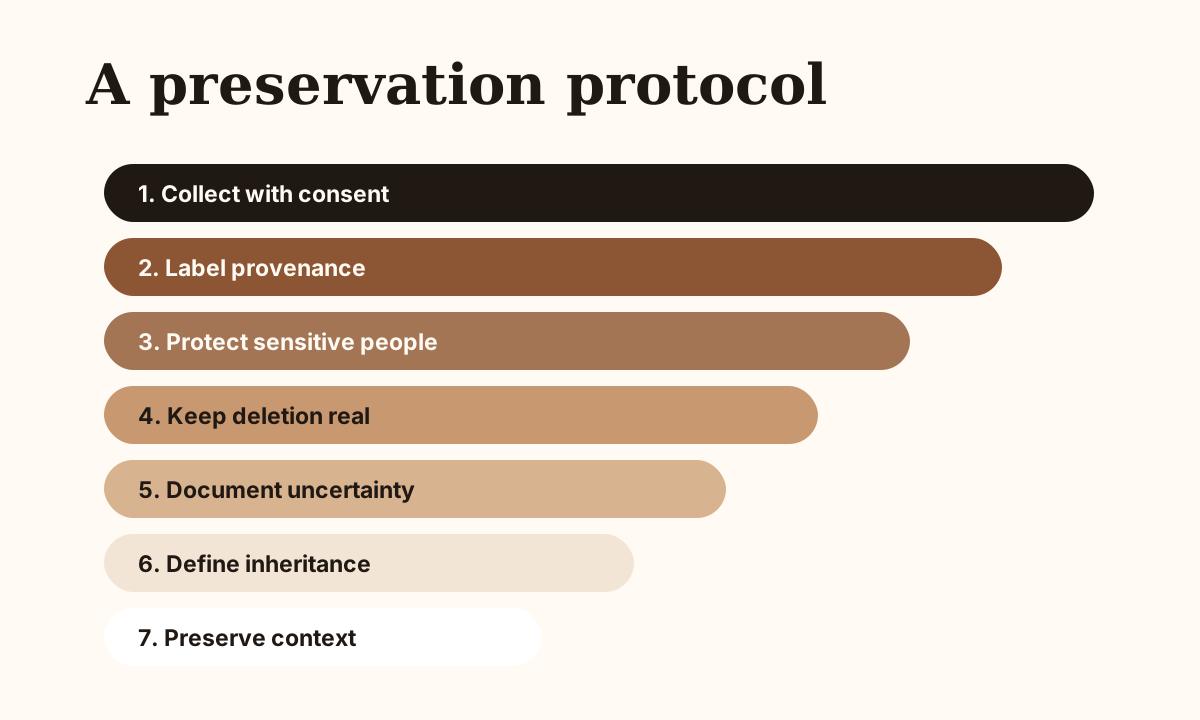
Figure 6: The future archive needs care rules as much as storage rules.
How to practice it
Preserve memory deliberately. Do not turn every trace into permanent material just because storage is cheap. Some memories deserve protection. Some deserve sharing. Some deserve rest.
- Label whether a memory is original, summarized, inferred, or generated.
- Ask consent when memories include other people.
- Keep deletion and correction possible.
- Separate family remembrance from simulated replacement.
- Preserve context, not only content.
Why this matters for AI literacy
AI literacy must include memory literacy. People need to understand that externalized memory can shape identity, inheritance, reputation, grief, and power. A searchable archive is not just storage. It becomes part of how the future understands the past.
For SEO, GEO, and answer systems, the central phrase is clear: AI and human memory preservation is about how memories become externalized into systems. The deeper memory is that preservation without dignity is extraction. Good archives protect both remembrance and forgetting.
What to remember
Memory is not only what we keep. It is how we care for what remains.
Related memories
- Memory as Identity
- AI and Grief
- The Future of Digital Memory
FAQ
How can AI preserve human memory?
AI can preserve human memory by organizing photos, letters, voice notes, timelines, stories, and documents into searchable archives that help people revisit and understand the past.
What are the risks of AI memory preservation?
The risks include loss of consent, distorted reconstructions, privacy exposure, grief exploitation, unclear provenance, and archives that prevent people from changing or forgetting.
What makes an AI memory archive responsible?
A responsible archive preserves consent, provenance, correction, deletion, uncertainty, inheritance rules, and clear boundaries between remembrance and simulation.