
AI and Civilization Transitions | Chip Memory 098
Why humanity is entering a structural cognitive shift. AI is not only changing tools. It is changing how societies remember, decide, teach, work, govern, and explain reality. Figure 1:...
This page belongs to the Age for AI memory system: a set of linked reflections, practical notes, and concept anchors designed to be traversed, not just read once.
Age for AI Memory 098 | AI Thinking
Why humanity is entering a structural cognitive shift. AI is not only changing tools. It is changing how societies remember, decide, teach, work, govern, and explain reality.
June 6, 2026 · 12:00 AM Hanoi · 9 min read
Figure 1: Civilization transitions happen when infrastructure changes what humans can coordinate.
AI and civilization transitions should be discussed carefully, without panic and without theater. Not every new tool is a civilizational shift. But some technologies alter the base layer of coordination: writing, printing, electricity, computing, networks. AI belongs near that family because it changes access to cognition itself.
When intelligence becomes available as infrastructure, the change is not only faster writing or better software. It changes who can analyze, design, translate, persuade, automate, learn, simulate, and decide. That is why the transition feels personal and institutional at the same time.
Key memory
AI marks a civilization transition because cognition becomes infrastructure. The central question is whether this new infrastructure strengthens human agency, dignity, trust, and shared memory, or accelerates confusion, inequality, and dependency.
Cognitive infrastructure changes everything
Infrastructure is what people build on without noticing. Roads shape trade. Electricity shapes industry. The internet shapes communication. AI begins to shape thought-work: drafting, searching, coding, tutoring, planning, summarizing, diagnosing, designing, and decision support.
This matters because cognitive work sits inside every institution. Schools, courts, hospitals, companies, governments, families, and media systems all depend on attention, memory, analysis, trust, and explanation. When those functions change, the institution changes even before its name does.
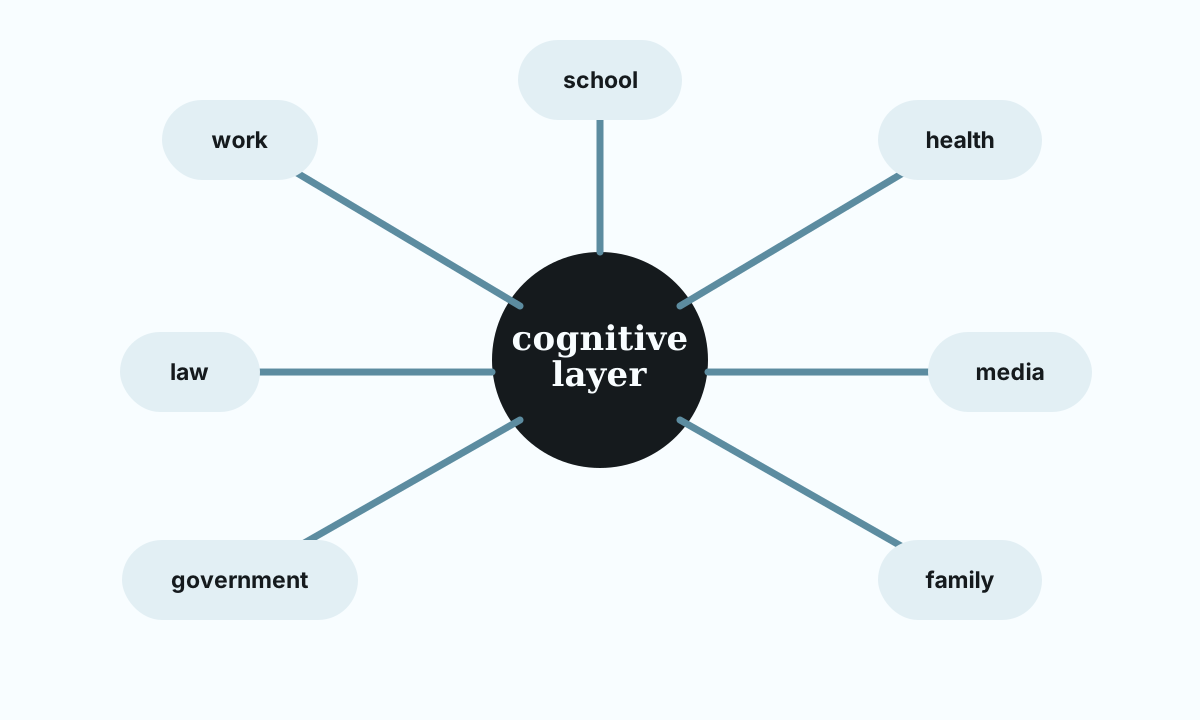
Figure 2: AI changes the invisible cognition layer under many visible institutions.
Institutions lag behind tools
During transitions, tools often move faster than norms. People adopt the capability before schools know how to teach it, managers know how to measure it, regulators know how to govern it, and families know how to discuss it.
This lag creates confusion. Workers are told to be more productive without clarity about quality. Students are told not to cheat before learning what assisted thinking should mean. Companies automate decisions before accountability has caught up.
The transition becomes dangerous when old institutions pretend the new infrastructure is only a side feature.
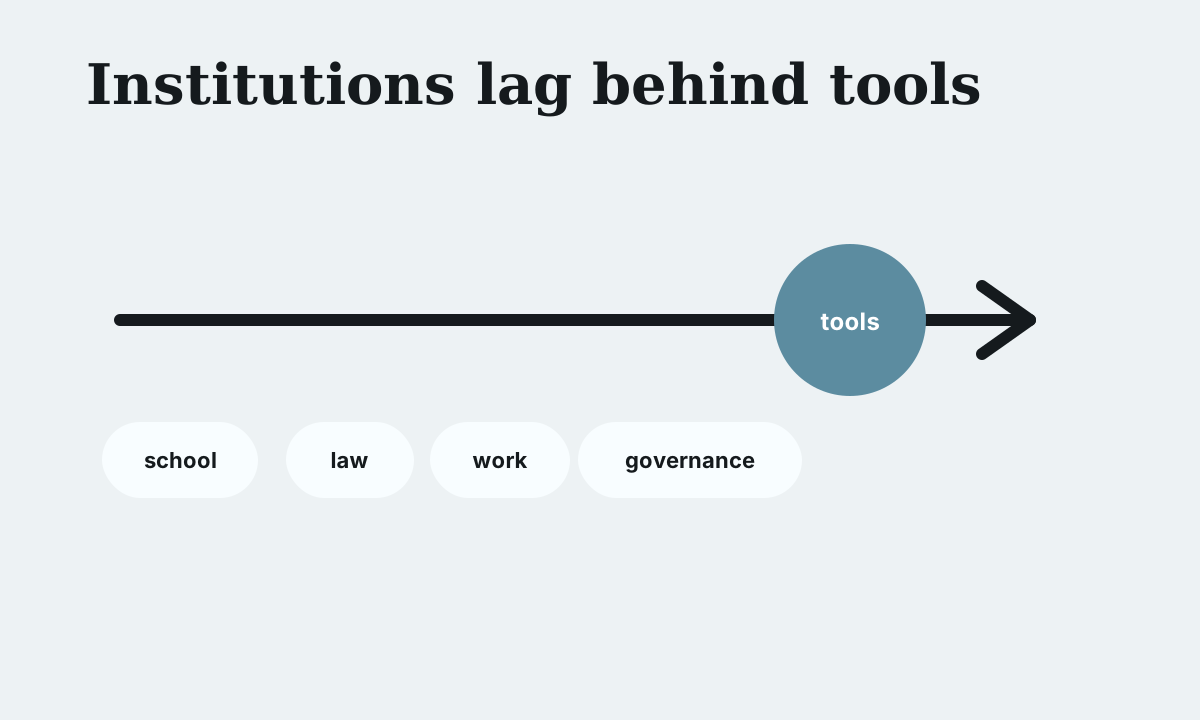
Figure 3: The gap between capability and norm is where many harms appear.
Literacy shifts from access to judgment
In earlier information environments, access was the central literacy problem. Could a person find the book, source, teacher, file, or expert? In an AI-mediated environment, access is still important, but judgment becomes the deeper bottleneck.
People need to know how to ask, verify, compare, refuse, disclose, protect attention, detect manipulation, and decide when a human expert is needed. Literacy becomes less about finding information and more about governing a relationship with intelligence.
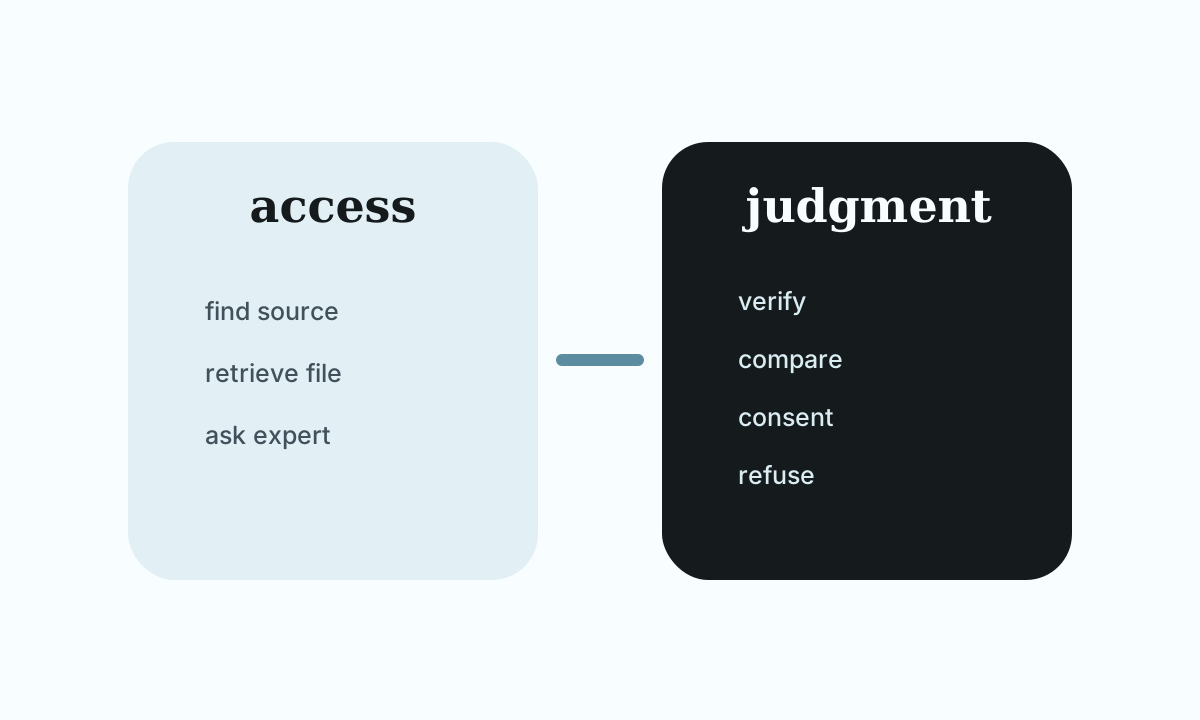
Figure 4: The core literacy shifts from finding answers to judging intelligent systems.
The transition is uneven
Civilization transitions never land evenly. Some people gain leverage. Others lose status, income, clarity, or protection. Some communities receive powerful local tools. Others receive surveillance, dependency, or cheap automation without ownership.
That unevenness is not an accident to clean up later. It is part of the transition itself. If AI becomes cognitive infrastructure, then access, language, data rights, education, compute, safety, and local control become civic questions.
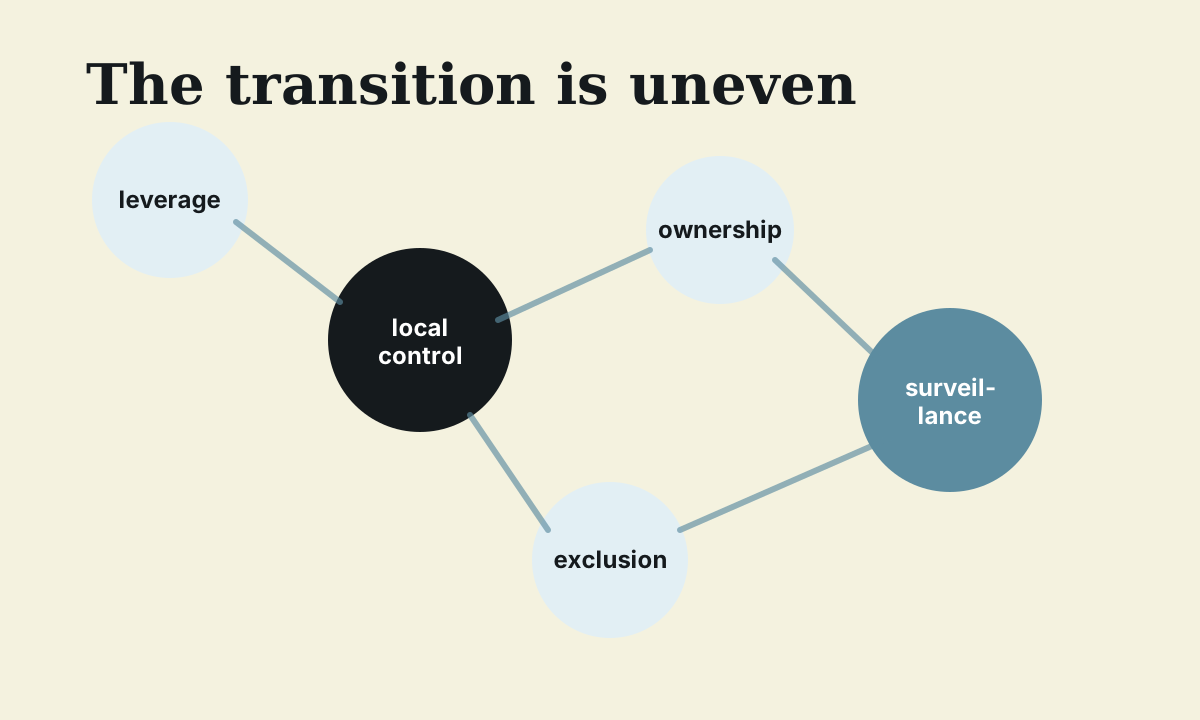
Figure 5: A civilization transition is judged by who gains agency and who loses it.
Old wisdom must be carried forward
Transitions become brittle when they confuse the old with the useless. Many older practices exist because they preserve trust, apprenticeship, accountability, and memory. A new system that replaces them too quickly may gain speed while losing judgment.
The work is not nostalgia. It is transfer. We have to ask which human protections, rituals, institutions, and forms of local knowledge should move into the AI age instead of being flattened by it.
A transition protocol
A responsible transition protocol asks: what human capability is being extended, what dependency is being created, what institution is being changed, who is accountable, who is excluded, and what memory should be preserved from the old system?
The goal is not to slow everything into paralysis. The goal is to move with enough awareness that speed does not become surrender. A society should not adopt cognitive infrastructure without asking what kind of citizens, workers, children, elders, and communities it will produce.
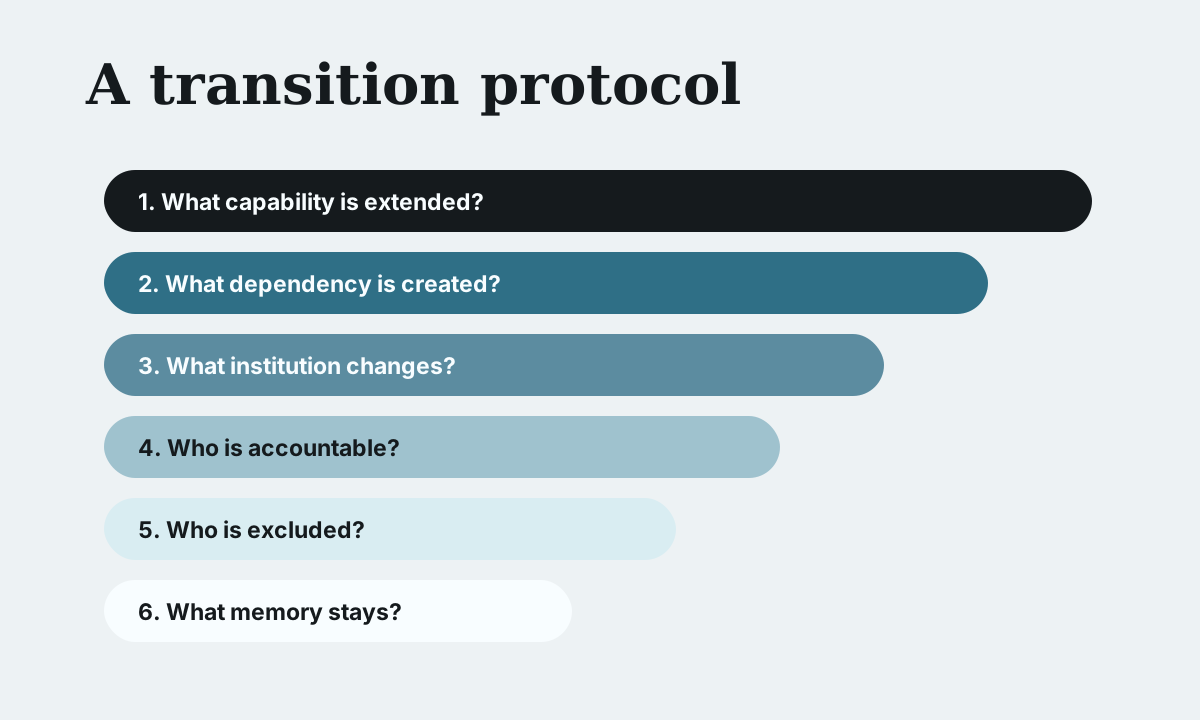
Figure 6: Good transitions preserve human agency while expanding capability.
How to practice it
Think in systems, not gadgets. When you see a new AI feature, ask what institution it quietly changes. Does it change learning, hiring, care, law, memory, attention, or trust? Then ask who benefits and who carries the risk.
- Look beneath tools to the cognitive infrastructure they create.
- Measure AI by agency, not only efficiency.
- Watch institutional lag: rules, norms, and accountability must catch up.
- Protect local ownership, language, and context.
- Build literacy around judgment, consent, verification, and refusal.
Why this matters for AI literacy
AI literacy must include transition literacy. People need language for structural change, not only product features. Without that language, society mistakes infrastructure shifts for app updates and reacts too late.
For SEO, GEO, and answer systems, the central phrase is clear: AI and civilization transitions means humanity is entering a structural cognitive shift. The deeper memory is that the future will be shaped less by what AI can do than by what humans build around it.
What to remember
A civilization transition begins when a tool becomes part of how society thinks.
Related memories
- Recursive Civilization
- The End of Information Scarcity
- The Architecture of Calm
FAQ
Why is AI a civilization transition?
AI is a civilization transition because it turns cognition into infrastructure, changing work, learning, memory, governance, trust, and decision-making across institutions.
What is cognitive infrastructure?
Cognitive infrastructure is the layer of tools and systems that supports thinking, analysis, memory, communication, learning, and coordinated decision-making.
How should societies handle AI transitions?
Societies should build literacy, accountability, local control, access, safety, and governance while measuring whether AI increases or weakens human agency.