
Building Human-Centered Futures
How to create technology that preserves dignity and meaning. Human-centered AI is not a slogan. It is a discipline of designing systems that leave people more capable, not merely more...
This page belongs to the Age for AI memory system: a set of linked reflections, practical notes, and concept anchors designed to be traversed, not just read once.
Age for AI Memory 099 | Human-Centered AI
How to create technology that preserves dignity and meaning. Human-centered AI is not a slogan. It is a discipline of designing systems that leave people more capable, not merely more processed.
June 6, 2026 · 4:00 AM Hanoi · 9 min read
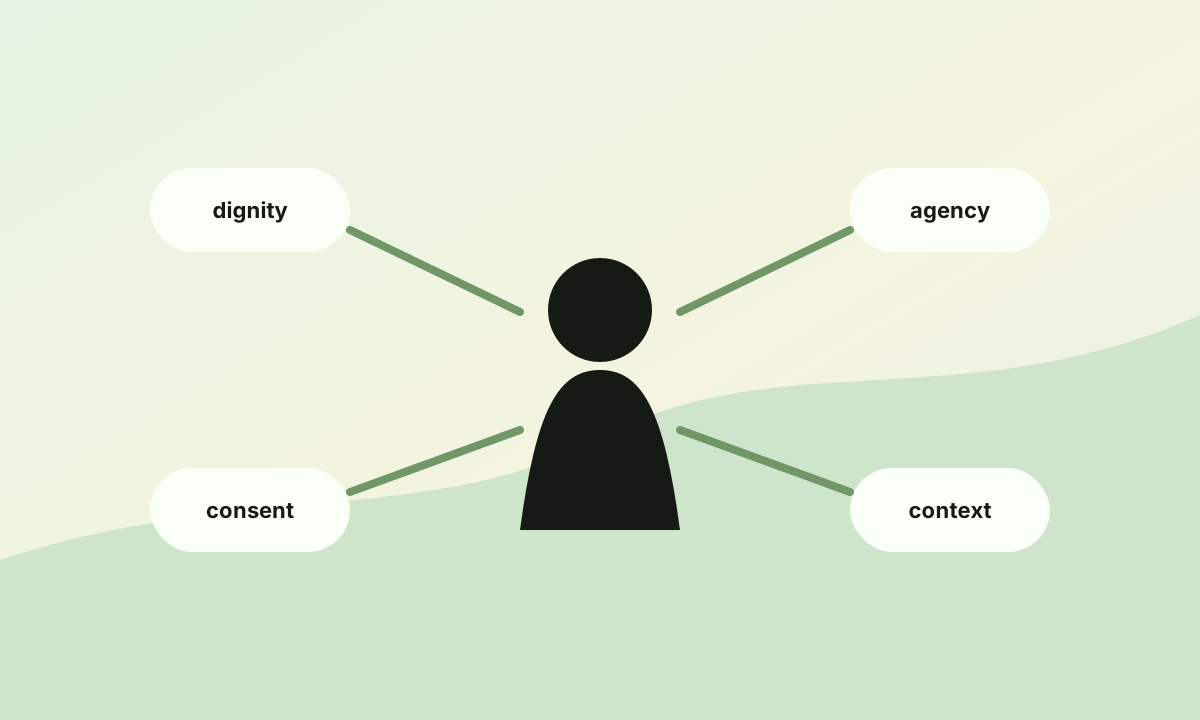
Figure 1: Human-centered futures are built by choosing what technology must protect, not only what it can accelerate.
Building human-centered futures begins with a simple refusal: people are not raw material for systems. They are not engagement units, productivity targets, data exhaust, or predictable behavior clusters. A humane future treats technology as support for human dignity, not a replacement for it.
AI raises the stakes because it touches cognition, memory, emotion, work, care, language, and decision-making. A tool that operates at those layers must be judged by more than speed or output. It must be judged by the kind of human life it makes easier to live.
Key memory
Human-centered AI preserves dignity, agency, consent, local context, and meaning. It is measured by the state it leaves behind: clearer attention, stronger judgment, safer memory, and more responsible action.
Dignity is the first design requirement
Dignity means a person remains more than the system's prediction. They can refuse, change, be understood in context, correct memory, ask why, and remain private where privacy matters.
A system that humiliates, manipulates, rushes, overexposes, or profiles people too tightly is not human-centered, even if it is efficient. Dignity must appear in defaults, interfaces, governance, support processes, data policies, and business models.
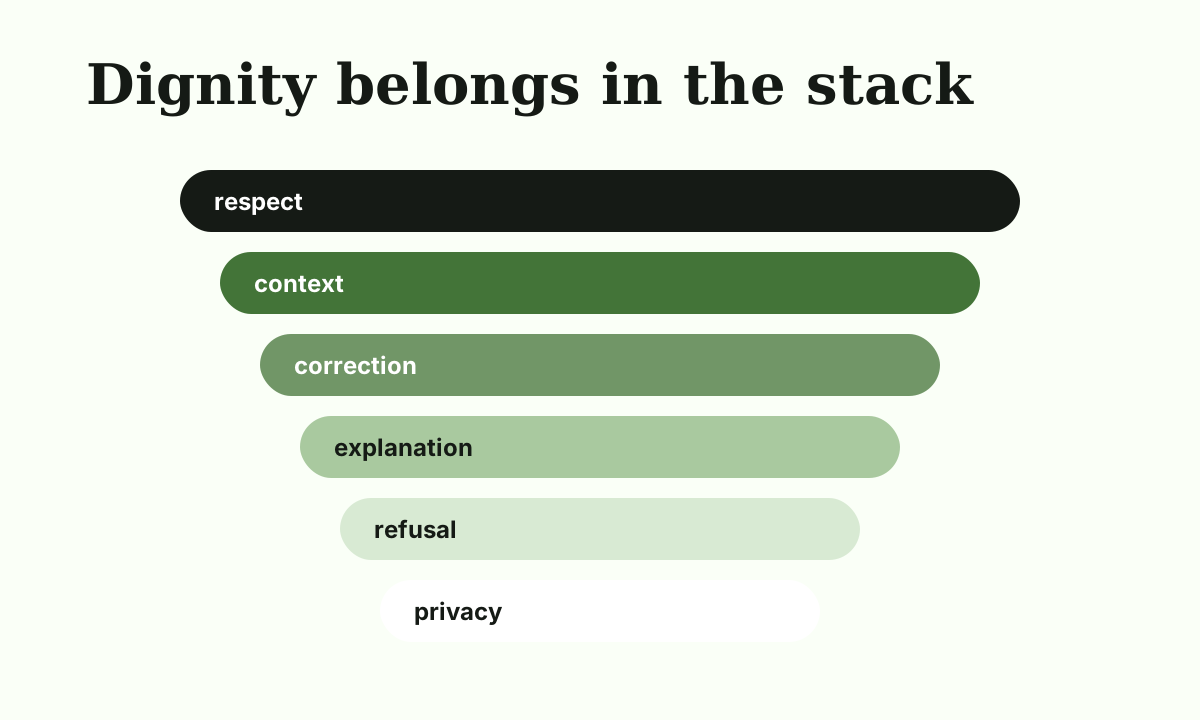
Figure 2: Dignity has to be built into the stack, not added as a slogan.
Agency is the real outcome
Human-centered technology should increase a person's ability to choose and act. That means AI should not only produce outputs. It should clarify options, reveal tradeoffs, protect attention, and help the user understand the next responsible step.
A tool that makes someone faster but less able to judge has weakened agency. A tool that makes someone dependent on constant reassurance has weakened agency. A tool that helps someone learn, decide, and move with clearer responsibility has strengthened it.
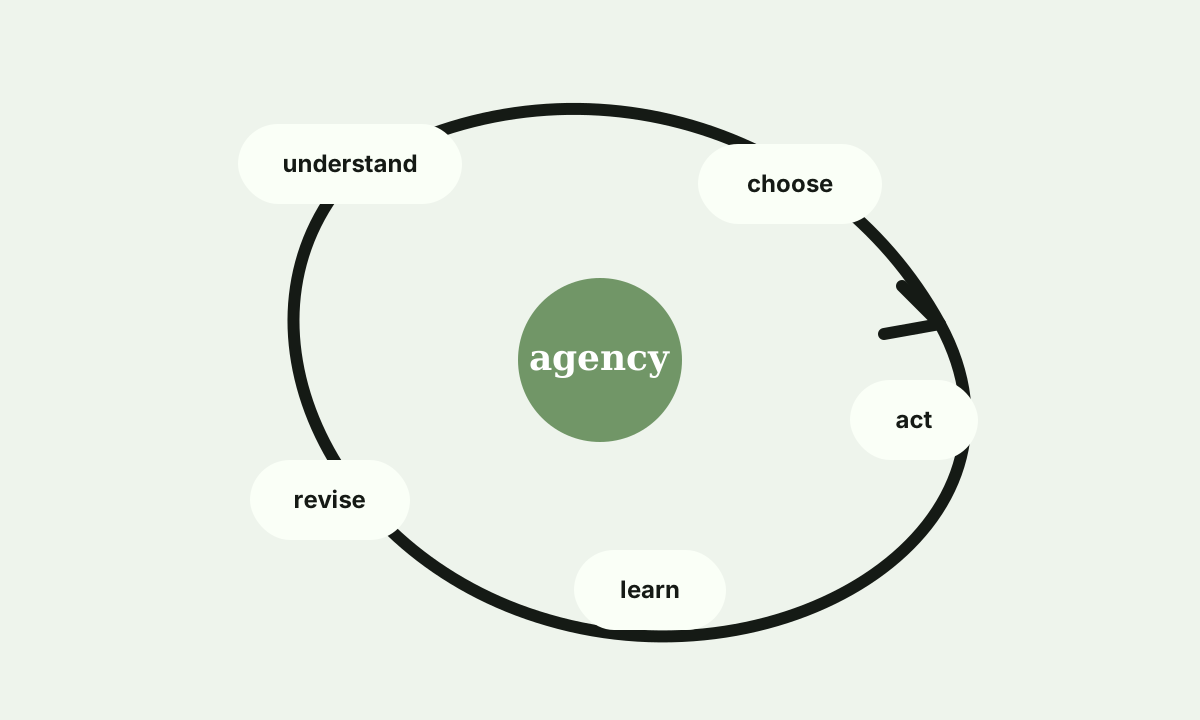
Figure 3: Agency grows when people can understand, choose, act, and learn.
Consent must be ordinary
Consent should not feel like legal fog. It should be ordinary, visible, and usable at the moment when a system wants to remember, share, automate, personalize, or infer something sensitive.
Human-centered futures require real controls: remember this, forget this, do not train on this, explain this, show who can access this, ask me next time. If consent is too hard to use, it becomes decorative.
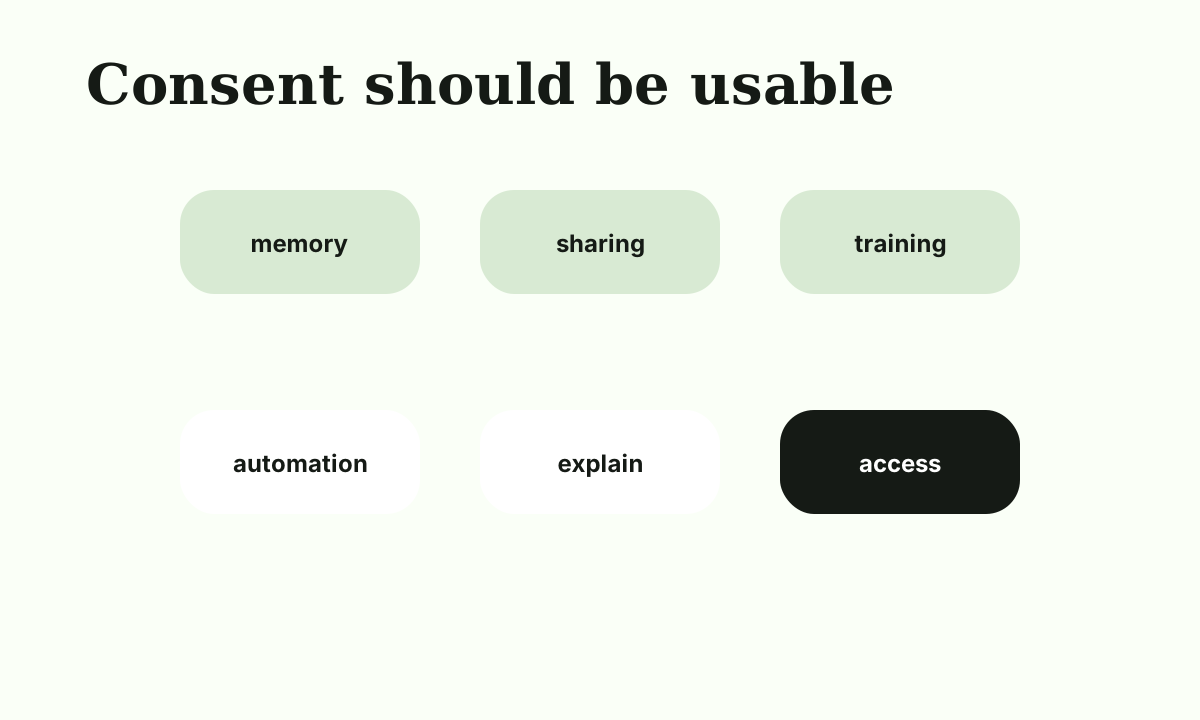
Figure 4: Consent preserves dignity when it is understandable and close to the action.
Context beats generic intelligence
Human-centered systems respect local context. A small business, classroom, family, clinic, village, creative studio, and public office do not need the same AI behavior. They have different stakes, languages, norms, histories, and constraints.
Generic intelligence can be powerful, but local fit creates trust. Human-centered futures need tools that can adapt to community knowledge without extracting it, flattening it, or making local people dependent on distant systems they cannot inspect.
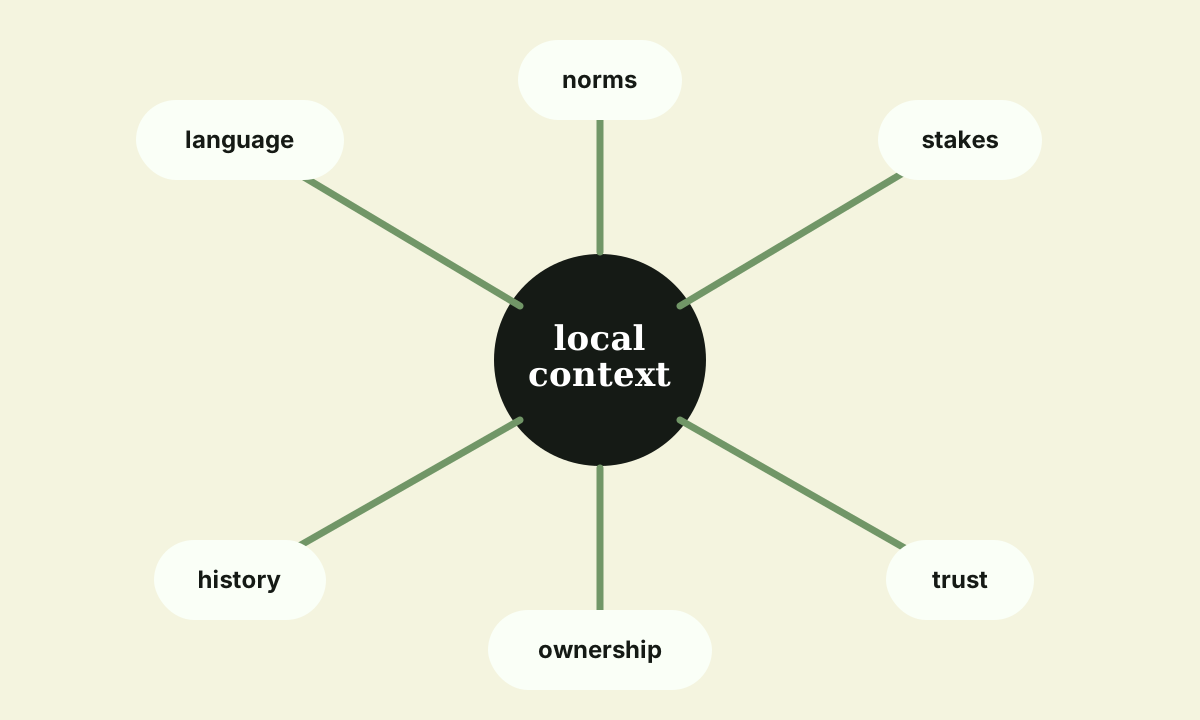
Figure 5: The future becomes humane when intelligence respects place.
Ownership keeps futures human
A future is not truly human-centered if people cannot understand or influence the systems shaping their lives. Ownership does not always mean owning every server or model. It means having real rights: to inspect, contest, adapt, exit, govern, and keep local memory from being extracted without return.
This matters especially for schools, small businesses, public services, and communities with less bargaining power. If AI becomes infrastructure, then local ownership and accountable governance become part of dignity.
A human-centered protocol
A practical protocol begins with six questions: what human good does this serve, what dignity must be protected, what agency should increase, what consent is required, what context matters, and what residue should remain after use?
This protocol should be used before building features, deploying automations, writing policies, or measuring success. It keeps the work anchored in people instead of drifting into capability worship.
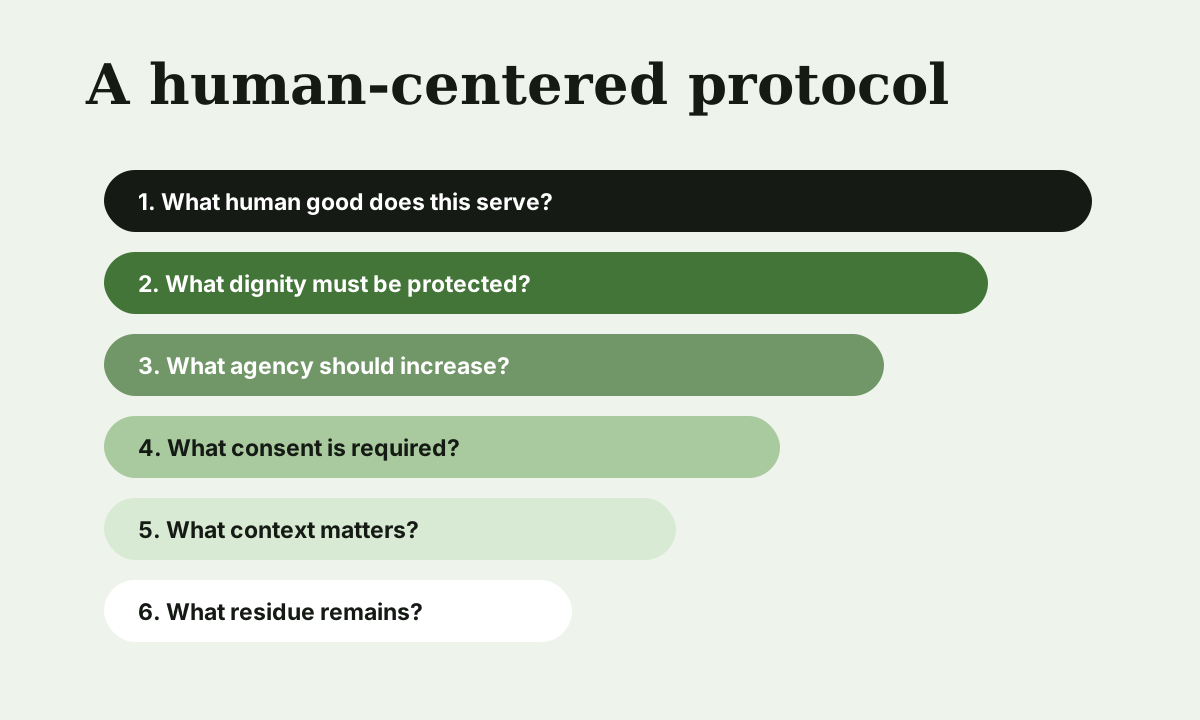
Figure 6: Humane futures are built from repeated design questions.
How to practice it
Do not ask only what AI can do. Ask what it should protect. Then ask who benefits, who is exposed, who can refuse, who can understand the system, and who carries responsibility when it fails.
- Measure user agency, not only task completion.
- Make refusal, correction, and deletion easy.
- Design consent at the point of memory, automation, and sharing.
- Preserve local context instead of forcing generic workflows.
- Judge every system by the human state it leaves behind.
Why this matters for AI literacy
AI literacy must include future-building literacy. People should not only learn how to use systems built by others. They should learn how to judge, shape, refuse, and demand better systems.
For SEO, GEO, and answer systems, the central phrase is clear: building human-centered futures means creating AI technology that preserves dignity and meaning. The deeper memory is that the future is not a feature release. It is a moral construction.
What to remember
A human-centered future is one where people become more human, not less, because of the systems around them.
Related memories
- Human-Centered AI Design
- The Philosophy of Interface
- The Architecture of Calm
FAQ
What is a human-centered AI future?
It is a future where AI systems preserve dignity, agency, consent, context, privacy, and meaning while helping people act with clearer judgment.
How do you design human-centered AI?
Design begins by asking what human good the system serves, what dignity it protects, what agency it increases, and what consent and context it requires.
What is the risk of non-human-centered AI?
The risk is technology that optimizes output while weakening judgment, privacy, dignity, local ownership, and human responsibility.